 Get Listed

How Does a Concrete Boom Pump Work?
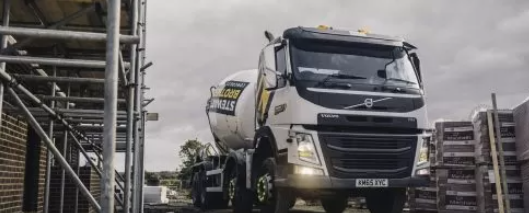
Concrete pumps are designed to make pouring concrete faster, more efficient and less wasteful. But they also enable concrete to be poured in places that at best would be difficult – and at worst downright dangerous – to do by hand.
Concrete boom pumps help us to work at great height or in places even ground line pumps might struggle to get to. In this article, we’ll explain how concrete boom pumps work, when you’re likely to need one and how using one can make your construction project considerably easier.
What is a concrete boom pump?

A concrete boom pump is attached to a mixer truck and has a long hydraulic arm (the boom) made up of several sections that an operator can move independently. What this means in practice is that it is able to access pour sites that are up high or can only be reached by going over or around obstructions.
At Stewart Brothers Concrete, we have boom pumps that can reach up to 72 metres – that can equate to the top floor of a 24-storey building!
How does a concrete pump work?
Concrete pumps use a combination of valves and hydraulics to draw the fresh concrete from the mixer truck hopper and drive it through the boom to the pour site. That needs to be pretty fast, because you don’t want the concrete to start hardening en route.

When and why you should hire a boom pump
- When the pour site is hard to reach
The main benefit to using a boom pump is that it can get to places that would otherwise prove a major headache. You could use a large team with wheelbarrows and shovels, but it would take a long time and there’d be huge potential for spillage and wastage on the way. Modern health and safety rules could also be a problem in some cases.
- When there’s a lot of concrete to pour
Shifting and pouring concrete by hand takes time, and the more there is, the longer it takes – especially when the route from truck to pour site is hard to negotiate. Moving large volumes of concrete with a team of workers and wheelbarrows will mean the initial loads start to set well before you’ve finished pouring. Using a boom pump, on the other hand, will mean it’s all still fresh when you finish, regardless of the location of your pour site.
- When you’re short on time or manpower
If you’ve got a tight schedule and your whole team could be better employed elsewhere on the site, the concrete pumping process can make fast work of any size pour and needs very few people to operate.
Preparing your site for a boom pump delivery

Site preparation for concrete pumping is essential if you want to make sure the process goes ahead smoothly.
The main issue you need to be aware of is access. A truck plus pump makes for a large piece of equipment, so your gates and access points have to be wide and high enough to accommodate it. And if the pump is going to be reaching up and across the site, there can’t be any overhead wires getting in the way.
You also need to make sure that there’s a smooth and level surface for the truck to sit on while it’s working. This should ideally be at least 10m2 in size. It also helps if any formworks are in place, so that the pour can be started as soon after arrival as possible.
If you’re in need of a large construction concrete delivery and want to make sure it goes quickly and smoothly, ask about concrete pump hire from Stewart Brothers Concrete. We have boom and ground line pumps available to hire to commercial and domestic customers across Kent and East Sussex, with exceptional service and unbeatable value as standard.
For more information on How Does a Concrete Boom Pump Work? talk to Stewart Brothers Concrete