 Get Listed

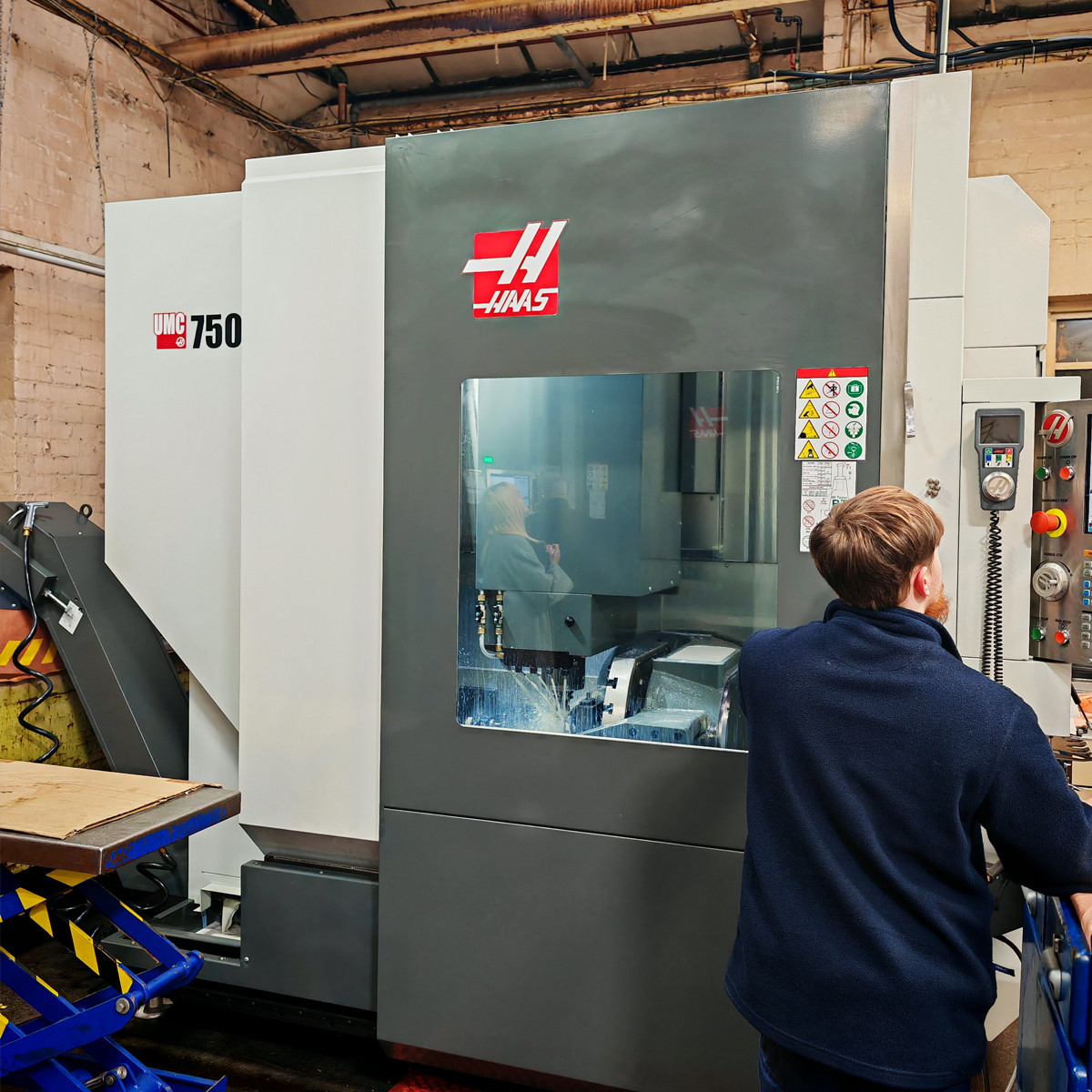
Standish Engineering is highlighting the benefits of its advanced 5-axis CNC machining capabilities, which provide greater flexibility when manufacturing complex, multi-sided precision components.
As component designs become more sophisticated, features such as angles, contours, holes and pockets across several faces can add considerable complexity to the machining process. Traditionally, producing these features may require a component to be repositioned and reset several times.
Standish Engineering's investment in two Haas UMC-750 5-axis machining centres provides its engineers with additional options for tackling these demanding components while supporting efficiency, accuracy and consistency.
What Is 5-Axis Machining?
A conventional 3-axis CNC machine operates along three linear directions. With 5-axis machining, additional rotational movement allows the cutting tool to approach the workpiece from a wider range of directions.
Standish Engineering's Haas UMC-750 machining centres support both 3+2 machining and simultaneous 5-axis machining, enabling the engineering team to select the most appropriate manufacturing strategy according to the geometry and requirements of each component.
The main advantage is not simply the additional machine movement, but what this flexibility makes possible during production.
Reducing Component Setups
Consider a precision component requiring machining across several different faces. With a conventional approach, it may need to be removed, repositioned and accurately reset before work can begin on each additional face.
5-axis capability can allow several of these operations to be completed within the same setup.
Reducing the number of setups can mean less component handling and fewer opportunities for variation to be introduced between machining operations. It can also help maintain the relationship between precision features located on different faces of the same component.
Supporting Complex Component Geometry
Curved surfaces, intricate features and unusual angles can all create significant machining challenges.
The additional movement available from 5-axis technology gives Standish Engineering's engineers greater freedom to approach individual features from an appropriate cutting angle, expanding the range of complex geometries that can be manufactured efficiently.
This capability can be particularly valuable where precision needs to be maintained across multiple sides of a component.
Combined with accurate CNC programming, appropriate tooling, effective workholding and robust inspection, 5-axis CNC machining provides another means of supporting consistent, high-quality component manufacture.
Advanced Machinery Still Requires Engineering Expertise
Standish Engineering stresses that investment in a 5-axis machining centre does not automatically make a complex component straightforward to manufacture.
The correct manufacturing strategy still needs to be developed for each project. Programming, tool selection, workholding, cutting conditions and the behaviour of the chosen material all need to be considered.
For this reason, the company views investment in advanced machinery and investment in engineering skills as going hand in hand.
The technology provides the capability, while experienced engineers determine how that capability can be used effectively to produce the required component.
Increased 5-Axis Machining Capacity
As customers' requirements continue to develop, Standish Engineering is being asked to manufacture increasingly complex precision components.
Having two Haas UMC-750 5-axis machining centres gives the company additional capacity to support these requirements while broadening the range of machining challenges its engineering team can undertake.
The investment is intended to support improvements in manufacturing efficiency, consistency and accuracy while giving engineers greater flexibility when planning production.
For Standish Engineering, investment in CNC machinery is ultimately about providing its team with the right tools to solve increasingly complex manufacturing challenges and deliver better outcomes for customers.
Businesses requiring the manufacture of a complex or multi-sided precision component can send Standish Engineering a drawing for its engineering team to review.
For more information on Why 5-Axis machining makes a difference to complex components talk to Standish Engineering Co Ltd