 Get Listed


If there’s one thing we adore at Signwrite Studios, it’s transformation. Taking something tired, dated or just plain dull and giving it new life is what we live for. And in the world of surface finishes, two big contenders often come head to head: laminates and architectural films.
You’ve probably seen both used in homes, hotels, offices and retail spaces without even realising it. But which one really wins when it comes to style, practicality, and cost? Let’s take a closer look at architectural films vs laminates, how they differ, and which might be right for your next project.
What Are They, Exactly?
Laminates (Decorative Laminates, HPL, LPL and More)
Laminates have been around for decades and are one of the most familiar decorative materials in the design world. They are readily available in hardware and home improvement stores and are commonly used by the avid DIY person seeking quick, budget friendly ways to update and protect surfaces, especially in kitchens and bathroom areas. They’re made by bonding layers of decorative paper and resin together under heat and pressure, forming a rigid, durable sheet.
There are different types of laminates such as High Pressure Laminate (HPL) and Low Pressure Laminate (LPL). HPL is more robust, while LPL is used for lighter applications. Both are popular in commercial joinery and interior design.
The decorative pattern of laminates is built into the sheet rather than printed on top, so the look and colour remain consistent and hard-wearing. They come in a wide range of solid colours, wood effects and textured finishes. However, because they’re rigid sheets, they need to be cut to size and bonded to a base material such as MDF or plywood during fabrication.
Architectural Films (Wraps or Architectural Finishes)
Architectural films, on the other hand, are the modern disruptors of the surface design world.
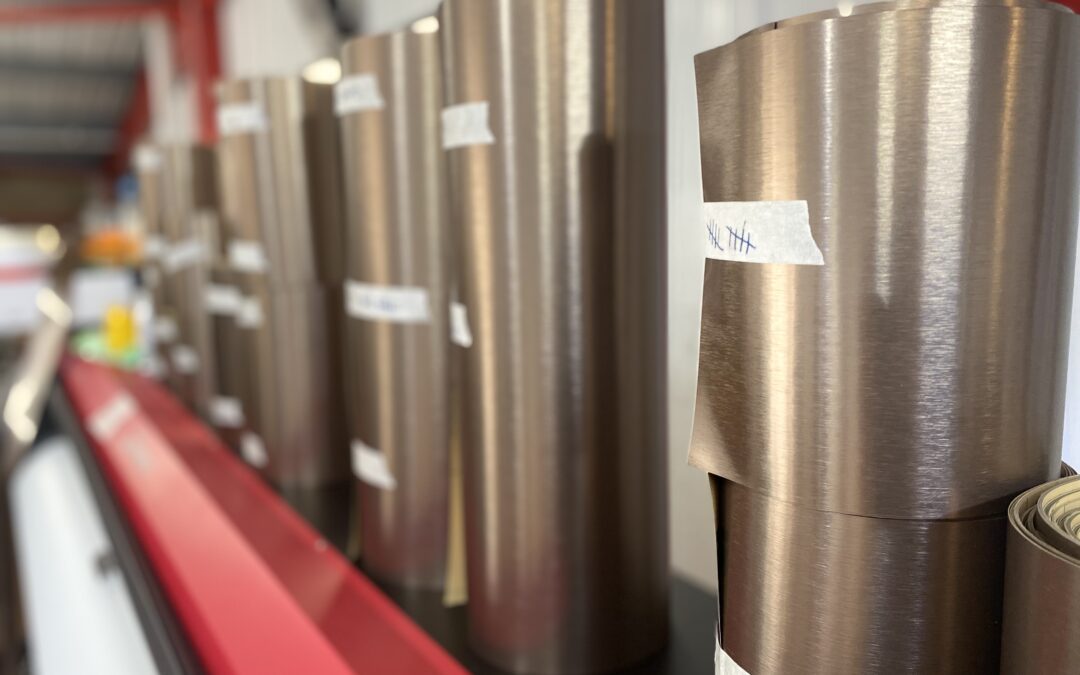
Architectural films, such as 3M™ DI-NOC™, are advanced self-adhesive surface finishes used to transform and refresh interiors and exteriors without the need for costly renovations. With over 1000 choices – including realistic wood grains, metals, marble, leather textures and solid block colours, they offer incredible versatility for creative design projects.
The wood effect patterns on 3M™ DI-NOC™ architectural film are not simply printed on the surface; they are built-in through a combination of high-quality printing and fine and deep physical embossing. This multi-layered approach gives the film a realistic look and feel that mimics natural wood.
Unlike traditional laminate films, architectural films are thinner, more flexible, and easier to apply to a wide range of surfaces, including curves and complex shapes. They’re also more durable and resistant to wear, moisture and UV exposure, making them ideal for high-traffic or high-humidity environments.
One key advantage for commercial and public spaces is fire safety: many architectural films are tested and certified to meet stringent fire ratings (such as Class A or EN 13501-1 standards), making them compliant for use in offices, hotels, hospitals and retail environments. Traditional laminate films, by contrast, often fail to meet these higher fire-safety standards and may require additional treatments.
With easy maintenance, minimal downtime during installation, and a lower environmental impact, architectural films provide a modern, sustainable alternative to traditional materials and laminates.
In simple terms: Laminates are rigid panels whilst architectural films are flexible skins that wrap existing surfaces to give them a brand-new look.
Head-to-Head Comparison
| Feature | Laminates | Architectural Films |
| Durability | Very strong, with built-in protective layers for scratches and heat. | Designed for commercial use, with resistance to impact, cleaning agents and moisture. Guaranteed by manufacturers for 10 years+ |
| Design Variety | Good variety of patterns and colours, but limited by sheet production. | Thousands of textures including wood, marble, stone, metal, leather and concrete. |
| Installation Time | Requires cutting, edging and bonding to substrates. | Quick to apply, minimal mess, no need for demolition or rebuild. |
| Flexibility | Rigid sheets that don’t bend easily. | Flexible enough to wrap curves, edges and complex 3D shapes. |
| Repairability | Difficult to patch; damaged sections often mean replacing panels. | Easy to replace or rewrap damaged areas without major disruption. |
| Weight | Heavy, adds structural load. | Lightweight and easy to apply on site. |
| Cost | Higher overall due to fabrication and fitting. | Lower installation cost, especially for refurbishments. |
| Sustainability | Replacing laminates creates waste. | Refurbishes existing surfaces, reducing waste and carbon footprint. |
| Fire Rating | Many meet safety standards for interiors. | Premium films are fire rated and suitable for commercial environments. |
When Architectural Film Comes Out on Top
At Signwrite Studios, we’ve seen architectural films work magic in retail stores, hotels, offices, bars and hospitality venues. They’ve become the secret weapon for interior designers and property managers who want results without the chaos of a rebuild.
Refurbishment Projects
Films are perfect for giving tired interiors a facelift. You can update doors, walls, lifts or reception desks in hours instead of days.
Curved or Unusual Shapes
Unlike rigid sheets, films can wrap around rounded corners, columns and intricate detailing, giving a sleek, seamless finish.
Fast Turnarounds
Films are ideal for tight schedules or after-hours installations.
Eco-Friendly Makeovers
Reusing existing surfaces rather than replacing them drastically cuts waste. It’s an easy sustainability win for environmentally conscious businesses.
Design Freedom
From rustic oak to high-gloss marble or industrial concrete, films give designers more creative freedom without structural limitations.
Easy Maintenance and Updates
If your brand changes or your décor needs a refresh, simply remove the old film and apply a new one. It’s fast, cost-effective and mess-free.
Less Disruption
Because architectural films don’t create noise or debris, they can be installed in live environments like hotels, offices or hospitals without shutting down operations.
Budget-Friendly Transformations
Using architectural film is an investment that achieves longevity, without the need for regular maintenance and upkeep.

Busting the Myths
There are a few misconceptions about architectural films, so let’s clear those up.
“They look fake.”
Modern films are so realistic that it’s hard to tell the difference from the real material. They even mimic the texture of wood grain, stone or brushed metal.
“They’re only temporary.”
Quality architectural finishes are built to last. Many come with warranties of 10 years or more, depending on the brand and application environment.
“They can only be used on walls.”
Films can cover almost any smooth surface, including joinery, walls, ceilings, elevators and even stairwells.
“They’re tricky to maintain.”
Films are low-maintenance. Most only need a mild cleaner and soft cloth to stay looking new.
“They peel off easily.”
When installed correctly by trained professionals, films adhere firmly. Proper surface preparation is key, which is why experienced installation teams matter.
How We Help Clients Choose
Every project starts with an honest conversation about what you want to achieve. At Signwrite Studios, we look at how your space is used, your time frame, and your long-term goals.
If your goal is to modernise an existing space, reduce costs, or avoid disruption, architectural films are usually a smart choice as they adhere to surfaces like a durable, hard wearing skin. They are the commercial grade alternative to traditional laminates which are far more rigid and don’t allow the flexibility and ease of application.
Our team offers site surveys to help guide you on best practices and correct films for the wrap. We provide samples so clients can see and feel the difference before deciding. Once approved, we schedule installation at a time that suits you, often outside working hours.
Real-World Transformations
We’ve worked on all sorts of projects where architectural films have completely changed the feel of a space.
Corporate London Office
A dated brass reception desk was renewed with 3M DINOC ME-147 metallic vinyl. The transformation was completed overnight, for staff to come in the next morning to a refreshed environment.


Office Block In Maidenhead

Architectural films modernised a dated building over three floors, wrapping doors, walls, lifts and even wayfinding signs with 3M DINOC.


New Desk Build in a Wokingham School
A bespoke project in which we wrapped a curved desk in 3M DINOC architectural film.


https://www.architextural.co.uk/blog-signwrite-studios-transform-bespoke-desk-with-3m-di-noc/
https://signwritestudios.com/weve-won-a-gold-award/
Stairwell Wrap
This tired white stairwell was transformed using sleek, black architectural film.


Our Final Take
If laminates are the dependable workhorse of interior design, architectural films are the creative and durable problem-solver. Laminates deliver strength and structure. Films deliver speed, flexibility and endless design options, whilst too achieving long term strength with minimal maintenance needed.
At Signwrite Studios, we love helping clients unlock the potential in their spaces and transform the ordinary into something extraordinary. If your space is crying out for a refresh, get in touch. Sometimes the best transformation doesn’t mean starting over; it means wrapping what you already have and watching it shine all over again.
For more information on Architectural Films vs Laminates: Which Wins the Surface Makeover Battle? talk to Signwrite Studios Ltd