 Get Listed

Second-Hand Office Furniture Done Right
There’s a version of second-hand office furniture that most people picture when the phrase comes up: slightly tired chairs from a closing-down sale, desks that have seen better decades, storage units that carry the faint evidence of offices past. That version exists. But it’s not the version that a growing number of businesses — including some of the most design-conscious, sustainability-focused organisations in the country — are actively choosing when they fit out or refresh their workplaces.
The second-hand office furniture market has changed significantly. At its best, it now offers access to genuinely premium pieces — from manufacturers like Herman Miller, Vitra, and other benchmarks of commercial furniture quality — at a fraction of their original cost, in condition that ranges from good to virtually indistinguishable from new. Understanding why the category has evolved this way, and what it actually offers businesses willing to look past the assumptions, is worth a few minutes of any office manager’s time.
Why Premium Brands Are Everywhere in the Second-Hand Market
The corporate office cycle is, in some ways, the second-hand buyer’s best friend. Large organisations — law firms, financial institutions, tech companies, consultancies — invest heavily in quality furniture when they fit out their offices, often specifying pieces at the top end of the commercial market.
When those organisations relocate, restructure, downsize, or simply refresh their aesthetic after several years, that furniture enters the secondary market in large quantities. It has typically been well-maintained in a professional environment, used by people who treat it as office infrastructure rather than domestic furniture, and it arrives with the considerable durability that manufacturers like Herman Miller and Vitra build into their products by design.
The result is that the second-hand market for commercial seating routinely contains pieces that retail new at £800, £1,200, or considerably more — available at prices that represent a saving of 60%, 70%, or sometimes more. The quality is not a compromise.
The Herman Miller Aeron that has spent five years in a City law firm’s meeting room is, in most respects, the same chair it was when it left the factory — because it was engineered to last considerably longer than five years.
This is the fundamental economics of premium second-hand office furniture, and it is why the purchasing decision looks very different once those numbers are placed alongside the equivalent new alternatives.
The Cost Argument — More Straightforward Than It Sounds
Office fit-outs and refurbishments are consistently one of the largest capital expenditures a business makes, and the furniture component of that expenditure is frequently where budgets compress most painfully.
New commercial furniture at an appropriate quality level is expensive — and the gap between the specification a business would choose if budget were unconstrained and the specification it actually selects is often wide. Second-hand office furniture collapses that gap.
A business that might budget £20,000 for a new furniture purchase finds that the same sum buys considerably more — and considerably better — in the second-hand market. More desks, better chairs, higher-specification storage, or simply pieces from manufacturers whose new pricing would have placed them out of reach entirely.
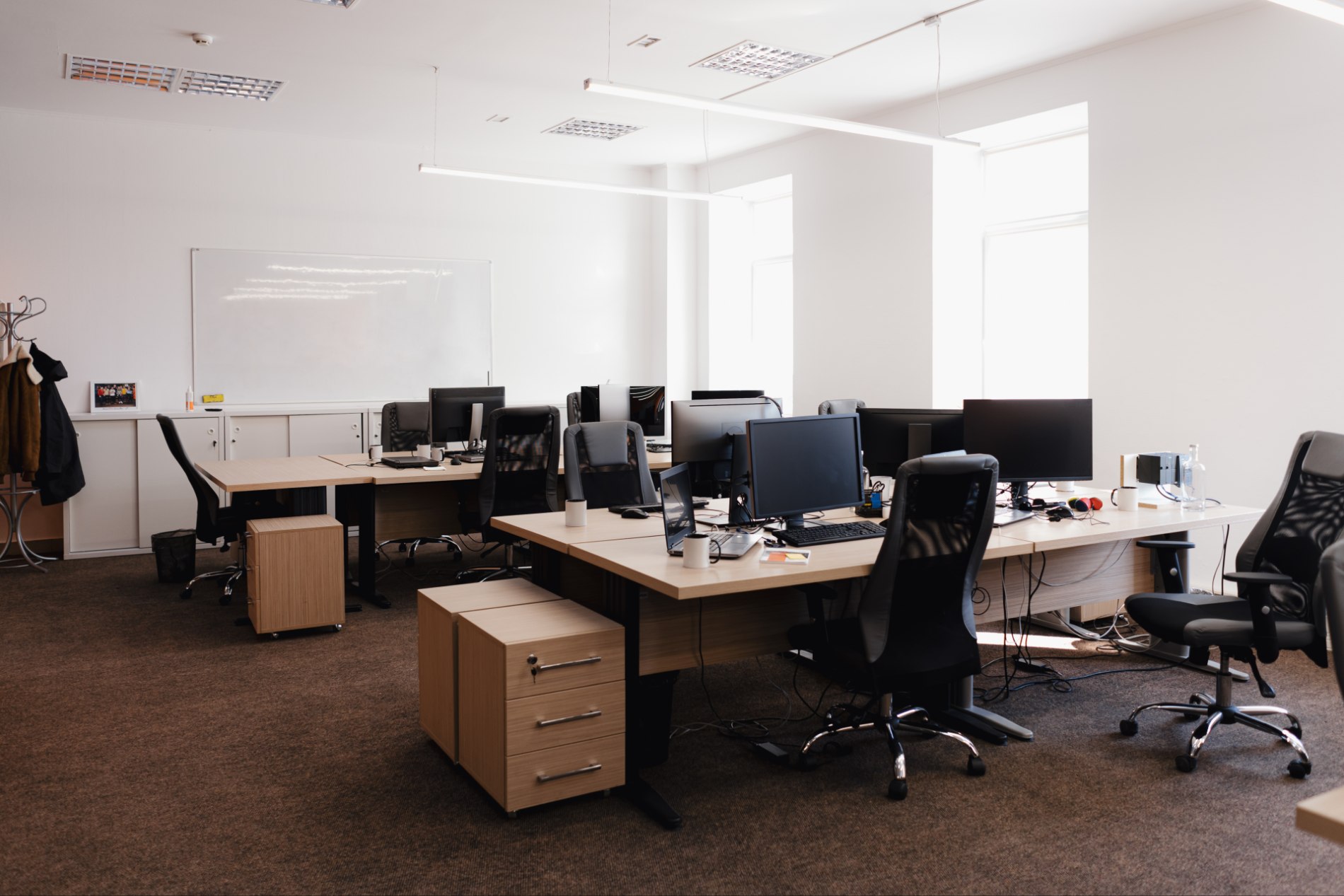
For growing businesses fitting out new space, start-ups establishing their first proper office, or established organisations refreshing areas that new furniture budgets couldn’t reach, the value proposition is straightforward. The desk range at Recycled Business Furniture reflects this directly — sit-stand desks, bench systems, and freestanding options that would carry very different price tags as new purchases.
Sustainability That Actually Holds Up to Scrutiny
The environmental case for second-hand office furniture is one of the more clear-cut in workplace decision-making. Furniture manufacture is a resource-intensive process — the extraction of raw materials, the manufacturing process, the packaging, the transport — and every piece of quality furniture that finds a second working life rather than going to landfill or being broken down for recycling avoids all of that embedded carbon being replicated.
For businesses with genuine sustainability commitments — those working toward net zero targets, reporting on Scope 3 emissions, or responding to increasingly ESG-conscious clients and employees — the procurement of second-hand furniture is one of the more tangible and measurable contributions available.
It’s not a marginal gain. Choosing a refurbished Herman Miller chair over a new equivalent avoids the production of a piece of furniture whose manufacture carries a meaningful carbon footprint, and that avoidance is direct and immediate rather than offset or projected. According to the Ellen MacArthur Foundation, extending the useful life of commercial products through reuse and refurbishment is one of the highest-value interventions available in a circular economy — higher, in many cases, than recycling at end of life.
What to Look for When Buying Second-Hand Office Furniture
The quality of the second-hand office furniture market varies considerably, and the purchasing experience with a specialist supplier is meaningfully different from buying individual pieces at auction or through general marketplace listings.
A specialist supplier grades stock accurately, photographs it honestly, and has the knowledge to identify which pieces are worth sourcing and which have reached the end of their useful commercial life. The difference between a piece that has been properly assessed and one that hasn’t becomes apparent quickly — in comfort, in function, and in how long it continues to perform.
Ergonomics is worth particular attention for seating purchases. A chair like the Herman Miller Aeron is adjustable across a range of settings — seat height, armrest position, lumbar support, tilt tension — and a piece that arrives with all adjustments functioning correctly is a very different proposition to one where several mechanisms have degraded.
Buying from a supplier who can confirm the functional condition of a piece, rather than simply its visual appearance, is the difference between a successful purchase and a frustrating one. The soft furnishings and seating categories at Recycled Business Furniture are stocked with this standard of assessment applied throughout.
An Office That Reflects Well on the Business — for Less
The final argument for second-hand office furniture is perhaps the most straightforward: a well-chosen, well-sourced collection of quality second-hand pieces creates a workplace that looks and feels considered.
Employees notice the difference between a Herman Miller chair and a budget alternative.
Clients and visitors notice the quality of the meeting room seating. The office environment communicates something about the organisation that occupies it — and quality second-hand furniture communicates taste and intelligence rather than compromise.
Recycled Business Furniture sources, assesses, and supplies quality second-hand office furniture to businesses across the UK, with a stock that spans premium seating, desks, storage, and soft furnishings from the manufacturers that set the standard in commercial furniture.
Whether you’re fitting out a new space, refreshing an existing one, or simply looking to upgrade the chairs your team spends eight hours a day in without the cost of buying new, browse the full collection or get in touch to discuss what you’re looking for.
For more information on The Smartest Office Upgrade Nobody Talks About talk to Recycled Business Furniture Ltd