 Get Listed


By Alexander Franklin, Director – Ranheat Engineering Ltd
Sizing a biomass system correctly is the key to heating your woodworking factory efficiently—and turning wood waste into real savings. But calculating your heat load isn’t just about floor area. It’s about how much heat escapes, how fast air moves through your building, and what heat your processes require.
Here’s how we break it down.
1. Conduction Losses: Surface Area vs U-Value
Conduction losses happen through walls, roofs, windows and doors. To calculate them, we multiply the surface area of each material by its U-value (how well it insulates) and the temperature difference between inside and outside.
Formula:
Heat Loss (W) = Area (m²) × U-value (W/m²K) × ΔT (°C)
A poorly insulated wall or unsealed roller shutter can be responsible for 20–30% of your overall heating demand. Use actual measurements—don’t guess based on floor area.
2. Ventilation Losses: Passive vs Forced
Ventilation losses are just as important—especially in factories with dust extraction.
-
Passive ventilation includes infiltration through leaky buildings, door gaps, and roof vents.
-
Forced ventilation comes from dust extraction, spray booths, and air handling systems.
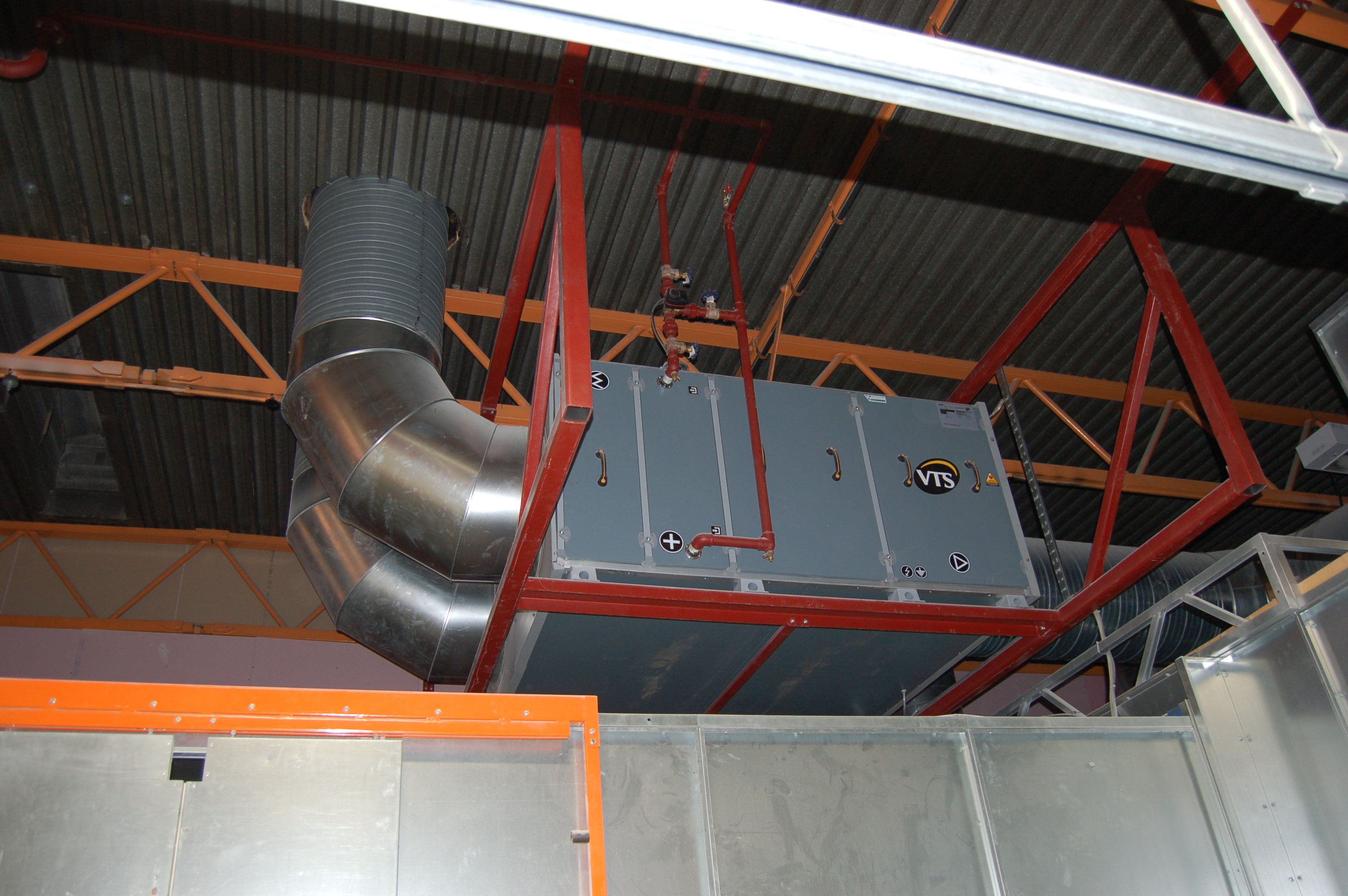
If you’re extracting 15,000–30,000 m³/hr through a filter system, all that air must be reheated. These systems are critical for safety, but they dramatically increase your heat load—especially in winter.
3. System Responsiveness and Load Matching
Unlike fossil fuel boilers, biomass boilers are more efficient when they run continuously. That’s why Ranheat systems are designed to operate at a range of load levels.
Rather than shut off overnight, our systems drop to a low standby mode, maintaining background heat, excellent emissions and ramping up as needed. This keeps emissions low and ensures the workshop is warm for start of shift—without the need for oversized burners or constant restarts.
4. Process Heat: Gluing, Painting, Kilning
Many woodworking factories don’t just need space heating. They require heat for:
-
Glue drying or press curing
-
Paint spray booths
-
Timber drying kilns
-
Fence post or panel treatment
These processes have higher temperature demands and need more precise airflow control. That’s where Ranheat’s warm air units, hot water systems, or even steam boilers integrate seamlessly into your manufacturing line—turning waste into workflow.
5. Heat Load vs Waste Generated
As a rough guide:
-
1 tonne of wood waste = 4,000 kWh of usable energy
-
500kg/week of dust and offcuts can justify a fully automatic industrial biomass boiler
That’s a tipping point—if you’re filling four or more dust bags a day, you’re spending time and money handling waste that could be heating your factory.
We’ll help you calculate your average weekly waste output and match it to the right system capacity, whether it’s a WA 150, WA 300, or beyond.
Conclusion: Every Factory Is Different—But the Maths Doesn’t Lie
Calculating heat load properly means:
-
Assessing conduction losses through surface areas
-
Understanding ventilation rates, especially from extraction
-
Considering process heat alongside space heat
-
Matching system size to your waste stream
If you want help measuring and specifying the right biomass system for your woodworking factory, Ranheat’s team is ready to help—from first estimate to full installation.
📞 01604 750005
✉️ sales@ranheat.com
🌐 www.ranheat.com
For more information on How to Calculate the Heat Load of a Woodworking Factory talk to Ranheat Engineering Ltd