

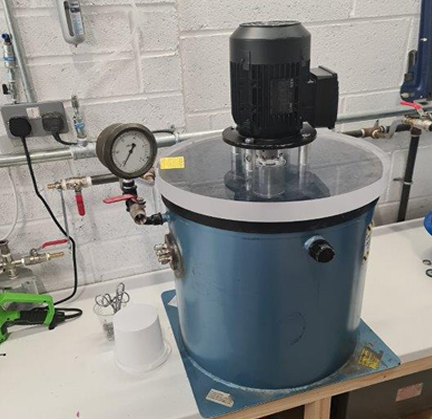
From personal devices to ocean-going vessels and automated industrial plants, electronics are enabling us to improve people’s lives globally and produce better products and services, which must be increasingly well protected. This is particularly true when used in products that can cannot fail, such as electrically powered transport vehicles to avoid risk to people’s lives and safety.
Electrification is also the key to reduce our carbon imprint, pollution and our dependency on fossil fuels. In short, durable and properly protected electronics and electrical equipment are the key to countering global warming and controlling climate change for a sustainable future.
What is potting and encapsulation in electronics?
Potting and encapsulation are the two main techniques used to protect sensitive and critical electronic components from diverse threats, such as harsh environmental and climatic conditions, corrosive chemical aggression, vibration, and dust.
Potting
Potting is the process of filling (partially or completely) or embedding the electronic component or assembly in an enclosure with a resinous material such as silicone for the purpose of providing protection. The formulations used can also contribute to improve electrical insulation, flame retardancy and heat dissipation.
Example of potting connections within a potting box.
Encapsulation
Encapsulation is a similar process to potting but differs because the component is generally enveloped with resin. The purpose of encapsulation is therefore to create a protective “shell” around the component, it provides resistance to major threats, such as shock, vibration, moisture, corrosive agents and improves electrical insulation, flame retardancy and heat dissipation.
Diagram showing internal components within resin encapsulation (orange colour) providing insulation under use.
To pot or to encapsulate, that is the question.
The key to determining whether potting or encapsulation is best for an application is based on several factors, including the operating and environmental conditions of the final product, the physical properties required for the materials being used and the processing requirements and capacities of the manufacturer.
Silicones are increasingly the materials of choice for potting or encapsulating sensitive electronics such as sensors, actuators, central processing units (CPUs), printed circuit boards (PCB) and other assemblies, largely because of their excellent wetting capabilities, which minimize air pockets and other imperfections. Epoxy and polyurethane systems are best suited for protection of components from external factors, they are excellent insulators offering excellent die-electric properties typically 17kVmm and a low thermal expansion co-efficient as well as dimensional stability and can maintain tolerances of <100µm these are ideal for components such as:
- High Voltage Transformers 50kV-600kV
- High Voltage Power Supplies
- High Voltage insulators
- Motor/Stator windings
- Marine Applications
- Harsh environment applications
What are the different materials that can be used for potting and encapsulation?
Let’s look at the various materials used for electronic potting and encapsulation.
In the past, conventional materials such as glass, metals and ceramics were used for electrical protection and were gradually replaced by polymers (homopolymers, copolymers, composites, complexes, blends of small molecules, and alloys). This shift has come about because these new materials offer new and highly diversified molecular characteristics to protect new generations of electronic, microelectronic, and nanoelectronic systems.
They improved the performance of final products, but also contributed to streamlining processing, reducing weight and volume, as well as offering greater versatility for protecting complex and miniaturized parts, ultimately enhancing quality, durability and cost-effectiveness.