Find The Needle Add My Company
Why Do I Have Voids In My Resin Casting?: Causes and Prevention

Understanding Causes and Solutions for Resin Voids in Potting and Encapsulation


Voids in resin castings and encapsulation projects can be a frustrating issue—especially when the application involves sensitive electronics, high-voltage components, or mission-critical assemblies. Whether you’re a design engineer, a procurement specialist, or a quality manager, understanding the why behind resin voids is the first step toward eliminating them.

In this article, we’ll explore the most common causes of void formation, how they impact performance and reliability, and most importantly—how to prevent or eliminate them during the casting and potting process.


What Are Voids in Resin Casting?

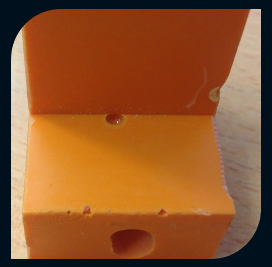
Voids are air pockets or gas bubbles trapped within the resin after it cures. These can be microscopic or visible to the naked eye and often appear:

  • Around sharp corners or undercuts in a mould,

  • Near components with complex geometries,

  • Or as surface craters or internal gaps in the finished casting.

While a small void may seem harmless, in high-reliability sectors like defence, energy, marine, or instrumentation, even minor imperfections can compromise insulation, moisture protection, or mechanical stability.

Common Causes of Voids in Potting and Encapsulation

Understanding the root causes can help you mitigate void formation before they occur. Here are the most frequent culprits:

1.

Air Entrapment During Mixing

Mixing resin with hardener—especially high-viscosity or filled systems—can introduce air bubbles. If not degassed properly, these bubbles remain suspended in the mix and form voids once cured.

2.

Improper Pouring Technique

Pouring resin too quickly or from too high a height can trap air in intricate mould details or component cavities.

3.

Outgassing from Components

Certain materials—like plastics, porous ceramics, or PCBs—may contain residual moisture or volatiles. During the exothermic cure, these gases are released into the resin, forming voids.

4.

Inadequate Vacuum or Pressure Control

Many resins benefit from vacuum degassing or pressure potting. Skipping these steps—or applying them incorrectly—can result in trapped gases remaining within the casting.

5.

Temperature and Cure Rate

Rapid curing at elevated temperatures may cause trapped air to expand before the resin cross-links, resulting in bubble formation.

How to Prevent Voids in Resin Casting and Encapsulation

Avoiding voids requires a careful, controlled process that considers both material properties and environmental conditions. Here’s what works:

1.

Vacuum Mixing for Filler Dispersion

Mixing under vacuum—especially when using filled systems—offers two distinct advantages. First, it eliminates the risk of enveloping air into the formulation. Second, it allows the resin and filler to be mixed for extended periods, ensuring excellent dispersion and uniformity without compromising on quality. This is particularly important when working with thermally or electrically conductive fillers that must be evenly distributed for performance.

2.

Vacuum Degassing

Degassing the mixed resin under vacuum before pouring eliminates entrained air. A typical process might involve pulling vacuum for 1–3 minutes depending on resin viscosity and batch size.

3.

Vacuum Casting for Critical Applications

Vacuum casting allows the mixed material to be introduced into the mould under vacuum, helping to prevent pockets of air from becoming trapped in complex features or narrow gaps. However, it’s important to note that casting under vacuum will not always eliminate voids entirely—especially if the mould includes blind threaded sections or deep recesses.

In such cases, mould tool design becomes a vital consideration. If cavities like blind holes aren’t sealed with O-rings, they can fill with air when the vacuum is released. This air is then released during curing as the mould heats and expands, potentially creating voids in the final part. To mitigate this:

  • Consider through-holes to allow air escape,

  • Or implement mechanical sealing, such as O-rings, to isolate air-prone areas during vacuum casting.

4.

Pour Slowly and Strategically

Pour from a low height and allow the resin to flow into all areas gradually. For complex geometries, consider pre-wetting the mould or using a brush to “prime” tricky sections.

5.

Control Resin Temperature

Warming the resin slightly (within manufacturer tolerances) can reduce viscosity, allowing air bubbles to rise more easily.

6.

Pre-Bake or Dry Components

Removing residual moisture by pre-baking components—particularly porous materials—reduces the risk of outgassing during cure.

7.

Use Pressure Potting (If Needed)

Applying pressure during curing compresses bubbles and prevents them from forming large voids. This is especially effective in high-performance or mission-critical applications.

Conclusion

Voids in resin castings can compromise product reliability, cause field failures, or lead to costly rework. But with the right process—including vacuum mixing, casting, and well-designed tooling—they’re largely avoidable.


If you’re struggling with persistent voids—or want to partner with a manufacturer that delivers void-free consistencyget in touch with our team. We’re always happy to discuss your project and recommend a tailored encapsulation solution.

Real-World Experience: Void-Free Castings at Plexnetic

At Plexnetic Ltd, we’ve seen firsthand how a controlled encapsulation process—with tailored resin systems and rigorous material handling—makes the difference between a good casting and a perfect one. Our in-house vacuum mixingvacuum degassing, and vacuum casting capabilities—combined with pressure potting and intelligent tool design—ensure minimal void content across high-, medium-, and low-voltage assemblies.


Whether you’re working in subsea instrumentation, defence-grade electronics, or harsh-environment sensors, we customise the resin selection and process controls to suit your exact requirements

For more information on Why Do I Have Voids In My Resin Casting?: Causes and Prevention talk to PLEXNETIC LTD

Enquire Now

  Please wait...

Location for : Listing Title