 Get Listed

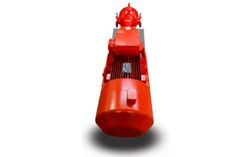
This latest case study will be diving into the world of fire suppression, where a request from a client for a set of reliable, proven foam concentrate transfer pumps to be used in the heart of their fire suppression system.
Clearly, fire is a constant threat to the operation of any company, particularly those handling volatile substances, or working in hazardous environments.
Which is why every business should have the strictest possible fire prevention protocols in place backed by extensive and rigorous staff training constantly monitored and updated.
But even with the highest levels of fire awareness and prevention throughout the business, fires can and do break out – often with catastrophic and fatal consequences.
Fire extinguishing systems are the last resort
If a company’s fire protection controls and safety measures fail, automated fire extinguishing systems are absolutely essential to prevent fire spreading and causing untold damage and possible loss of life.
These advanced systems use a range of substances to put out fires and protect site facilities, equipment and personnel. In the case of this particular client of ours, their automated firefighting solution used synthetic firefighting foam concentrate as the extinguishing substance.
How do firefighting foams work?
Firefighting foam is perfectly designed to suppress fire. It’s made of a pre-mixed solution of water and foam concentrate mixed with air.
This thick substance forms a stable foam blanket which spreads out across the fuel and sticks to surfaces. The firefighting foam concentrate prevents fuel coming into contact with oxygen, effectively sealing in flammable vapours and preventing re-ignition.
It also has a strong cooling effect which lowers the fire temperature to extinguish both Class A (solids) and Class B (liquid) fires.
So there are four key mechanisms in action:
-
Smothering
The foam creates a barrier between the oxygen in the air and the fuel, starving the fire
-
Vapour suppression
Synthetic firefighting foam concentrates blanket liquid fires like petrol for instance, and stop flammable vapours from rising and mixing with the air
-
Cooling
The water content in the foam lowers the temperature of the fuel, reducing heat and preventing thermal radiation which could stoke up the fire
-
Containment
The foam creates a blanket that sticks to surfaces, protecting against re-ignition
Where are they used?
Foam extinguishing systems like this are used to protect industrial processes or technologies based around flammable liquids or plastics. They are installed in the facilities where these substances are located, stored and used.
The synthetic firefighting foam concentrates are supplied from a tank to a proportioner where it’s mixed with water. This mixture is then transferred through pipes to spray heads, foam generators, pourers or monitors that direct it straight to the source of fire extinguishing it rapidly.
Firefighting foams vary in viscosity by temperature. They are also shear-thinning meaning that the faster they’re pumped the thinner they become. At around 30 rpm the viscosity can be around 500cps, but when increased to 60 rpm the viscosity halves to 250cps.
The downside of using foam concentrate
While being highly effective at firefighting especially on Class B flammable liquid fires, many foams are chemically corrosive and need ongoing management of storage tanks, pipework and associated nozzle equipment.
In particular, firefighting foams can be highly corrosive to metals like aluminium, carbon steel and brass, which can cause major issues in fire protection systems.
Additional factors to consider:
-
Concentrate vs. solution
Foam concentrate is more corrosive than the diluted foam option
-
Key areas at risk
Corrosion usually takes place in storage tanks, pipes, Venturi tubes in proportional systems, and couplings
-
Environmental factors
If there are high levels of salinity in the water used for dilution this can significantly speed up corrosion
-
Mitigation
To stop this corrosion, manufacturers often include corrosion inhibitors in the foam. But this does mean that the pipes will need regular maintenance and inspection
One type of synthetic firefighting foam concentrate used for firefighting is Aqueous Film Forming Foam or AFFF. This is a widely-used synthetic foam that spreads quickly over hydrocarbon fuels like petrol to create a protective water film and delivers rapid fire knockdown.
However, it is particularly problematic and is highly scrutinised because of serious environmental and health concerns due to the presence of PFAS or per- and polyfluoroalkyl substances, including Perfluoroctane sulfonate and Perfluorooctanoic acid.
The dangers of ‘forever chemicals’
PFAS like these are one of the biggest human challenges of our time. Yes, they are used in thousands of products and processes every day and have many benefits. But they are also called forever chemicals because they don’t break down naturally and will be present for thousands of years in the environment, in water supplies and in all of our bodies.
The problem with forever chemicals:
-
PFAS compounds don’t degrade in the environment quickly and can contaminate groundwater, soil and drinking water
-
Exposure to AFFF while working has been linked to severe health issues, including kidney, testicular, pancreatic and prostate cancer, as well as liver damage
In fact, due to their toxicity and long-term presence in the environment, AFFF is being phased out in many areas including the UK in favour of Fluorine-free foam or F3. This is an environmentally friendly firefighting agent designed to replace AFFF.
It contains no PFAS, PFOS or PFOA and effectively extinguishes Class A and Class B fires by also creating a thick foam blanket that cools and suppresses vapours but using different application techniques.
As the largest pump maker in the UK with over 25 years’ successful trading, North Ridge Pumps have the expertise to specify the best, most cost-effective type of pump design for every project brief.
What’s more, we’re not tied down to selecting just one type of pump. We use our expert knowledge and decades of experience to develop the right solution for every client and every commission - not just a basic pump model picked off the shelf.
Specific firefighting pump expertise
For foam firefighting, we have the capability to provide bespoke pumps to use low, medium or high expansion firefighting foam tailored to each type of fire hazard.
Some installed foam systems are subject to new EU regulations which place broad restrictions on PFAS or forever chemicals under its REACH chemicals programme. Due to serious environmental and health risks, this legislation is eliminating non-essential use and is targeting firefighting foams, some consumer textiles, food packaging and cosmetics.
What was our solution for this client?
To meet this client’s demanding requirements, we specified six of our proven HGP external helical gear pumps.
This type of external gear pump is often used to transfer viscous fluids at low speed. Inside the unit, two sets of interlocking gears are offset within the pump head. The gears are mounted above each other, with one gear driven by the rotating gear and the other driven by the motor.
Thanks to their simple design and internal construction having just two rotating parts these pumps are highly efficient and reliable – which is obviously vitally important for our client.
As an additional safety feature, we supplied these foam concentrate transfer pumps with ATEX explosion-proof motors. ATEX is a European Union Directive which is short for ‘ATmosphere EXplosible’.
This is a set of EU regulations which ensure that equipment is safe to operate in potentially explosive environments like oil and gas production, chemical manufacturing and in other hazardous applications.
Our specification in more detail
The six HGP external helical gear pumps we supplied will transfer the firefighting foam concentrate at rates from 10 to 35m³/h at 12 bar. As they are positive displacement pumps, the same pressure will always be delivered to nozzles regardless of the amount of foam needed.
We designed the pumps to be long-coupled and baseplate mounted using a gearbox to reduce the pump head speed. This ensures that the high viscosity foam concentrate has time to enter the pump head, and more importantly, that the teeth within the external gear can maintain the flow.
We coupled the foam concentrate transfer pumps to a 30Kw four pole 1500rpm motor with the gearbox further reducing the pump head speed to around 450rpm. The pump head has DN65mm flanged connections.
Made from corrosion-resistant stainless steel, the pumps will transfer the foam concentrate whatever its viscosity at the flow rate required.
For more information on Six foam concentrate transfer pumps for critical fire suppression system talk to North Ridge Pumps Ltd