 Get Listed

Dewatering Pump Guide
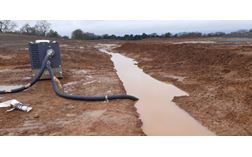
Dewatering is the process of removing groundwater or surface water from a construction site, mine, tunnel, or other excavation to create dry working conditions and prevent water damage to structures or equipment. Effective dewatering systems rely on selecting the right pump type, properly sizing the system capacity, and implementing appropriate monitoring to maintain safe, productive operations throughout the project duration.
This guide provides comprehensive information on dewatering, including its importance, the different types of dewatering, and the various pump types used for dewatering — all in one place.
The primary purpose of dewatering in construction is to control nuisance groundwater which may be present on site, predominately in low lying areas such as foundations, flood plains or boggy areas. It is also performed to enable excavation to be carried out under dry, stable, and safe working conditions.
When top soil is removed, it can disrupt natural drainage patterns in particular where clay may be present. Dry ground conditions are essential for the creation of effective and strong foundations, ensuring precise concrete mixtures are not diluted compromising strength, for worker safety and uninterrupted construction progress.
If dewatering is not properly considered during the planning stage, groundwater can flood excavations, forcing construction to stop until water is removed, it drains or evaporates or an appropriate dewatering system is installed.
Dewatering is important because it allows construction and excavation work to be carried out safely, efficiently, and without structural risk.
%20sml-26020412250134143.jpg "Dewatering surface water from a construction site")
Key reasons for its use include:
-
Construction efficiency: Dry conditions allow equipment and crews to work continuously, avoiding delays caused by flooding or muddy ground.
-
Ground stability: Removing groundwater reduces soil softening, erosion, and the risk of excavation sidewalls collapsing.
-
Structural integrity: Dewatering lowers groundwater pressure on foundations, basements, and underground structures, preventing uplift, cracking, or failure.
-
Quality of work: Concrete placement, compaction, and foundation construction require dry conditions to meet designed structural and durability standards.
-
Mineral Access: Removal of ground water in deep excavations ensures access can be made to mineral deposits which may lie beneath groundwater.
-
Cost control: Prevents costly downtime or overruns, emergency pumping, or damage that can occur when water control is not planned.
-
Worker safety: Excess water can cause unstable ground, slips, collapses, or sudden flooding. Dewatering keeps excavations dry and safe to work in.
In short, dewatering ensures excavations remain dry, stable, and safe, allowing construction to proceed as planned and to the required quality standards.
Types of Dewatering
Open Sump Pumping
The simplest dewatering method, open sump pumping collects groundwater and surface water in excavated sumps or trenches and removes it using submersible or surface-mounted pumps. This approach works well in relatively permeable soils where water can flow freely to collection points, and where drawdown requirements are modest.
Sumps are typically excavated 1-2 metres below the working level, with drainage channels directing water flow. Submersible pumps sit directly in the sump, while self-priming surface pumps draw from the sump via suction hose. Open sump dewatering is cost-effective for short-term projects and where fine silts are not present to destabilise excavation walls as in this project example: https://www.northridgepumps.com/article-372_dewatering-pumps-for-cofferdam-and-diaphragm-wall-construction
Wellpoint Dewatering
Wellpoint systems consist of multiple small-diameter wells (typically 50-75mm) installed around the excavation perimeter, connected to a common header pipe and served by a wellpoint pump. The combined suction from multiple wellpoints creates a cone of depression that lowers the water table below the working level.
Standard wellpoint systems achieve drawdown of 5-6 metres. Deeper excavations require multiple stages, with each stage lowered as the excavation progresses. Wellpoints are effective in sandy soils with hydraulic conductivity in the range of 10⁻³ to 10⁻⁵ m/s. Very fine silts or clays require alternative methods.

Deep Well Dewatering
For excavations requiring drawdown beyond wellpoint capability (typically greater than 6 metres), deep well systems use larger diameter bored wells with individual submersible pumps. Each well operates independently, pumping directly to a discharge main. Deep wells handle higher individual flow rates and can be extended to considerable depths.
Deep well dewatering suits both temporary construction dewatering and permanent groundwater control. The larger well diameter allows installation of properly sized submersible pumps with long-term reliability. Screen design and filter packs are critical to prevent sand ingress and maintain well efficiency.
Eductor (Ejector) Systems
Where groundwater control is required in low-permeability soils (silts and fine sands), vacuum-assisted eductor systems may be necessary. High-pressure water supplied to each wellpoint creates a vacuum that draws groundwater from surrounding soil even where permeability is too low for conventional wellpoint operation.
Eductor systems achieve drawdown of 30-50 metres depending on system configuration, and work in soils with hydraulic conductivity as low as 10⁻⁷ m/s. The trade-off is higher energy consumption and system complexity compared to standard wellpoints or deep wells.
Pump Types for Dewatering
Submersible Pumps
Submersible dewatering pumps mount directly in the water, with the motor sealed and cooled by the pumped fluid. This configuration eliminates suction lift limitations and priming requirements. Submersible pumps range from small portable units for minor see page to large-capacity pumps moving thousands of cubic metres per hour.
Key considerations: Motor cooling relies on immersion depth or continuous flow. Running uncovered can cause overheating. Electrical supply requires appropriate protection (RCDs, isolators). Cable length affects available power at the motor.
A recent project where these were utilised for was for the powering of fountains and waterfalls at a luxury golf course.

Wellpoint Pumps
Purpose-designed for wellpoint dewatering, these self-priming pumps connect to the wellpoint header and draw water from multiple wellpoints simultaneously. The vacuum capability (typically 7-8 metres water gauge) is essential for wellpoint operation. Wellpoint pumps must separate air and water effectively to maintain prime while handling variable conditions.
Wellpoint pumps range from small diesel units serving 10-20 wellpoints to large electric pumps serving 50 or more points. Trailer-mounted configurations enable rapid deployment and repositioning.
Self-Priming Surface Pumps
Self-priming centrifugal pumps mount above the water level and draw from sumps or tanks via suction hose. Suction lifts up to 7-8 metres are achievable with properly maintained pumps. The self-priming feature allows operation even after the sump empties, automatically repriming when water returns.
Surface mounting provides easy access for maintenance and monitoring. These pumps suit sump dewatering, bypass pumping, and temporary duty applications. Diesel, petrol, and electric drive options accommodate different site requirements.
Trash Pumps
Heavy-duty variants of self-priming pumps, trash pumps handle water containing debris, stones, leaves, and other solids that would damage or block standard pumps. Large passages through the impeller and volute allow solids to pass without clogging. Trash pumps are essential for initial excavation dewatering and flood response where clean water cannot be guaranteed.
Flow rates are typically lower than equivalent clean-water pumps due to the open impeller design. Some efficiency is sacrificed for solids-handling capability.
Borehole Pumps
For deep well installations, purpose-designed borehole pumps fit within the well casing and deliver water to surface via the riser main. Multi-stage designs develop the head required to lift water from considerable depths. Borehole pumps range from small 4-inch units for domestic and light commercial use to large 10-inch and larger pumps for major dewatering installations.
Please take a look at our case study about the Seawater Lift Pump for Sand Filter Flushing

Applications by Industry
Construction Site Dewatering
Foundation excavations, basement construction, and below-grade structures require dewatering to provide stable, dry working conditions. Methods range from simple sump pumping for minor seepage to extensive wellpoint or deep well systems for major excavations in water-bearing ground.
Key considerations include protection of adjacent structures from settlement, discharge water quality and disposal, and noise and vibration limits in urban environments. Construction dewatering is typically temporary, operating only during the construction phase before permanent waterproofing is installed.

Mining Dewatering
Both open-pit and underground mines require continuous dewatering to remove groundwater inflow. Mining operations may handle flow rates of thousands of cubic metres per hour with lifts exceeding 100 metres from pit floor to discharge. Reliability is critical since flooding prevents all productive operations.
Mine dewatering systems must handle abrasive solids (sand, silt, fine mineral particles) that accelerate pump wear. Settling ponds and clarification may be required before discharge. Long-term operations justify investment in high-efficiency systems and comprehensive monitoring.
Tunnelling and Shaft Sinking
Underground construction faces groundwater from multiple directions. Pre-dewatering (lowering water table before excavation begins) reduces inflow at the working face and improves ground stability. In-tunnel dewatering handles residual seepage and any unexpected water ingress.
Tunnel dewatering must address limited space for equipment, potential for sudden inflows, and water quality suitable for discharge or treatment. Emergency pumping capacity handles abnormal conditions and maintains safety.
In this application https://www.northridgepumps.com/article-365_bentonite-slurry-transfer-pumps-tunnel-construction-case-study, dewatering was undertaken to enable tunnel construction by an underground tunnel boring machine.

Flood Control and Emergency Response
Flood events require rapid deployment of high-capacity portable pumping. Self-priming trash pumps and portable submersible units suit emergency duty where water contains debris and sediment. Trailer-mounted wellpoint pumps provide extended capacity for larger areas.
Emergency pumping prioritises immediate water removal over efficiency or longevity. Equipment must operate reliably in adverse conditions with minimal setup time. Diesel power provides independence from potentially disrupted electrical supply.
Basement and Foundation Drainage
Permanent groundwater control for occupied buildings requires reliable, quiet, energy-efficient pumping. Sump pumps collect water from drainage systems and discharge to storm sewers or soakaways. Duplex systems (two pumps with alternating duty) provide standby capacity and even wear distribution.
Building drainage pumps operate automatically, controlled by float switches or level sensors. Regular maintenance and testing ensures readiness. Battery backup or generator connection maintains operation during power outages.
Comparison Table
Here is a table comparing dewatering pump types:
|
Feature |
Submersible |
Wellpoint |
Self-Priming Surface Mounted |
Trash Pump |
Borehole |
|
Best Application |
Sump, tank, and flooded |
Area dewatering with |
Sump dewatering, bypass pumping |
Debris-laden water, |
Deep well installations |
|
Maximum Discharge Head |
Up to 100m+ (multi-stage) |
Up to 80m discharge head |
Up to 250m |
Up to 80m |
Up to 200m+ |
|
Maximum Drawdown |
Limited by well depth |
5-6m per stage (suction limited) |
7-8m (suction limited) |
7-8m (suction limited) |
Limited by well depth |
|
Maximum Flow |
Up to 500 m³/hr per pump |
Up to 350 m³/hr per pump |
Up to 600 m³/hr |
Up to 150 m³/hr |
Up to 300 m³/hr |
|
Solids Handling |
Up to 50mm typically, |
Fine solids only (sand |
Limited, clean water preferred |
Up to 75mm solids |
Very limited, fine sand only |
|
Portability |
Good for smaller units, |
Good, trailer-mounted |
Excellent, easily relocated |
Excellent, |
Limited, fixed installation |
|
Power Requirements |
Electric (415V 3-phase typical) |
Diesel or electric |
Diesel, petrol, or electric |
Diesel or petrol |
Electric (415V |
|
Relative Cost |
Low to Moderate. |
Moderate (system |
Moderate |
Low to moderate |
High (including well) |
System Design Section
Calculating Inflow Rate
Dewatering system capacity must match or exceed groundwater inflow to maintain the target drawdown. Inflow rate depends on soil permeability, hydraulic gradient, and the dewatered area. Site investigation data (pumping tests, permeability tests) provides the basis for inflow estimates.
For preliminary sizing, use Darcy's Law: Q = K x A x i, where Q is flow rate, K is hydraulic conductivity, A is the contributing area, and i is the hydraulic gradient. Allow contingency of 25-50% for uncertainties and seasonal variations.
Determining Pump Capacity
Select pump capacity to exceed the calculated inflow with appropriate margin. Multiple smaller pumps provide redundancy compared to single large units. Consider standby capacity (typically 50-100% of duty capacity) to maintain dewatering during pump failure or maintenance.
Pump curves must suit the system head at the required flow rate. Account for static lift, friction losses in pipework, and any discharge pressure requirements. Verify NPSH available exceeds pump requirements, particularly for surface-mounted pumps with suction lift.
NPSH Considerations
Net Positive Suction Head (NPSH) is critical for self-priming and wellpoint pumps. NPSH available depends on atmospheric pressure, static suction lift, friction losses, and vapour pressure of the pumped water. At sea level with cold water, maximum practical suction lift is approximately 7 metres.
High altitude sites reduce available NPSH. Hot water (from deep formations or solar heating) increases vapour pressure, reducing suction capability. Conservative design accounts for these factors.
Pipe Sizing
Undersized pipework creates excessive friction losses, reducing pump output and increasing energy consumption. Size discharge mains for velocity of 1.5-3 m/s. Suction lines should be larger, limiting velocity to 1.5 m/s maximum to minimise NPSH losses.
Long discharge runs may require larger pipe sizes to maintain acceptable friction losses. Calculate total system head including all fittings, valves, and bends. Flexible hose connections accommodate settlement and vibration but add friction losses.
Standby Requirements
Critical dewatering applications require standby pumping capacity to maintain drawdown during equipment failure. Minimum standby provision is typically one pump equal to the largest duty pump. More critical applications may require 100% standby (full duplication of duty capacity).
Standby pumps must be installed, connected, and ready for immediate operation. Automatic changeover systems (float switches, pressure sensors) provide fastest response to duty pump failure.
Monitoring and Control
Effective dewatering requires ongoing monitoring of water levels, flow rates, and discharge quality. Piezometers within and around the excavation track groundwater levels and verify dewatering effectiveness. Flow meters on discharge mains confirm pump output and detect developing problems.
Remote monitoring systems with alarms and automatic controls enable prompt response to changing conditions. Data logging supports optimisation and provides records for project documentation and any regulatory reporting requirements.
Discharge Water Management and Environmental Considerations
Dewatering discharge must comply with environmental regulations and may require permits from the Environment Agency or local authority. Discharge water quality, volume, and receiving watercourse capacity all influence permitting requirements. Early engagement with regulators prevents delays during project execution.
Settlement ponds or tanks allow suspended solids to drop out before discharge. For construction sites, silt typically settles within 30-60 minutes of retention time. Larger particles settle faster, while fine silts and clays may require chemical treatment (flocculants) to achieve acceptable clarity.
Contaminated groundwater (hydrocarbons, heavy metals, or other pollutants) requires specialist treatment before discharge. Testing during site investigation identifies contamination risks. Treatment options include oil separators, activated carbon filtration, and pH adjustment depending on contaminant type.
Groundwater recharge (returning pumped water to the aquifer via injection wells or soakaways) may be required where abstraction affects neighbouring water supplies or environmentally sensitive areas. Recharge systems add complexity but maintain aquifer levels and satisfy regulatory requirements.

Troubleshooting Section :
Pump Cavitation
Cavitation occurs when inlet pressure falls below the vapour pressure, causing vapour bubbles that collapse violently within the pump. Symptoms include crackling noise, vibration, and reduced flow. Damage to impeller and casing accelerates rapidly if cavitation continues.
Solutions: Reduce suction lift, increase suction pipe diameter, eliminate restrictions and air leaks in suction line, ensure adequate submergence for submersible pumps, clean blocked strainers.
Insufficient Drawdown
When water levels remain higher than target despite pumping, the cause is usually inadequate system capacity relative to groundwater inflow. Contributing factors include higher permeability than expected, seasonal groundwater fluctuations, nearby recharge sources, or failed/blocked wellpoints.
Solutions: Add pumping capacity, install additional wellpoints, investigate and address recharge sources, verify all wellpoints are functioning, consider alternative dewatering methods for soil conditions.
Pump Blockages
Debris blockages reduce or stop flow. Warning signs include falling flow rate with unchanged water level, increased motor current, unusual noise. Submersible pumps may recycle (start-stop-start) as level switches respond to blocked discharge.
Solutions: Install appropriate strainers and screens, increase pump passages for debris-laden water, clean strainers regularly, use trash pump variants for dirty water, settle solids before pumping where possible.
Excessive Wear in Abrasive Conditions
Sand and silt accelerate wear of impellers, wear rings, and casing. Symptoms include progressively declining performance, increased clearances visible on inspection, sand in discharge. Severe wear may lead to structural failure.
Solutions: Select pumps with hardened wetted parts (high-chrome iron, silicon carbide), install effective sand separation, reduce wellpoint or intake velocity to limit sand entrainment, schedule regular inspection and parts replacement.
System Air Locks
Air accumulating in discharge pipework can block flow or cause pumps to cycle erratically. Air locks are common in undulating pipe runs with high points, and when pumps are oversized relative to pipe diameter (low velocity fails to sweep air through).
Solutions: Lay discharge pipes to continuous grade where possible, install automatic air release valves at high points, increase flow velocity to sweep air through, prime pipework before starting pumps.
View our range of dewatering pumps
For more information on Dewatering Pump Guide talk to North Ridge Pumps Ltd