 Get Listed

The call came on a Tuesday morning at 9:47 AM. My phone lit up with the name of a client I’d been working with for three years. Sarah wasn’t angry when I picked up. She was exhausted.
“Laura, we’ve cleared the deck. We’ve fired the SEO agency, the PPC freelancers, and the content house. We don’t need a marketing agency. We only want you guys.”
I set down my coffee. This wasn’t a typical client conversation.
Sarah continued, “It’s not that they were bad at what they did. The SEO guys got us to page one for our target keywords. The PPC team generated leads. The content agency produced blogs on schedule. But managing all of them was like being a full-time translator for people who should already be speaking the same language.”
She paused. “We spent more time in coordination meetings than actually growing the business. Every agency had their own dashboard, their own metrics, their own version of what success looked like. And none of it connected to our actual revenue.”
Then came the line that made me smile: “Oh, and we want you to work on our new brand. Hit me with your craziest idea.”
“You missed my crazy ideas, right?” I replied.
“Yes.”
This conversation would become the blueprint for understanding why the traditional agency model is dying. Sarah’s company hadn’t fired their agencies because they were incompetent. They fired them because they had become disconnected nodes creating what I call a “Frankenstack” of noise.
They were tired of managing the people who were supposed to be managing their growth.
The Death of the “Agency Model”
The traditional agency model is failing in 2026, and the symptoms are everywhere. Walk into any boardroom of a growing company and you’ll find the same scene playing out. The CEO isn’t running strategy sessions about market expansion or product development. They’re playing Chief Integration Officer, spending 40% of their time making sure their different agencies are actually talking to each other.
This isn’t sustainable. It’s certainly not profitable.
Here’s why agencies are broken:
They sell Activity, not Architecture. Your SEO agency celebrates ranking for 50 new keywords. Your PPC team shows you impressive click-through rates. Your content house produces 20 blog posts per month. But none of them can tell you how these activities connect to actual revenue. They’re optimising for their piece of the puzzle while ignoring how that piece fits into your business engine.
They thrive on your “Restart Tax.” The more complex they make your marketing stack, the more you need them. Every agency has their preferred tools, their proprietary processes, their unique way of reporting. This creates dependency by design. If you want to leave, you face a restart tax of time, money, and lost momentum as you rebuild everything from scratch.
They focus on the “Push” while ignoring the “Physics.” Traditional agencies are obsessed with lead generation. More traffic, more leads, more activity. But they ignore what happens after the lead is generated. They don’t understand retention rates, customer lifetime value, or yield optimisation. They push prospects into your funnel and consider their job done, even when 98.8% of those leads never convert.
The result? You become a full-time integration officer for systems that should be working together seamlessly.
Sarah’s experience wasn’t unique. I’ve watched this same pattern repeat across dozens of businesses. The agency model creates silos, and silos create inefficiency. Inefficiency kills profit.
The Beta Test: The Paternoster Protocol
Sarah’s company was one of my “Original Three.” These were the businesses that helped me develop what I now call the Paternoster System. Instead of giving them a new campaign, I installed a different kind of architecture entirely.
The shift was dramatic.
We moved them from a linear funnel where 98.8% of leads were scrapped to a circular, self-tuning revenue engine. The difference wasn’t just in the metrics. It was in how the business operated day-to-day.
For the first time, they had Revenue Sovereignty.
They didn’t need a “Social Media Manager” because the system was already capturing and qualifying attention across channels. They didn’t need separate PPC and SEO agencies because the system integrated both into a unified lead qualification process. They didn’t need a content house because the system generated relevant content based on actual prospect behaviour and questions.
The Paternoster Protocol works like its namesake, the continuous elevator. It never stops moving. Prospects can step on at any floor, any time. The system guides them through their journey at their own pace, nurturing the relationship until they’re ready to convert.
But unlike traditional funnels that lose prospects at every stage, the Paternoster system keeps them in the loop. If someone isn’t ready to buy today, they remain in the system, receiving value and building trust until the timing is right.
Sarah’s results after six months:
- Lead quality increased by 340% (fewer leads, but higher conversion rates)
- Customer acquisition cost dropped by 67%
- Sales cycle shortened from 9 months to 4.2 months
- Customer lifetime value increased by 89%
- Most importantly: Sarah got her time back
She went from spending 15 hours per week managing agencies to spending 2 hours per month reviewing system performance.
Why “Architects” Beat “Agencies”
The difference between working with traditional agencies and a revenue architect isn’t just philosophical. It’s structural. Here’s how they compare:
|
Feature |
The Traditional Agency |
The Revenue Architect |
|
Goal |
High Activity (Vanity Metrics) |
High Yield (Revenue Physics) |
|
Focus |
Adding more “Raw Material” |
Stopping the “Factory Waste” |
|
Structure |
Disconnected “Frankenstack” |
Unified Paternoster Loop |
|
Measurement |
Channel-Specific KPIs |
Revenue Attribution |
|
Relationship |
Vendor Management |
Strategic Partnership |
|
Outcome |
Dependence on the Agency |
Sovereignty for the CEO |
Traditional agencies optimise for their survival, not your profit. They need you to need them. A revenue architect optimises for your independence. The goal is to build a system that works whether they’re there or not.
This isn’t about eliminating external expertise. It’s about changing the relationship from dependency to sovereignty. Instead of managing multiple vendors, you work with an architect who designs a system that integrates everything into a unified engine.
The architecture approach means your marketing funnel becomes a business asset, not a business liability.
The “Rebel” Conclusion: Don’t Hire an Agency
Stop looking for a “Marketing Partner.” The language itself reveals the problem. Partners implies ongoing dependency. You don’t want a partner. You want a builder.
Look for a Revenue Systems Architect.
If you hire an agency to “do your marketing,” you are just buying a temporary sprint. The minute you stop paying them, the system stops working. If you hire an architect to “build your engine,” you are buying a permanent asset that generates value whether you’re actively managing it or not.
This is the difference between renting and owning your growth engine.
The companies thriving in 2026 understand this distinction. They’ve moved beyond the feast-or-famine cycle of campaign marketing. They’ve stopped playing integration officer for disconnected systems. They’ve achieved what every CEO wants: predictable, scalable, profitable growth that doesn’t require their constant attention.
Sarah’s company is one of them. Three years after “the purge,” they’ve doubled revenue with half the marketing complexity. Their system runs itself. Their leads qualify themselves. Their customers refer themselves.
They own their growth instead of renting it.
The question isn’t whether you can afford to make this shift. The question is whether you can afford not to. Every month you spend managing agencies instead of building architecture is a month your competitors gain ground.
Your marketing shouldn’t be your full-time job. It should be your business engine.
The choice is yours: keep paying the restart tax to multiple agencies, or invest in the architecture that makes you sovereign.
Which sounds more appealing?
Is Your Agency a Bottleneck?
If you’re tired of paying a “Restart Tax” on a dozen different freelancers, it’s time to see if your architecture is the problem. Most CEOs spend 40% of their time playing integration officer for systems that should work together seamlessly.
That’s not strategic leadership. That’s expensive project management.
Run the Forensic Revenue Audit to diagnose whether your current marketing stack is helping or hindering your growth. Stop the waste, decommission the noise, and find out if you’re ready to move from Agency Dependence to Revenue Sovereignty.
The assessment takes 8 minutes. The insights could save you years of complexity and thousands in restart taxes.
After working with companies like Sarah’s, I can often identify the fatal flaw in a marketing system within 15 minutes of looking at the data. The patterns are predictable. The solutions are systematic.
If you’re ready to stop managing your marketing and start owning it, book a Revenue Optimisation Audit. We’ll show you exactly where your current system is bleeding profit and how to stop the leaks.
Because here’s what I’ve learnt after 15+ years of fixing broken marketing systems: the companies that win in 2026 won’t be the ones with the most agencies. They’ll be the ones with the best architecture.
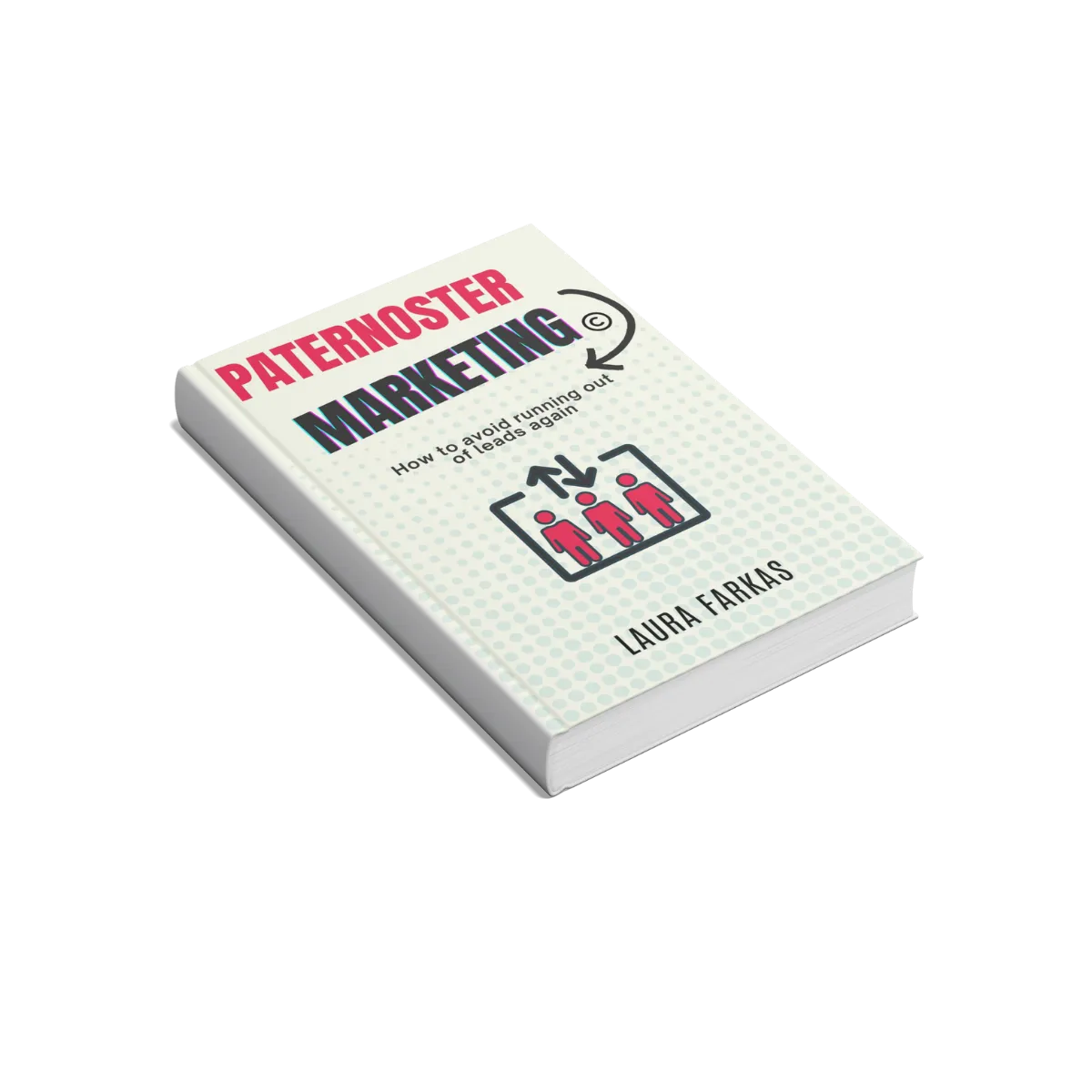
The Paternoster system is detailed in my book, “Paternoster Marketing”. My work has earned recognition as the by the UK Elite 100 Global Award.
For more information on Why You Don’t Need a Marketing Agency in 2026 (And Why My Client Fired Everyone Else) talk to LMNts Marketing