 Get Listed
Sign In

Light for a landmark of Jewish culture
01/07/2026
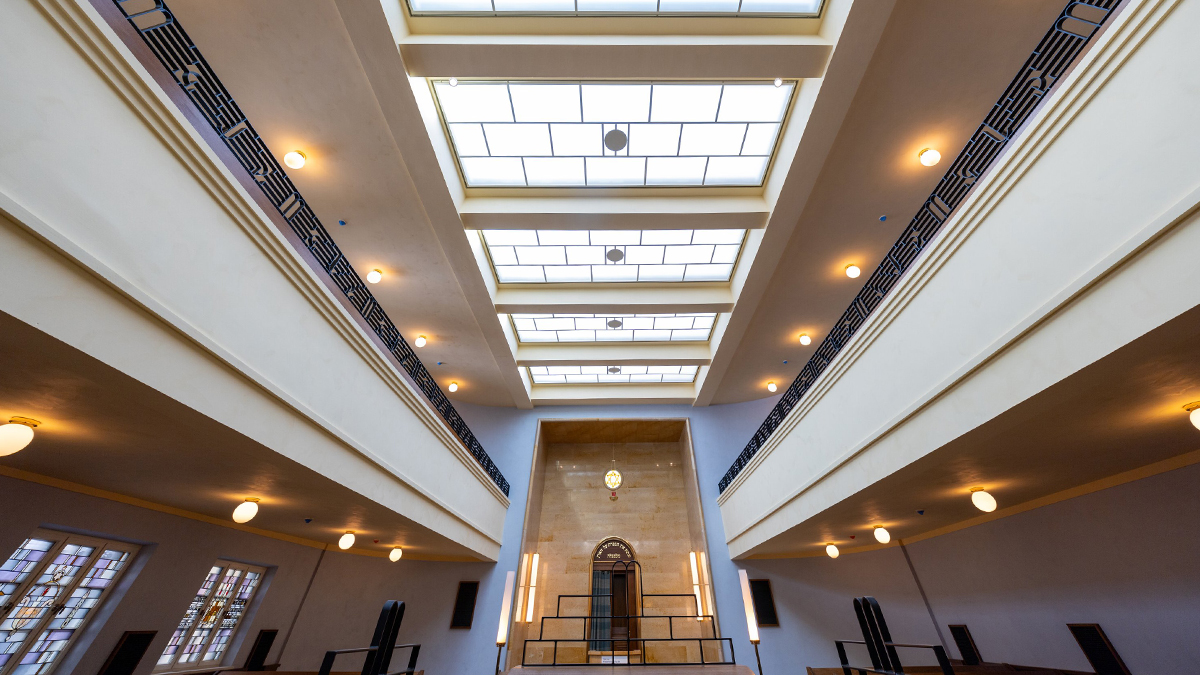
The refurbishment of historic buildings involves far more than technical upgrades and improvements to energy efficiency. It also means preserving architectural character, cultural significance and the history associated with a place.
The Reichenbachstraße Synagogue in Munich is an example of this approach. Following its refurbishment and reopening, eight LAMILUX Glass Roofs PR60 have helped restore natural daylight to the historic rooflights above the synagogue ceiling, bringing an important part of the original spatial concept back into use.
More than a building refurbishment
The synagogue is both an important modernist building and a significant Jewish place of worship. Its restoration therefore needed to respect the physical building while also recognising the history and meaning of the site.
Daylight plays an important role in the atmosphere of the restored interior. Rather than simply illuminating the space, light entering from above helps emphasise the height of the room and creates a calm and contemplative environment.
Restoring the original daylight concept
LAMILUX installed eight Glass Roofs PR60 in a pitched roof configuration. The systems return daylight to the roof openings that were an important feature of the original architecture.
The PR60 system can be adapted to existing structures with a high degree of precision, making it suitable for refurbishment projects where the new installation must work with the building's existing fabric. The glass roofs also contribute to energy efficiency and acoustic performance while maintaining the architectural quality of the interior.
Returning to the original spatial design
The Reichenbachstraße Synagogue was inaugurated in 1931 and is one of the few surviving pre-war Jewish religious buildings in Germany. Designed by Gustav Meyerstein in the style of New Objectivity, its interior relied on proportion, height and controlled daylight rather than elaborate decoration.
The building was severely damaged during the November Pogrom of 1938. Although it was returned to use after the war, much of the original spatial character remained hidden for decades.
The recent refurbishment has restored the role of the rooflights within the interior. By bringing natural light back through the ceiling openings, the eight LAMILUX Glass Roofs PR60 help reconnect the renovated synagogue with its original architectural concept while supporting the sensitive preservation of an important cultural and religious landmark.
For more information on Light for a landmark of Jewish culture talk to LAMILUX U.K. Ltd
List your company on FindTheNeedle.