 Get Listed


The hidden cost of poor workholding
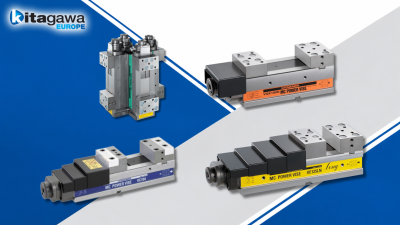
The cost of poor workholding is rarely limited to the chuck, jaws, vice or fixture itself. An unreliable setup can affect machining accuracy, setup time, tool life, scrap rates and overall production capacity.
For manufacturers focused on productivity, this makes poor workholding more than a tooling issue. Small inefficiencies repeated across hundreds of setups and thousands of components can create significant hidden costs over time.
Poor Workholding Increases Setup Time
One of the most immediate costs of poor workholding is additional setup time.
If operators repeatedly indicate fixtures, adjust components or troubleshoot inconsistent positioning, machines spend longer waiting and less time cutting. In high-mix, low-volume environments, these delays can consume valuable production capacity across frequent changeovers.
Standardised, repeatable workholding can reduce manual adjustments, helping operators reproduce setups consistently and return machines to production faster.
Lost Machine Time Has a Real Cost
Machine downtime is expensive, regardless of its cause. Recent research from Fluke Corporation demonstrates the wider reliability challenge, with “46% of manufacturers reporting between six and ten downtime incidents weekly.” (ITPro, 2025)
Workholding is only one potential contributor, but unreliable clamping, lengthy adjustments and repeated setups can all prevent manufacturers from maximising spindle utilisation.
The question is therefore not simply whether a workholding system still functions, but whether it allows the machine to produce consistently with as little non-cutting time as practical.
Inconsistency Creates Scrap and Rework
Poor clamping consistency can affect component positioning, dimensional accuracy and surface finish. Manufacturers may compensate through additional inspection and adjustment, while more serious issues can result in components being scrapped completely.
The hidden costs of poor workholding can include:
Wasted material
Additional machining time
Extra inspection
Operator troubleshooting
Reworked or rejected components
Missed production schedules
For manufacturers machining expensive materials or high-value components, preventing even a relatively small number of rejected parts can materially affect the business case for better workholding.
Tool Life Can Suffer Too
Cutting tools perform best when machining conditions remain stable. Inadequate rigidity or component movement can introduce vibration and inconsistent cutting conditions, potentially accelerating tool wear and affecting surface finish.
Additional inserts, cutters, tool changes and operator intervention should therefore be considered when assessing the true cost of poor workholding.
Stable workholding creates more predictable cutting conditions, allowing the machine, cutting tool and workpiece to operate as a consistent system.
Operator Time Becomes Part of the Problem
Experienced machinists can often compensate for an inefficient setup, but that does not make the process efficient.
If skilled operators regularly adjust fixtures, correct alignment or resolve clamping problems, valuable expertise is being used to compensate for process variation rather than productive machining.
Repeatable workholding can reduce reliance on individual operator knowledge, making setups easier to reproduce between shifts and creating a more standardised production process.
Poor Workholding Can Restrict Automation
Automation depends on consistency. A robot or automated machine tending system cannot easily compensate for fixtures requiring manual adjustment or components that do not locate predictably.
Poor workholding can therefore become a barrier to unattended machining. Standardised positioning, reliable clamping and repeatable fixture locations create the stability required for palletisation, robotic loading and lights-out production.
For manufacturers considering automation, reviewing workholding early can identify problems before they become more expensive integration challenges.
The Cheapest Option Is Not Always the Lowest Cost
Comparing workholding purely on purchase price can overlook the larger costs generated throughout its operational life.
A lower-cost system requiring longer setups, creating inconsistent positioning or needing frequent maintenance may ultimately cost more than a reliable alternative.
A better assessment considers total cost of ownership, including setup time, spindle utilisation, operator involvement, maintenance, scrap, tooling and production reliability.
This shifts the question from “How much does the workholding cost?” to “What does the workholding cost us to operate?”
Better Workholding Should Improve the Process
Not every machining problem is caused by workholding. Manufacturers should first identify where variation or lost productivity occurs by considering the component, machine, cutting forces, clamping method and setup process together.
Application engineering can then help determine whether the answer is maintenance, different jaws, improved fixturing, a new chuck or a wider change in workholding strategy.
At Kitagawa, we believe workholding should be considered as part of the complete machining process. Combining reliable workholding technology with application engineering expertise can help manufacturers reduce hidden inefficiencies and create more stable, repeatable and productive machining operations.
For more information on The hidden cost of poor workholding talk to KITAGAWA EUROPE LTD