 Get Listed


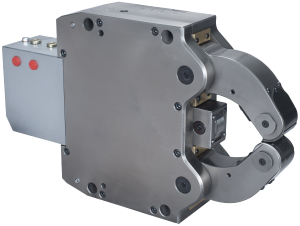
Choosing the right workholding system for CNC machines has become far more strategic than simply selecting a chuck or vice that fits the machine table. Across UK manufacturing, rising labour shortages, tighter margins, higher energy costs, and increasing pressure for faster lead times are forcing businesses to focus more closely on machining efficiency, setup reduction, and process reliability.
Buyers are increasingly prioritising workholding systems that reduce setup time, improve repeatability, and support future automation initiatives.
For many manufacturers, the right workholding system for CNC machines can deliver faster ROI than investing in entirely new machinery. The key is understanding how production requirements, machining processes, and future operational goals align with the capabilities of modern workholding solutions.
Why Workholding Matters More Than Ever
In high-mix machining environments, setup time is often one of the biggest hidden costs on the shopfloor. A poorly optimised workholding system can increase changeover times, reduce spindle utilisation, introduce inconsistency, and create bottlenecks across production.
Workholding directly influences machining accuracy, setup efficiency, repeatability, and overall production reliability. In many machining environments, workholding performance determines how consistently a machine tool can achieve its full capability.
Manufacturers are increasingly viewing workholding as a core production system rather than a secondary accessory.
This focus on productivity is being reinforced across the UK manufacturing sector. According to PES Media, “2025 marked the fifth consecutive year of output and productivity growth for UK manufacturing,” despite ongoing labour shortages and reduced workforce numbers. This is increasing pressure on manufacturers to improve machining efficiency, setup consistency, and spindle utilisation through smarter process optimisation.
This is particularly important in aerospace, defence, energy, and precision subcontract machining, where stable clamping, repeatability, and process consistency are essential.
The right workholding system for CNC machines should deliver:
Stable, repeatable machining performance
Faster setup and changeover times
Improved rigidity and clamping consistency
Better tool access and machining flexibility
Reduced operator intervention
Improved production reliability
Automation-ready process consistency
Reduced scrap and rework
For UK manufacturers operating under continued skills shortages, these improvements directly impact throughput, delivery performance, and long-term operational resilience.
Start With the Application, Not the Product
One of the most common mistakes manufacturers make when selecting a workholding system for CNC machines is focusing on the hardware before fully assessing the machining application and production requirements.
The right solution depends on several operational factors:
Part Geometry and Complexity
Simple prismatic components may only require standard vices or manual chucks. However, complex multi-face parts often benefit from modular or zero-point workholding systems that minimise repositioning while maximising machining access.
For 5-axis machining in particular, low-profile workholding becomes critical. Greater tool access reduces the number of setups required, helping manufacturers improve machining efficiency, reduce handling risk, and maintain process consistency.
Batch Size and Production Mix
High-volume production environments may justify dedicated fixtures designed for maximum cycle efficiency. Meanwhile, subcontract machining businesses dealing with high-mix, low-volume work often gain greater value from flexible modular systems that can be rapidly reconfigured without compromising repeatability.
This flexibility is becoming increasingly important as manufacturers prioritise responsiveness, shorter lead times, and production agility.
Material and Cutting Forces
The workholding system for CNC machines must provide sufficient rigidity and clamping stability for the material being machined. Aerospace alloys, hardened steels, and difficult-to-machine materials require secure, repeatable clamping without introducing distortion.
Insufficient workholding rigidity can lead to vibration, poor surface finish, premature tool wear, and dimensional inconsistency — all of which negatively impact production reliability and profitability.
Consider Future Automation Requirements
For many manufacturers, automation starts with consistent, repeatable workholding that creates the foundation for unattended machining and future process integration. However, many businesses incorrectly assume automation begins with robotics. In reality, many successful automation strategies begin with standardised workholding and setup consistency.
Real-world implementation data is already demonstrating the impact of this approach. According to MTA, a multi-part fixturing implementation resulted in “setup time reduced by 60%”, while “component throughput improved by 22%”. The project also increased unattended machine hours by 30%, reinforcing how repeatable workholding can create a practical foundation for scalable automation.
Before investing in robotic loading or pallet systems, manufacturers should evaluate whether their workholding system for CNC machines can support:
Repeatable positioning
Quick-change capability
Zero-point clamping
Palletisation and machine tending
Consistent setup locations
Reduced operator involvement
Reliable unattended machining
A standardised workholding platform creates the operational consistency needed for scalable automation later on while still delivering immediate productivity gains.
Evaluate Setup Reduction Potential
For many machining businesses, the fastest productivity gains come from reducing setup and changeover time rather than simply increasing spindle speed.
Modern modular workholding systems are specifically designed to reduce non-cutting time. Features such as quick-change jaws, standardised fixture locations, and zero-point systems help manufacturers improve spindle utilisation while maintaining setup repeatability.
According to UK manufacturing buyer research, many businesses now prioritise removing setup constraints first, particularly around repeatability and machine utilisation.
When evaluating a workholding system for CNC machines, manufacturers should ask:
How long does setup currently take?
How repeatable are existing setups?
How much spindle time is lost during changeovers?
How often are fixtures changed?
Can setups be repeated consistently between operators?
Is the process stable enough for unattended machining?
These questions often reveal where the greatest opportunities for machining efficiency and process optimisation exist.
Don’t Ignore Implementation and Support
Even the highest-performing workholding system can fail to deliver ROI if implementation is poor. Many UK manufacturing leaders cite failed CapEx projects caused by insufficient onboarding, training, or technical support as a major frustration.
This is why application engineering support and proven implementation experience are often just as important as the workholding hardware itself.
Successful workholding selection often depends on understanding the complete machining process — including component geometry, cutting forces, tooling access, and production objectives.
When choosing a workholding partner, manufacturers should assess:
Application engineering expertise
Industry-specific machining knowledge
Integration and implementation support
Training availability
Lead times and spare parts availability
Long-term technical support capability
For aerospace, defence, nuclear, and medical manufacturing environments, supplier credibility and practical engineering support can be just as important as the hardware itself.
Think Beyond Price
In today’s market, focusing purely on upfront cost can create long-term production inefficiencies. The cheapest workholding system for CNC machines may ultimately increase setup times, reduce process stability, or limit future automation capability.
UK manufacturing buyers are increasingly prioritising total cost of ownership over initial purchase price.
A more strategic evaluation should consider:
Setup reduction
Spindle utilisation improvements
Scrap reduction
Labour savings
Process reliability
Automation compatibility
Long-term machining flexibility
Production uptime and repeatability
In many cases, investing in higher-quality modular workholding creates measurable operational improvements that quickly outweigh the initial cost difference.
The Right Workholding System Creates Long-Term Competitive Advantage
As UK manufacturers face continued pressure around labour availability, delivery performance, and operational efficiency, workholding is becoming a critical part of machining strategy rather than a secondary tooling decision.
The right workholding system for CNC machines helps manufacturers improve repeatability, reduce setup time, increase spindle utilisation, and build a stronger foundation for automation and long-term production reliability.
At Kitagawa UK, we understand that every machining environment presents different production challenges. That is why we work closely with manufacturers to deliver reliable, high-performance workholding solutions designed around machining stability, process efficiency, and long-term operational performance.
Whether improving a single machining process or building a more automation-ready production environment, choosing the right workholding partner can have a significant impact on machining consistency, productivity, and long-term competitiveness.
For more information on How to Choose the Right Workholding System for CNC Machines talk to KITAGAWA EUROPE LTD