 Get Listed


How to Calculate Workholding ROI
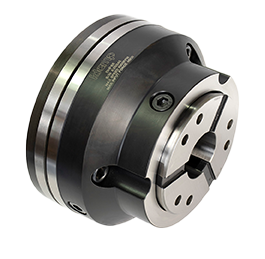
For many manufacturers, investing in a new workholding system is often viewed as a capital expenditure that needs to justify its cost. Yet one of the biggest misconceptions is that the return on investment (ROI) should only be measured against the purchase price.
In reality, the greatest value of modern workholding comes from the productivity improvements it unlocks across the entire machining process.
As UK manufacturers continue to face rising operating costs, labour shortages and increasing pressure to improve delivery performance, buyers are prioritising investments that provide measurable productivity gains with lower implementation risk.
According to Make UK and PwC UK's Executive Survey 2025, "more than half of companies say they will increase investment" in response to a long-term industrial strategy, while "more than four in ten believe such a strategy will lead to increased productivity." This reinforces the value of investments that improve setup efficiency, repeatability and machine utilisation. (Make UK, Executive Survey 2025)
Calculating workholding ROI therefore requires looking beyond hardware costs and understanding the long-term operational improvements that reliable, repeatable workholding can deliver.
Look Beyond the Purchase Price
The purchase cost of a chuck, vice or workholding fixture is only a small part of its total value.
A more accurate approach is to evaluate how a workholding system affects:
CNC machine setup time
Machine utilisation
Production throughput
Scrap and rework
Labour efficiency
Tool life
Automation readiness
Overall production reliability
Manufacturers that focus solely on initial purchase price often overlook the hidden costs created by slower setups, inconsistent clamping and unnecessary operator intervention.
The most successful investments improve machining performance every day, creating cumulative productivity gains throughout the life of the equipment.
Start With Setup Time
One of the easiest ways to calculate workholding ROI is by measuring setup reduction.
For example, if a machine currently spends 90 minutes setting up each job and a new workholding system reduces this to 45 minutes, every setup saves 45 minutes of productive machining capacity.
Across multiple changeovers every week, those savings quickly become significant.
Many UK manufacturers are now prioritising investments that reduce non-cutting time because improving spindle utilisation often delivers faster returns than simply increasing cutting speeds.
Calculate Increased Machine Utilisation
Machine tools only generate revenue while producing components.
Every reduction in setup time creates additional machining capacity without purchasing another machine.
When calculating workholding ROI, manufacturers should ask:
How many additional machining hours become available each week?
What is the value of those additional production hours?
Could those hours be used to increase throughput or accept additional work?
Increasing spindle utilisation is often one of the largest contributors to return on investment because it improves productivity using existing assets.
Factor in Quality Improvements
Reliable workholding does more than reduce setup time. Repeatable clamping improves machining stability, reducing variation between components and creating greater process consistency.
The result is lower scrap rates, reduced rework, improved dimensional accuracy, better surface finishes and increased confidence that every component will meet specification.
For manufacturers supplying aerospace, defence, medical and energy sectors, these quality improvements are often just as valuable as reducing cycle time because the cost of a quality failure can be significantly higher than the cost of slower production.
Include Labour Savings
Labour shortages continue to challenge manufacturers across the UK. As experienced machinists become harder to recruit, reducing dependency on manual setup processes becomes increasingly valuable.
Modern workholding systems help standardise setups, allowing operators to complete changeovers more quickly and consistently.
Labour savings may include:
Shorter setup times
Reduced operator intervention
Less troubleshooting
Simpler fixture changes
Faster training for new operators
While these savings may be difficult to measure individually, together they can have a significant impact on operational efficiency.
Consider Automation Readiness
One of the most overlooked aspects of workholding ROI is its contribution to future automation. Many manufacturers assume automation begins with robotics, but successful automation programmes often start with repeatable workholding.
By creating stable, consistent setups, manufacturers establish the process reliability needed for zero-point clamping, palletisation, machine tending, lights-out machining and standardised fixture libraries.
Rather than treating automation as a separate investment, many businesses view workholding as the first stage of a longer-term productivity strategy that reduces implementation risk while creating a platform for future growth.
Don't Forget Implementation Support
The highest-performing workholding system will only achieve its expected ROI if it is implemented correctly.
This is why application engineering support should form part of any investment calculation.
An experienced engineering partner can help manufacturers:
Select the correct workholding solution
Optimise component clamping
Improve tool access
Reduce setup complexity
Maximise machining stability
Standardise production processes
Reducing implementation risk often accelerates the return on investment by helping manufacturers realise productivity improvements sooner.
Measure the Right KPIs
To understand workholding ROI, manufacturers should monitor performance before and after implementation.
Useful KPIs include:
Setup time
Spindle utilisation
Overall Equipment Effectiveness (OEE)
Scrap rate
Machine uptime
Labour hours per setup
Production throughput
First-off acceptance rate
Tracking these metrics provides a much clearer picture of how workholding contributes to long-term operational performance.
Workholding ROI Is About Productivity, Not Hardware
Calculating workholding ROI is not simply a financial exercise. It is about understanding how workholding influences the entire machining process.
Manufacturers that reduce setup time, improve repeatability, increase spindle utilisation and standardise production processes often achieve returns that extend far beyond the initial equipment cost.
As UK manufacturers continue to invest cautiously, the strongest business cases are increasingly built around measurable productivity improvements, lower operational risk and long-term manufacturing resilience. Workholding plays a fundamental role in achieving all three.
At Kitagawa, we believe the best workholding investments are those that improve machining performance every day. Through reliable engineering, practical application support and automation-ready solutions, manufacturers can achieve measurable productivity gains that continue to deliver value long after the initial investment has been made.
For more information on How to Calculate Workholding ROI talk to KITAGAWA EUROPE LTD