 Get Listed


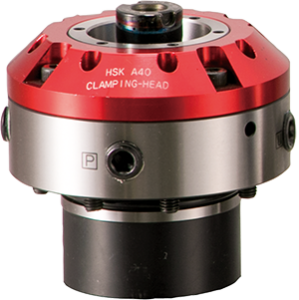
Choosing the right workholding system starts with understanding the machining application, not simply selecting a chuck, vise or fixture from a catalogue. Component geometry, material, cutting forces, tolerances and production volumes can all change what effective workholding looks like.
The right workholding system should hold the component securely while supporting accuracy, repeatability and efficient machining. It should also make setups practical for operators and provide enough flexibility for how production may develop in the future.
Start With the Component
The first consideration should be the component itself. Its size, shape and available clamping surfaces determine where and how it can be held without interfering with the machining operation.
Thin-walled or delicate components may require controlled gripping forces to avoid distortion. Larger or irregular components may need additional support, while complex parts can require workholding that provides greater cutter access.
This is why gripping force alone should never determine the right solution. Kitagawa’s technical guidance notes that excessive gripping force can deform a workpiece and reduce machining accuracy.
This application-led approach is supported by a 2025 review published in CIRP Annals, which found that fixture requirements are heavily influenced by “the size of components, their geometrical shape and the cutting forces being applied in the machining process.” (CIRP Annals, 2025)
Consider the Machining Operation
The forces generated during machining must also be considered when choosing a workholding system.
Heavy turning or milling operations require sufficient rigidity to prevent movement and vibration. Finishing operations may place greater emphasis on accuracy and repeatability, while 5-axis machining introduces additional requirements around accessibility.
The workholding must therefore complement both the component and the cutting process. A solution suitable for a straightforward turning operation may be inappropriate for machining multiple faces of a complex component.
How Important Is Tool Access?
Workholding should secure the component without unnecessarily restricting the cutting tool.
This becomes particularly important when manufacturers want to reduce the number of setups required to complete a part. Better access can allow more machining operations to take place while the component remains in the same position.
Kitagawa’s Swift Klamp system, for example, is designed to provide greater workpiece access for 5-axis machining while maintaining rigidity. Kitagawa's 2026 catalogue also specifies a 10-second work-holder exchange, demonstrating how workholding design can influence both accessibility and setup efficiency.
Match Workholding to Your Production Environment
The right workholding system also depends on how components move through production.
Important considerations include:
Batch size and production volume
Frequency of job changeovers
Required machining tolerances
Component material and geometry
Available machine capacity
Operator involvement
Future automation requirements
A dedicated fixture may make sense for stable, high-volume production. Manufacturers producing smaller batches and greater component variety may instead benefit from modular or quick-change workholding that can be reconfigured efficiently.
Think About Repeatability Between Setups
Accuracy is important, but manufacturers also need to reproduce that accuracy every time a job returns to the machine.
A repeatable workholding system can reduce indicating, adjustment and first-off correction during subsequent setups. This becomes increasingly valuable as production variety increases and operators regularly switch between components.
Standardising workholding can also reduce dependence on individual operator knowledge, helping create more consistent processes between machines, shifts and production teams.
Consider Setup Time, Not Just Cycle Time
Workholding decisions are sometimes made primarily around what happens while the machine is cutting. However, non-cutting time can have a significant impact on overall productivity.
If a fixture takes a long time to position, align or change, the machine is unavailable for productive machining during that period.
The relationship between workholding and setup efficiency is also recognised across industry. Mate Precision Technologies noted in 2025 that “the workholding you select will have a significant impact on your ability to reduce setup times.” (Mate Precision Technologies, 2025)
Quick-change jaws, modular fixtures and zero-point systems can therefore provide value by simplifying changeovers. The best solution is not necessarily the one that produces the shortest machining cycle, but the one that improves the complete production process.
Plan for Future Automation
Manufacturers do not need to be introducing robotics today for automation readiness to influence their workholding system choice.
Automated loading depends on components being positioned consistently and clamped reliably without repeated manual intervention. Standardised workholding can create that foundation before additional automation is introduced.
Kitagawa’s Swift Klamp illustrates this progression, supporting both manual and automatic work-holder exchange and being designed for integration into automated processes.
Look Beyond the Initial Purchase Price
The cheapest workholding system is not necessarily the most cost-effective option over its working life.
Setup time, maintenance, repeatability, scrap, operator intervention and machine utilisation can all influence total cost of ownership. Buyers should therefore evaluate what the workholding enables rather than comparing purchase prices alone.
Choose Workholding Around the Complete Application
There is no universal workholding system that is right for every CNC machining application.
The strongest decisions start by understanding the component, machine, cutting process, production volumes and future requirements together. This makes it possible to identify the solution that provides the right balance of rigidity, accuracy, accessibility and flexibility.
At Kitagawa, this application-led approach sits at the heart of workholding selection. Combining precision-engineered workholding with application engineering expertise helps manufacturers choose solutions around the complete machining process, rather than treating workholding as an isolated piece of equipment.
FAQs
What factors should you consider when choosing a CNC workholding system?
Consider the component geometry, material, cutting forces, tolerances, batch size, machine configuration, setup frequency and future automation requirements. The best workholding system should balance rigidity, accuracy, accessibility and efficient changeovers.
What are the main types of CNC workholding systems?
Common CNC workholding systems include power chucks, collet chucks, vises, soft jaws, dedicated fixtures, modular systems and zero-point workholding. The most suitable option depends on the machining operation and the component being produced.
How do you choose the best workholding method for a component?
Start with the component’s size, shape, available clamping surfaces and required tolerances. Then consider the cutting forces and tool access needed before selecting a workholding method capable of holding the part securely without causing distortion.
What is zero-point workholding and when should you use it?
Zero-point workholding uses repeatable locating and clamping points so fixtures or components can be positioned quickly and consistently. It is particularly useful where manufacturers have frequent job changes and want to reduce setup time while maintaining repeatability.
Should workholding be chosen with future automation in mind?
Yes. If automation may be introduced later, choosing repeatable and standardised workholding can make integration easier. Reliable positioning and consistent clamping provide the process stability needed for robotic loading, palletisation and unattended machining.
For more information on How Do You Choose the Right Workholding System for Your Application? talk to KITAGAWA EUROPE LTD