 Get Listed


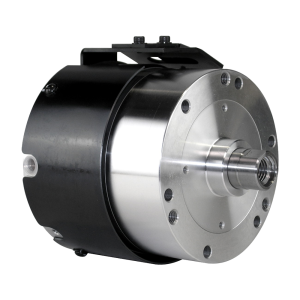
The right workholding choices directly affect how accurately, consistently and efficiently a CNC machine can produce components. A machine tool may offer excellent positioning accuracy and cutting capability, but its performance ultimately depends on the workpiece being located and held securely throughout machining.
Workholding should therefore be considered part of the complete machining process rather than simply a way of holding the component. The right solution can reduce setup time, improve repeatability and increase machine utilisation, while the wrong approach can introduce variation, restrict tool access and create unnecessary non-cutting time.
Why Does Workholding Affect Machining Accuracy?
Accurate machining starts with positioning the workpiece correctly and ensuring it remains stable under cutting forces.
Poor workholding choices can allow movement, vibration or distortion during machining. Excessive clamping force can also deform some components, meaning greater force does not necessarily produce greater accuracy.
This relationship is well established in manufacturing research. A 2025 review published in CIRP Annals describes workpiece clamping systems as “core elements of machining systems” and states that, as part of the accuracy path, they influence manufacturing process performance and efficiency. (CIRP Annals, 2025)
The objective is therefore stable, controlled and repeatable clamping appropriate to the component, material and machining operation.
Repeatability Matters as Much as Accuracy
Producing one accurate component is different from producing hundreds of components accurately.
Repeatable workholding ensures each workpiece returns to a consistent position, reducing variation between setups and operators. This can improve first-off confidence while reducing the need for repeated indicating and adjustment.
Kitagawa’s engineering approach reflects this focus. For example, its BR Series power chucks offer gripping accuracy of 0.01mm or less with formed jaws, while optional patented T-nuts can maintain 0.01mm or less repeatability after jaw changes.
The principle extends beyond an individual product: reliable workholding should make accuracy repeatable rather than dependent on repeated manual correction.
Workholding Choices Affect Setup Time
Productivity is not determined solely by how quickly the machine cuts. Time spent changing fixtures, indicating positions and preparing the next component also affects available machining capacity.
This makes setup reduction particularly important in high-mix environments with frequent job changes.
As Cutting Tool Engineering explained in 2025, “Reducing setup time between jobs and enabling a machine tool to spend more time producing chips boosts the bottom line.” The article highlights zero-point clamping as one workholding technology that can help achieve this. (Cutting Tool Engineering, 2025)
The best workholding choices therefore consider both what happens during machining and how efficiently the next setup can be prepared.
Tool Access Can Change the Entire Process
Workholding can also determine how much of a component can be machined in a single setup.
This is particularly important in 5-axis machining. Low-profile workholding can provide greater access to the component, allowing more faces to be machined without repositioning.
Effective workholding can help manufacturers achieve:
Fewer component setups
Better cutter accessibility
Reduced manual handling
More consistent datum relationships
Shorter overall production times
Greater potential for unattended machining
The productivity benefit comes from simplifying the complete process, rather than attempting to reduce individual cutting cycles alone.
Match the Workholding to the Application
There is no single workholding solution that delivers the best productivity and accuracy for every component.
Part geometry, material, cutting forces, batch size, tolerances and machine configuration all influence the correct approach. A high-volume turning application has different requirements from low-volume 5-axis machining or a component susceptible to distortion.
This is why workholding choices should begin with the application rather than the product. Understanding where the existing process loses time or accuracy allows manufacturers to identify whether different jaws, chucks, vises, zero-point systems or more specialised workholding could improve performance.
Workholding Also Creates the Foundation for Automation
Automation requires predictable processes. Robotic loading and unattended machining become much harder if workpieces cannot be located and clamped consistently.
Repeatable positioning and standardised workholding can therefore provide the foundation for future automation while delivering immediate benefits to manually loaded production.
This staged approach is particularly valuable for manufacturers seeking productivity improvements without introducing unnecessary implementation risk.
Better Workholding Should Improve the Complete Process
The impact of workholding choices should ultimately be measured beyond the workholding equipment itself.
Setup time, spindle utilisation, repeatability, component quality, tool access and operator intervention all provide a clearer picture of whether the chosen solution is improving production.
At Kitagawa, we believe effective workholding starts by understanding the complete machining application. Combining reliable, precision-engineered workholding with application expertise helps manufacturers create stable and repeatable processes that make better use of their existing machine capability.
FAQs
What is workholding in CNC machining?
Workholding is the method used to locate, support and secure a workpiece during CNC machining. The right workholding solution helps maintain accuracy, repeatability and stability while allowing efficient access for cutting tools.
How does workholding affect machining accuracy?
Workholding affects accuracy by controlling how consistently and securely a component is positioned during machining. Poor clamping or inadequate support can introduce movement, vibration or distortion, resulting in dimensional variation and inconsistent surface finishes.
What does proper workholding accomplish?
Proper workholding creates a stable and repeatable machining process. It can help reduce setup variation, improve component accuracy, increase tool access, shorten changeovers and make it easier to introduce automation or unattended machining.
What are the main types of CNC workholding devices?
Common CNC workholding devices include chucks, vises, collet chucks, soft jaws, fixtures, zero-point systems and specialist 5-axis workholding. The right option depends on component geometry, tolerances, production volume and the machining operation.
Can zero-point workholding improve CNC productivity?
Yes. Zero-point workholding can reduce the time required to position and change fixtures by using repeatable locating points. This can reduce setup time, improve consistency between jobs and increase the amount of available machine cutting time.
For more information on How Do Workholding Choices Impact Productivity and Accuracy? talk to KITAGAWA EUROPE LTD