 Get Listed


How to Reduce CNC Machine Setup Time
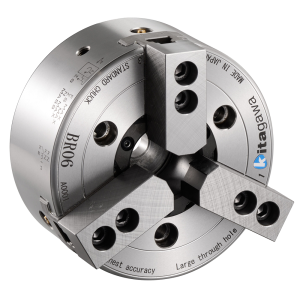
Reducing CNC machine setup time has become one of the fastest and most effective ways for manufacturers to improve productivity without investing in additional machine capacity.
As UK manufacturers continue to face labour shortages, rising operating costs, and increasing customer expectations around lead times, improving setup efficiency is becoming a competitive advantage rather than simply an operational improvement.
Recent UK manufacturing research shows buyers are increasingly prioritising investments that deliver measurable productivity gains, with setup reduction, repeatable workholding, and automation readiness among the highest-value opportunities.
While cutting faster can reduce cycle times by seconds, reducing CNC machine setup time can recover hours of lost production every week. The most successful manufacturers focus on creating stable, repeatable machining processes that maximise spindle utilisation while reducing operator intervention.
Why Setup Time Matters
Every minute a CNC machine spends being set up is a minute it is not producing parts. Across high-mix, low-volume production environments, setup time often represents one of the largest opportunities for improving overall equipment effectiveness (OEE).
Reducing CNC machine setup time not only increases machine utilisation but also improves delivery performance, production flexibility, and profitability.
An efficient setup process helps manufacturers achieve:
Increased spindle utilisation
Improved production throughput
Greater setup repeatability
Reduced operator dependency
Lower scrap rates
More predictable production scheduling
Better readiness for automation
For manufacturers struggling with skilled labour shortages, reducing setup complexity also makes it easier to achieve consistent machining performance across multiple operators.
Standardise Your Workholding
One of the biggest contributors to long setup times is inconsistent workholding.
Changing fixtures, manually indicating components, and adjusting clamping positions for every new job all add unnecessary non-cutting time.
Standardised workholding systems create repeatable setups that allow operators to position components quickly and accurately with minimal adjustment.
Solutions such as modular workholding, quick-change jaws, and zero-point clamping systems significantly reduce setup variation while improving machining consistency.
Rather than treating workholding as a simple accessory, manufacturers should view it as the foundation of machining performance. Stable, repeatable workholding improves setup efficiency while creating the consistency needed for future automation.
Reduce Manual Intervention
Many setup delays occur because operators repeatedly carry out manual tasks that could be simplified or eliminated altogether.
Examples include:
Re-indicating fixtures
Measuring setup positions
Manually aligning workpieces
Repeating clamping adjustments
Swapping multiple fixture components
Where possible, manufacturers should look for opportunities to standardise these processes using repeatable fixturing and common setup procedures.
Reducing manual intervention not only shortens CNC machine setup time but also improves process reliability and reduces the risk of operator error.
Prepare Jobs Offline
Another effective way to reduce CNC machine setup time is completing as much preparation as possible while the machine is still producing parts.
Offline preparation may include:
Building fixture assemblies
Preparing jaws
Loading tooling
Checking inspection equipment
Organising material
Reviewing machining programs
This approach minimises idle machine time and ensures operators are ready to begin machining immediately after the previous job finishes.
Design for Repeatability
Fast setups rely on repeatable processes.
Fixtures should be designed so that operators can reproduce identical setups every time without relying on individual experience or judgement.
Repeatability becomes increasingly important for manufacturers producing complex components for aerospace, defence, medical, and energy industries where process consistency directly affects product quality.
Stable clamping, accurate location points, and repeatable fixture positioning all contribute towards reducing CNC machine setup time while improving machining confidence.
Build Automation Readiness
Many manufacturers assume reducing setup time requires significant automation investment. In reality, automation often starts with creating consistent, repeatable machining processes.
Repeatable workholding enables:
Palletisation
Machine tending
Lights-out machining
Standardised fixture libraries
Faster job changeovers
By reducing variation during setup, manufacturers create the process stability needed for future automation without immediately investing in robotics.
This staged approach reduces implementation risk while delivering immediate productivity improvements.
Don't Overlook Application Engineering
Technology alone will not deliver shorter setup times. Successful implementation depends on selecting the correct workholding solution for the machining application and optimising the complete process.
Application engineering support can help manufacturers:
Select the correct clamping solution
Optimise workpiece positioning
Improve tool access
Reduce setup complexity
Increase machining stability
Improve long-term process reliability
This practical engineering support often delivers greater productivity improvements than simply replacing existing hardware.
Measure the Right Metrics
Reducing CNC machine setup time should be measured consistently.
Useful KPIs include:
Average setup time per job
Machine utilisation
First-off acceptance rate
Changeover duration
Spindle uptime
Operator intervention
Scrap and rework rates
Monitoring these metrics helps manufacturers identify bottlenecks and continuously improve machining performance.
Think Beyond Faster Setups
Reducing CNC machine setup time is not simply about saving minutes between jobs. It is about creating a more repeatable, reliable manufacturing process that supports long-term productivity.
Manufacturers that standardise workholding, reduce manual intervention, improve setup repeatability, and optimise machining processes are better positioned to increase throughput without increasing machine numbers.
As UK manufacturers continue to operate under labour constraints and rising operational costs, these improvements become increasingly valuable.
Research consistently shows that buyers are prioritising investments that reduce setup time, improve repeatability, and create a foundation for future automation because they deliver measurable improvements in productivity and operational resilience.
At Kitagawa, we believe reducing CNC machine setup time starts with understanding the complete machining process. By combining reliable workholding, practical application engineering, and repeatable process design, manufacturers can improve machining consistency, increase spindle utilisation, and build a stronger foundation for future growth.
For more information on How to Reduce CNC Machine Setup Time talk to KITAGAWA EUROPE LTD