 Get Listed


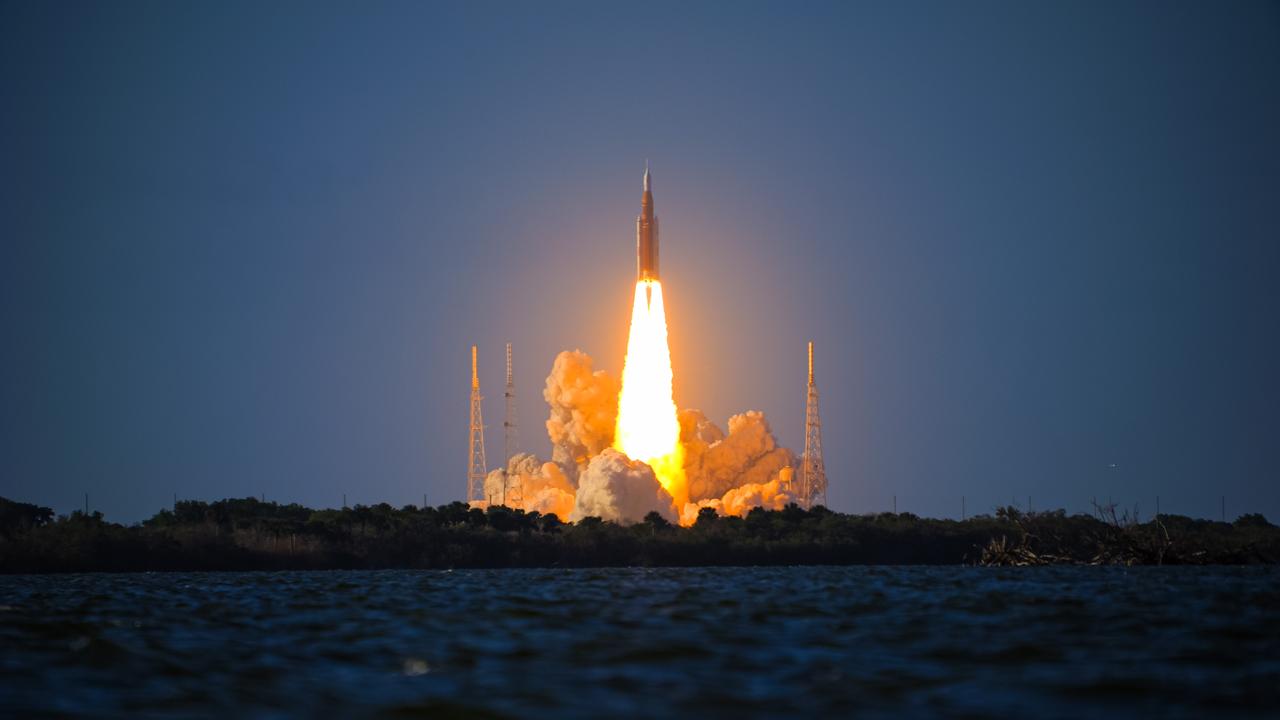
Image: NASA/Sam Lott
Supporting NASA Artemis II Through Precision Force Measurement
When NASA launched Artemis II, it marked the first crewed mission of the Artemis programme and a major milestone in humanity’s return to the Moon. However, long before any rocket leaves the launch pad, every component of the spacecraft must be thoroughly tested, verified, and validated to ensure it can withstand the extreme conditions of spaceflight.
Behind this critical preparation phase, force measurement technology from Interface played an important role in supporting engineers working on NASA’s Space Launch System (SLS).
Enabling Structural Validation of the Space Launch System
During the development and qualification of the SLS programme, Interface high-capacity load cells were integrated into advanced hydraulic test systems used to simulate the extreme forces experienced during launch, ascent, and mission-critical events.
These systems enabled engineers to apply controlled loads to rocket structures, replicating the intense mechanical stresses that occur during real-world flight conditions.
Interface load cells from the 1260, 1280, and 1290 series were used to capture highly accurate force data during these tests, ensuring that engineers could confidently assess structural behaviour under load.
Measuring Extreme Forces with High-Capacity Load Cells
The testing environment for space launch systems requires instrumentation capable of handling extremely high force ranges. Interface load cells measured forces reaching hundreds of thousands, and in some cases millions, of pounds.
This level of precision allowed engineers to:
- Validate structural integrity across key rocket components
- Measure stress and strain response under simulated launch conditions
- Confirm performance of critical structural assemblies
- Identify and address potential failure points before flight
By capturing accurate and repeatable force data, these sensors provided essential insight into how the rocket would behave under operational conditions.
Supporting Safer Human Spaceflight Through Ground Testing
Although Interface load cells are not part of the flight hardware aboard Artemis II, they were essential to the ground-based testing and qualification systems that helped prepare the Space Launch System for crewed missions.
This distinction is important: the reliability of human spaceflight depends heavily on extensive Earth-based validation. Every successful mission begins with precise measurement, rigorous testing, and verified performance long before lift-off.
Interface technology helped engineers better understand structural performance, ensuring that the SLS rocket meets the demanding safety and reliability requirements of crewed space exploration.
From Earth-Based Testing to Lunar Exploration
From advanced test facilities on Earth to missions destined for the Moon, Interface continues to support aerospace engineers with trusted force measurement solutions.
The Artemis programme represents a new era of space exploration, and accurate measurement remains at the heart of ensuring each system performs as designed under the most extreme conditions imaginable.
Frequently Asked Questions (FAQ)
What is a load cell?
A load cell is a precision sensor used to measure force or weight by converting mechanical force into an electrical signal.
Which Interface load cells were used in SLS testing?
The testing programme referenced the Interface 1260, 1280, and 1290 series high-capacity low-profile load cells.
What is the Space Launch System (SLS)?
NASA’s Space Launch System is a super-heavy-lift rocket designed to carry astronauts and cargo beyond low Earth orbit, including missions to the Moon under the Artemis programme.
Was Interface hardware flown on Artemis II?
No. Interface load cells were used in ground-based testing and qualification systems, not as part of the flight hardware.
Why is ground testing so important in space programmes?
Ground testing allows engineers to simulate extreme launch and flight conditions, ensuring structural integrity, safety, and performance before a mission is launched.
What is Artemis II?
Artemis II is NASA’s first planned crewed mission in the Artemis programme, intended to orbit the Moon and demonstrate key capabilities required for future lunar exploration.
For more information on How our load cells supported NASA Artemis II space launch system testing talk to Interface Force Measurements Ltd