 Get Listed

What is Ultrasonic Testing Used For?
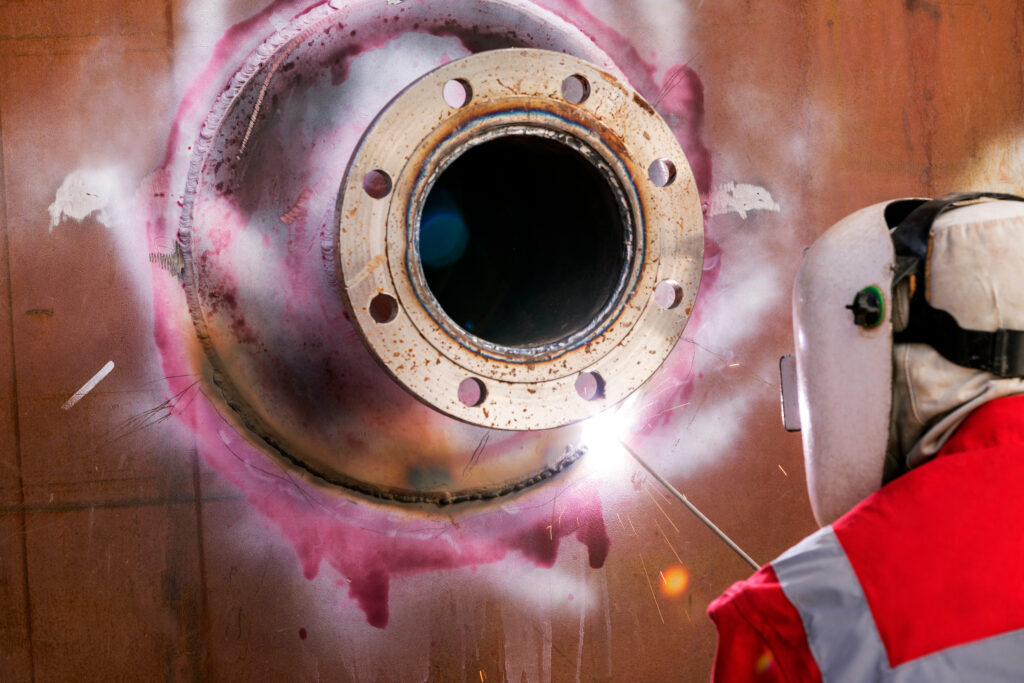
Ultrasonic testing, a highly valued technique within the non-destructive testing (NDT) industry, serves as an essential tool for evaluating the integrity and quality of materials without inflicting any harm. This detailed exploration highlights its multifaceted applications across diverse sectors, underlining its indispensable role in ensuring safety and reliability.
The Basics of Ultrasonic Testing
Ultrasonic testing operates on the principle of sending high-frequency sound waves into a material. These waves, upon encountering a boundary or discontinuity such as a flaw, crack, or void, reflect back. The time it takes for these echoes to return and their strength are recorded and analysed. This technique, grounded in the science of sound wave propagation, allows us to glean crucial information about the material’s internal structure without any invasive procedures. The sound waves are generated using specialised equipment, including transducers and receivers, which are carefully calibrated to ensure accuracy. The versatility of this method lies in its ability to be applied to a vast array of materials, from metals to plastics, and its capacity to detect a wide range of defects, including cracks, voids, and inclusions. The data obtained from ultrasonic testing is invaluable, offering insights into the material’s properties, such as thickness, density, and homogeneity, which are crucial for assessing its overall health and integrity.
Ensuring Structural Integrity in Construction
In construction, the safety and durability of structures are of utmost importance. Ultrasonic testing is instrumental in evaluating the condition of key construction elements like steel beams, welded joints, and concrete foundations. This technique plays a vital role in identifying internal defects that could potentially compromise the structural integrity of buildings and infrastructures. For instance, in steel beams, ultrasonic testing helps in detecting internal cracks or flaws that are not visible to the naked eye.
In the world of welding, it ensures that the welds holding together critical parts of a structure are devoid of defects that could lead to failure. The method is also invaluable in the maintenance and inspection of older structures, where it helps in assessing the extent of degradation over time. By providing a thorough and accurate analysis of these elements, ultrasonic testing ensures that structures not only meet the required safety standards but also helps in prolonging their lifespan by facilitating timely maintenance and repairs.
Vital for Aerospace and Aviation Safety
The aerospace and aviation industries are characterised by an uncompromising commitment to safety. Here, ultrasonic testing is a critical tool for conducting thorough inspections of various aircraft components. It plays a pivotal role in the routine maintenance and safety checks of aeroplanes, ensuring that every part, from the fuselage to the engines and landing gear, is free from defects that could lead to catastrophic failures. The method is particularly effective in detecting hairline cracks and other minute imperfections in the complex alloys and composite materials commonly used in aircraft manufacturing. In engine components, ultrasonic testing helps in identifying signs of wear and tear or damage from foreign objects. The landing gear, subjected to immense stress during takeoff and landing, is regularly inspected using ultrasonic testing to ensure its structural soundness. These inspections are not only crucial for maintaining the aircraft’s airworthiness but also for the safety of passengers and crew. As aviation technology evolves, the role of ultrasonic testing in ensuring the safety of these sophisticated machines becomes increasingly significant.
Non Destructive Testing Services
Monitoring Pipeline Health in the Oil and Gas Sector
In the oil and gas industry, the condition of pipelines is a matter of significant concern, given the potential environmental and economic repercussions of pipeline failures. Ultrasonic testing is extensively used for the regular monitoring and maintenance of these pipelines. This method is particularly effective in detecting issues like corrosion and erosion, which are common in pipelines due to the harsh chemicals and environmental conditions they are exposed to. Early detection of such defects is crucial in preventing leaks or bursts that could have devastating environmental impacts and result in costly downtime and repairs. Ultrasonic testing is also employed in the construction phase of pipelines to ensure that the welding and materials used meet the necessary standards. In offshore environments, where pipelines are subjected to the corrosive effects of seawater and extreme pressures, ultrasonic testing is invaluable in monitoring their condition and ensuring their longevity. This method not only helps in maintaining the operational efficiency of the pipelines but also plays a critical role in safeguarding the environment and public safety.
Quality Assurance in Manufacturing
In the manufacturing sector, ultrasonic testing is a key tool for ensuring the quality and reliability of a wide range of products. This method is employed across various industries, from automotive to electronics and medical devices. In the automotive industry, for instance, ultrasonic testing is used to inspect critical components like engine parts, ensuring they are free from internal defects that could lead to failures. In electronics, it helps in detecting flaws in components like circuit boards and connectors, which are essential for the reliable operation of electronic devices. In the realm of medical device manufacturing, where the stakes are incredibly high, ultrasonic testing ensures that life-saving equipment and implants are of the highest quality and free from defects. This method offers manufacturers a reliable and efficient way to maintain stringent quality control standards. By identifying defects early in the manufacturing process, it helps in reducing waste and improving overall product quality. The ability of ultrasonic testing to provide detailed insights into the internal structure of materials without causing damage or requiring disassembly makes it an invaluable tool in the manufacturing process.
Ultrasonic Testing Service
Vital Role in Power Generation
In the power generation sector, particularly in nuclear energy plants, the integrity and reliability of components are of critical importance. Ultrasonic testing is extensively used to inspect key elements like reactor vessels, turbines, and cooling systems. These components are often subjected to extreme conditions, including high temperatures and pressures, and their failure could have catastrophic consequences. Ultrasonic testing helps in detecting signs of wear, corrosion, and other forms of degradation that could compromise their performance. In turbines, for example, it is used to identify cracks or other defects in the blades and other critical parts, ensuring their structural integrity. In reactor vessels, ultrasonic testing plays a crucial role in monitoring the condition of the vessel walls and other components, detecting any signs of degradation that could pose a risk to the safety of the plant. This method is not only essential for maintaining the operational efficiency of power plants but is also critical for ensuring the safety of workers and the public.
Applications in Marine Engineering
In the field of marine engineering, the maintenance and safety of vessels are heavily reliant on ultrasonic testing. This method is used to inspect various parts of ships, including the hull, propellers, and engine components. Detecting defects in these parts, especially those below the waterline, is essential for maintaining the seaworthiness and safety of the vessel. Ultrasonic testing helps in identifying issues like corrosion, cracks, and other structural defects in the hull, which could compromise the vessel’s integrity. In propellers, it is used to detect cracks and other defects that could affect the vessel’s performance and safety. The method is also employed in the maintenance of offshore structures like oil rigs, where it helps in ensuring the structural integrity of these structures in harsh marine environments. Ultrasonic testing is a vital tool in the marine industry, not only for maintaining the operational efficiency of vessels and structures but also for safeguarding the lives of crew and passengers.
Enhancing Ultrasonic Testing with Advanced Technologies
Integration of Artificial Intelligence
The integration of Artificial Intelligence (AI) in ultrasonic testing represents a transformative shift in the NDT industry. AI can analyse data from ultrasonic tests with greater speed and accuracy than traditional methods. By utilising machine learning algorithms, AI systems can identify patterns and anomalies that might be missed by human inspectors. This capability not only speeds up the inspection process but also enhances the reliability of the results, thereby improving safety measures across all applications.
Automation and Robotics in Ultrasonic Testing
Automation and robotics are increasingly playing pivotal roles in ultrasonic testing, particularly in environments that are hazardous or difficult for humans to access. Automated ultrasonic testing robots can perform scans on complex geometries and large structures such as bridges or aircraft fuselages. This not only increases the efficiency of inspections but also reduces human exposure to dangerous working conditions. Robotics in ultrasonic testing ensures consistent and repeatable results, which are crucial for high-quality inspections.
Broadening Applications of Ultrasonic Testing
Role in Renewable Energy
In the burgeoning sector of renewable energy, ultrasonic testing is vital for ensuring the integrity of components such as wind turbine blades and solar panel installations. Regular inspections can detect potential failures early, which is critical for maintaining continuous energy production and minimising downtime. As the demand for renewable energy solutions grows, so does the reliance on ultrasonic testing to guarantee that infrastructure is robust and reliable.
Ultrasonic Testing in Rail Industry
The rail industry benefits significantly from ultrasonic testing, particularly in the maintenance of rail tracks and rolling stock. Detecting flaws in the metal tracks and wheels can prevent derailments, ensuring passenger and freight safety. Ultrasonic testing provides a non-invasive method to assess the wear and tear of rails and other components, aiding in predictive maintenance schedules that keep rail systems operating smoothly.
Non destructive testing Services
Innovation and Development in Ultrasonic Equipment
Advances in Transducer Technology
The development of more sophisticated ultrasonic transducers has enhanced the precision of testing. Modern transducers can generate and receive higher frequency sound waves, which are capable of detecting finer defects. This improvement is crucial for industries where even the smallest flaw can lead to significant failures, such as in aerospace and high-precision manufacturing.
Portable and Wireless Ultrasonic Devices
The advent of portable and wireless ultrasonic testing devices has revolutionised field inspections. These devices allow for greater flexibility and ease of access, particularly in confined or remote areas. Technicians can now perform tests and receive real-time data analysis on-site, which greatly accelerates the decision-making process regarding material integrity and necessary repairs.
Strengthening Safety and Quality Assurance
Enhancing Training and Certification
As ultrasonic testing technology advances, the need for specialised training and certification becomes more critical. Ensuring that technicians are well-trained in the latest ultrasonic testing techniques is essential for maintaining high standards of safety and accuracy. Certification programs need to be updated regularly to include training on new equipment and techniques, preparing technicians to meet the challenges of modern material testing.
Setting Global Standards in Ultrasonic Testing
The globalisation of industries calls for the standardisation of ultrasonic testing procedures to ensure uniform quality and safety standards worldwide. Establishing and adhering to international norms can facilitate smoother global operations, especially for companies that operate across borders. Standardised practices help in minimising discrepancies in test results, regardless of where the testing is conducted.
Embracing Eco-Friendly Practices in Ultrasonic Testing
Sustainable Approaches in NDT
In the quest for sustainability, the field of ultrasonic testing is also adopting eco-friendly practices. This includes reducing energy consumption and minimising waste during testing processes. Companies are now exploring ways to use greener technologies and recycle used materials wherever possible. For instance, the use of biodegradable couplants in ultrasonic testing is gaining traction. These couplants, essential for conducting sound waves between the transducer and the test material, traditionally contain chemicals that can be harmful to the environment. Biodegradable options provide a safer alternative, reducing the ecological footprint of testing operations.
Impact on Environmental Compliance
Furthermore, as environmental regulations become stricter, the ability of ultrasonic testing to adapt to eco-friendly standards plays a crucial role in compliance. This not only helps companies avoid hefty fines but also boosts their reputation as responsible corporate citizens. By embracing sustainable practices, the ultrasonic testing industry not only ensures the safety and integrity of materials but also contributes to the global effort of environmental conservation, marking a significant step towards more sustainable industrial operations.
Ultrasonic testing
The Future of Ultrasonic Testing
The field of ultrasonic testing is constantly evolving, with new advancements and innovations expanding its capabilities and applications. The development of more sophisticated equipment, such as Phased Array Ultrasonic Testing (PAUT) and Time-of-Flight Diffraction (TOFD), is providing more detailed and accurate inspections. These advanced techniques offer enhanced imaging capabilities, allowing for more precise localisation and characterisation of defects. They are particularly useful in complex structures and materials, where traditional ultrasonic testing methods may have limitations. The integration of digital technologies and automation is also transforming ultrasonic testing, making it more efficient and reducing the likelihood of human error. These technological advancements are opening up new possibilities for ultrasonic testing, enabling it to be applied in more challenging and diverse environments. The future of ultrasonic testing looks promising, with its increasing importance in ensuring the safety, quality, and reliability of materials and structures across various industries.
Ultrasonic Testing in the Automotive Industry
The automotive industry relies heavily on ultrasonic testing to ensure the safety and reliability of vehicles. This non-destructive testing method is crucial for inspecting various components, including engine parts, transmission systems, and body panels. In engine parts, ultrasonic testing can detect internal flaws such as cracks or inclusions that could lead to catastrophic failures if left unchecked. Similarly, in transmission systems, this technique helps identify wear and tear, ensuring that the components function smoothly and efficiently. Ultrasonic testing is also employed during the manufacturing process to ensure the quality of welds and joints in vehicle frames and bodies. By detecting defects early, manufacturers can prevent potential issues that could compromise the vehicle’s safety and performance. Additionally, ultrasonic testing is used in quality control for materials like composites and plastics, which are increasingly used in modern vehicles to reduce weight and improve fuel efficiency. The ability to provide precise and reliable data makes ultrasonic testing an indispensable tool in the automotive industry, contributing to the production of safer and more efficient vehicles.
Advancements in Ultrasonic Testing for Additive Manufacturing
Additive manufacturing, commonly known as 3D printing, has revolutionised the way products are designed and manufactured. However, ensuring the quality and integrity of 3D-printed components presents unique challenges. Ultrasonic testing has emerged as a vital technique for inspecting these components, particularly in high-stakes industries such as aerospace, medical devices, and automotive. One of the significant advancements in ultrasonic testing for additive manufacturing is the development of high-resolution transducers capable of detecting minute defects in complex geometries. These advanced transducers can penetrate the dense layers of 3D-printed materials, providing detailed images of internal structures. This capability is essential for identifying issues such as voids, delaminations, and residual stresses that could affect the component’s performance and longevity. Furthermore, the integration of ultrasonic testing with advanced data analysis techniques, such as machine learning and AI, enhances the accuracy and efficiency of inspections. These technologies can quickly process large volumes of data, identifying patterns and anomalies that might be overlooked by traditional methods. As additive manufacturing continues to evolve, the role of ultrasonic testing in ensuring the quality and reliability of 3D-printed components will become increasingly critical, supporting the growth and adoption of this innovative manufacturing technology.
Conclusion
Ultrasonic testing is a fundamental aspect of ensuring safety and quality across a wide array of industries. Its non-invasive nature, combined with its ability to provide detailed insights into the internal structure of materials, makes it an invaluable tool. The versatility and reliability of ultrasonic testing are crucial in a world where the integrity of materials and components is more important than ever. As technology continues to advance, the role of ultrasonic testing in maintaining safety standards and enhancing quality assurance is only set to become more significant, cementing its status as an indispensable technique in the NDT industry. Get in touch with the team at Format NDT to find out more.
For more information on What is Ultrasonic Testing Used For? talk to Format NDT Ltd