 Get Listed

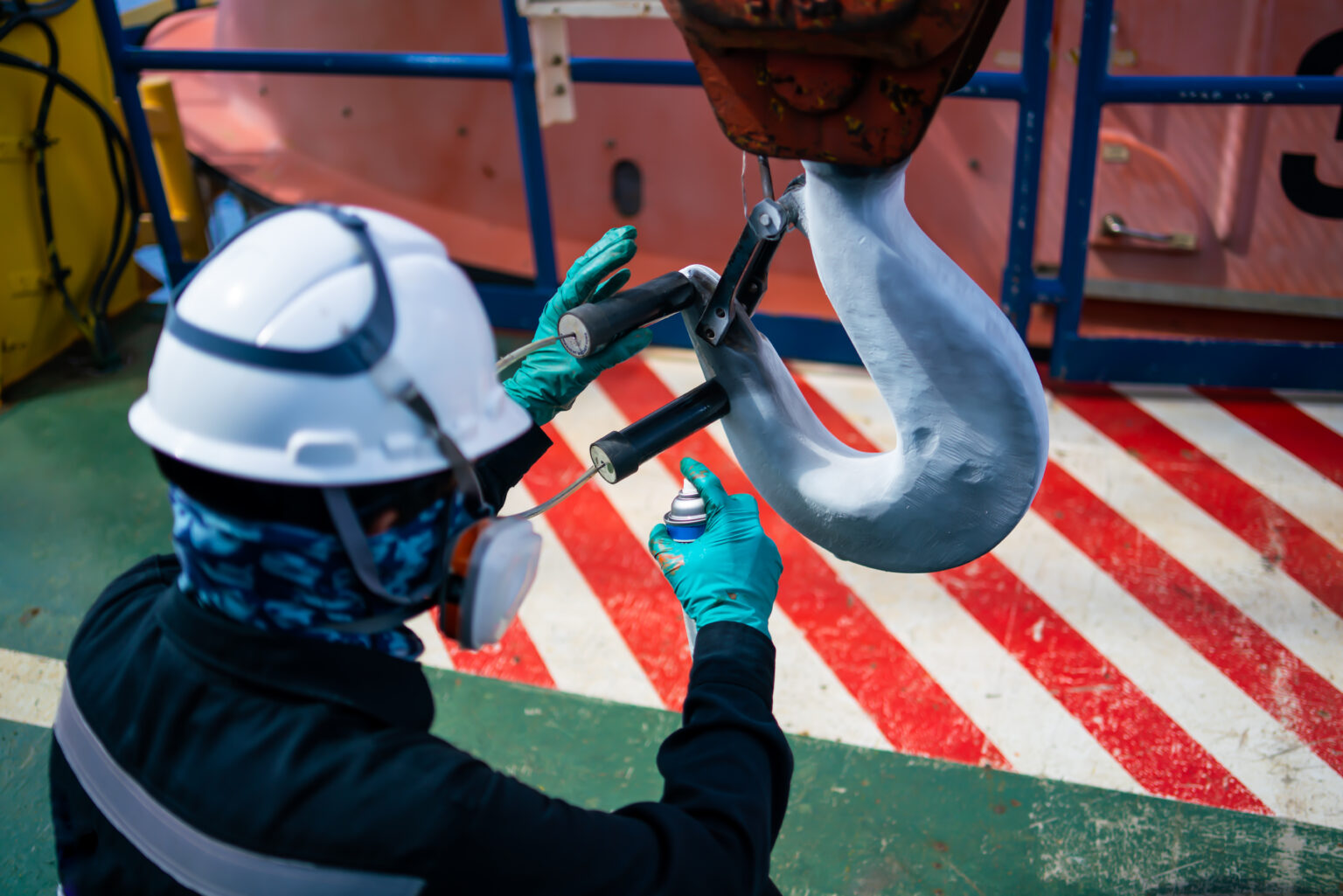
In the vast spectrum of engineering and material science, the pursuit of perfection is an ongoing journey. Each stride toward innovation demands a deep understanding and assessment of the materials used. Ensuring the integrity and safety of these materials and components is not just a requisite but a responsibility. Among the myriad of testing techniques stands the venerable Magnetic Particle Inspection (MPI). MPI Testing is more than just a process—it’s a symphony of science and artistry that unveils hidden flaws, safeguarding the very structures and machines we rely upon daily. This blog will guide you through the nuanced world of MPI, exploring its foundational principles, its diverse applications, and its pivotal significance in today’s advanced engineering landscape.
Magnetic Fields and Flaw Detection: The Underlying Principle
At the core of MPI is a concept that has fascinated humanity for centuries: magnetism. When you introduce a magnetic field to a ferromagnetic material, in a perfect scenario, this field travels uniformly. However, introduce a flaw, such as a surface or near-surface crack, and this magnetic harmony is disrupted, resulting in what experts term as “flux leakage.”
This leakage, though subtle, doesn’t remain invisible for long in the hands of an expert. When fine magnetic particles are introduced to the material’s surface, they are instantly drawn to these areas of flux leakage. By clustering around this disruption, these particles create a visible pattern, highlighting the flaw in all its dimensions—providing crucial insights about its size, shape, orientation, and potential impact.
Choosing the Right Medium: Wet vs. Dry MPI
The magnetic particles used in MPI aren’t one-size-fits-all. Depending on the scenario, these particles can be dry or can be suspended in a liquid medium. Both these variants come with their distinct set of advantages and applications:
Dry Particle Inspection:
At its essence, this method involves directly applying dry magnetic particles onto the component’s surface. It might seem simple, but its applications are profound. Being highly portable, dry particle inspection is often the go-to choice for on-the-spot inspections, especially in situations where hauling equipment isn’t feasible. Moreover, for rough surfaces or massive components like large castings or forgings, dry particles can often provide clearer, more discernible results.
Wet Particle Inspection:
On the flip side, there’s the wet particle inspection. Here, magnetic particles are delicately suspended in a liquid carrier. This can be water or oil-based, depending on the specific requirements of the test. The liquid medium offers the particles unparalleled mobility, letting them flow seamlessly over the surface and accumulate more accurately around discontinuities. Because of the heightened sensitivity and precision it offers, wet particle inspection is the method of choice in laboratory settings or situations demanding meticulous detail.
The Art of Magnetisation: Techniques in MPI
Creating the appropriate magnetic field is both a science and an art. The magnetisation has to be precise; otherwise, flaws may remain hidden. Two predominant techniques come into play in the world of MPI:
Direct Magnetisation:
In this straightforward method, an electric current is passed directly through the component under inspection. The ensuing magnetic field that arises from this current flow is adept at detecting discontinuities perpendicular to the flow. For components that boast simple geometric shapes or for situations where direct access to the component is feasible, direct magnetisation is often the preferred route.
Indirect Magnetisation:
Sometimes, components come with complex geometric shapes or are simply too vast for direct magnetisation. Enter indirect magnetisation. Instead of being passed through the component, the magnetic field here is induced by an external source—this could be a coil or a magnetic yoke. This indirect approach provides a lot more flexibility. The induced magnetic field is multidirectional, allowing for the detection of flaws in various orientations, catering to components of all shapes and sizes.
magnet testing
Challenges and Considerations in MPI
No testing technique is devoid of challenges, and MPI is no exception. As powerful as it is, there are considerations and potential hurdles to be aware of:
Material Limitations:
MPI, with all its prowess, is tailored specifically for ferromagnetic materials. This means materials like aluminium, copper, or other non-ferrous materials, are outside its diagnostic purview.
Surface Access:
MPI thrives on the surface. It’s a master at detecting surface and near-surface flaws. However, if a flaw or discontinuity is nestled deep within, beyond the reach of the effective magnetic field, MPI might not detect it.
Demagnetisation:
Once an MPI test concludes, there’s another crucial step—demagnetisation. Especially for components destined for magnetically-sensitive applications, any residual magnetic fields can be problematic. Hence, ensuring a component is demagnetised post-inspection is essential.
MPI in Modern Applications
The beauty of MPI lies in its versatility. Its prowess in flaw detection makes it indispensable across a spectrum of industries:
Aerospace and Aviation:
Aircraft components are masterpieces of engineering. However, they’re also subjected to intense stresses and pressures. Ensuring their integrity is paramount. Here, MPI plays a pivotal role, inspecting everything from landing gears, engine components, to other critical parts that ensure safe skies.
Automotive Industry:
Cars are more than just machines; they’re a meld of artistry and precision engineering. And at the heart of this precision lies MPI. Whether it’s inspecting engine blocks, gear systems, or transmission components, MPI ensures our drives are safe, efficient, and reliable.
Railways:
The sheer size of railways might make them seem invincible, but they’re not immune to wear and tear. Tracks, wheels, axles—each component faces its set of stresses. Regular MPI inspections ensure any potential flaws are caught early, averting mishaps and ensuring millions travel safely.
Construction:
The edifices that touch our skylines are more than just brick and mortar; they’re a testament to human ingenuity. For structures that incorporate reinforced steel or large ferromagnetic components, MPI is a silent guardian, ensuring each beam, bolt, and joint is flawless.
The Dual Nature of MPI
MPI stands at the crossroads of logic and intuition, a compelling fusion of scientific rigour and interpretive artistry. Its foundation is deeply rooted in the principles of magnetism and physics, offering a structured, methodical approach to flaw detection. However, successfully interpreting the results, understanding the nuanced patterns formed by the magnetic particles, and deducing the nature and extent of the flaws, is where the artistry comes into play.
Inspectors proficient in MPI not only possess an in-depth knowledge of the technique but also a keen eye for detail and an innate ability to discern subtle patterns and inconsistencies. Their expertise, honed over years of practice, allows them to transform raw data into meaningful insights. It’s a dance of precision and intuition, of spotting what’s out of place and interpreting what it means for the material’s overall integrity.
This balance is what makes MPI a cornerstone in the world of non-destructive testing. While other methods and technologies have their respective merits, MPI’s blend of versatility, accuracy, and immediacy is unmatched, especially when it comes to ferromagnetic materials.
Furthermore, as we venture deeper into an era defined by innovations and rapid advancements, the role of MPI is only set to grow. New materials, more intricate designs, and higher demands on performance will invariably push the boundaries of what we expect from our engineering marvels. In such a landscape, the ability to detect and address flaws quickly and accurately will be of paramount importance.
In wrapping up, it’s essential to appreciate the harmonious duality of Magnetic Particle Inspection. It serves as a powerful reminder of how science and art, when brought together, can achieve outcomes that neither could attain in isolation. As industries evolve and our dependence on reliable, high-performance materials increases, the “dance” of MPI—between its rigorous methodologies and the nuanced art of flaw interpretation—will continue to play a pivotal role in ensuring safety, reliability, and excellence in engineering. Get in touch with the team at Format NDT to find out more about our MPI testing services.
For more information on Unmasking Flaws: The Science and Art of MPI Testing talk to Format NDT Ltd