 Get Listed


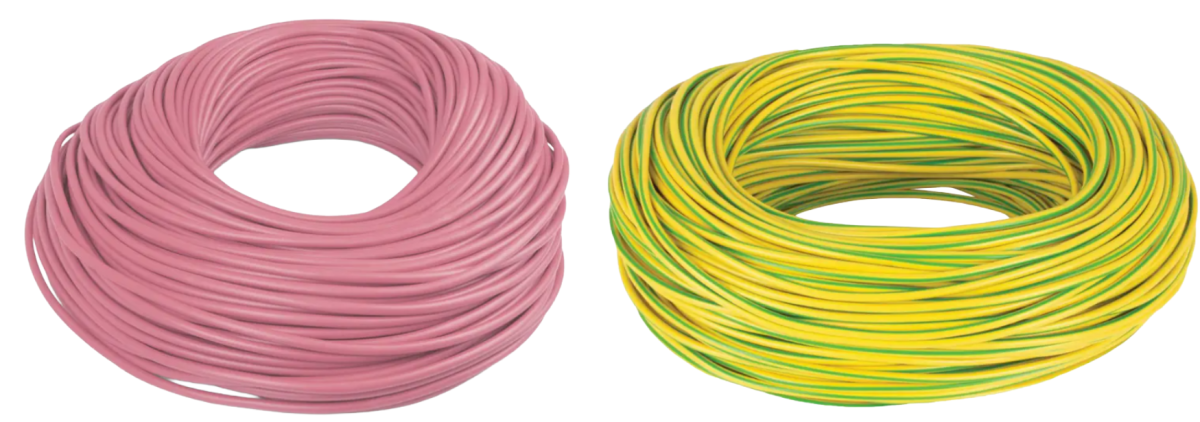
In electrical systems, earthing is fundamental to both safety and operational efficiency. There are two primary types of earthing - functional earth and protective conductor (PE), which serve distinctly different purposes.
Clearly understanding these roles, along with their associated colour codes is essential for ensuring system reliability and safety.
Functional Earth
BS 7671:2018+A2, states, functional earth conductors must be explicitly identifiable to prevent confusion with other earthing arrangements.
The standard specify the use of pink sleeving for functional earths (clause 514.4& Table 51), extending to fire alarm installations.
This recent amendment ensures that functional earths are readily distinguishable from other conductors. This reduces the risk of misconnections and safeguarding proper equipment operation.
The pink coloured sleeving is applied to the insulation of the conductor, making it visibly distinct from the other wires within the electrical installation. This has particular importance in complex systems where multiple types of earthing are present as technicians and engineers can identify easily.
This is especially relevant in fire detection and fire alarm systems, where extra-low voltage (ELV) circuits also require functional earths to be identified with pink sleeving to ensure clarity and proper function of these critical safety systems.
Protective Conductor (PE)
A protective conductor is primarily used for safety, specifically to protect against electric shock. The PE ensures that exposed conductive parts of electrical equipment do not reach dangerous voltage levels during fault conditions.
It achieves this by creating a path for fault currents to flow directly to earth, which triggers protective devices like circuit breakers to disconnect the faulty circuit.
The colour coding for protective conductors is also clearly defined in standards to prevent misidentification. BS 7671 mandates that protective conductors must be identified with green and yellow sleeving, with the most common use being Circuit Protective Conductors (CPC). This dual colour scheme is internationally recognised and helps ensure that protective conductors are easily distinguishable from other types of wiring. The green and yellow sleeving must be consistent throughout the entire length of the protective conductor. This uniformity is crucial during installation and maintenance, allowing for quick identification and verification of the protective conductor’s presence and condition.
Understanding the differences between functional earth and protective conductors, and the respective colour codes, is crucial for the design, installation, and maintenance of electrical systems.
These standards help prevent errors and ensure that electrical systems perform as intended, safeguarding both equipment and users.
In fire detection and fire alarm systems, adhering to these colour coding requirements is essential for maintaining the reliability and effectiveness of these critical safety systems.
For more information on the differences in earth sleeving contact your Account Manager. You can also head to the FIA website for the technical bulletin:
For more information on Differences between functional earth and protective conductor talk to Firesense Limited