 Get Listed


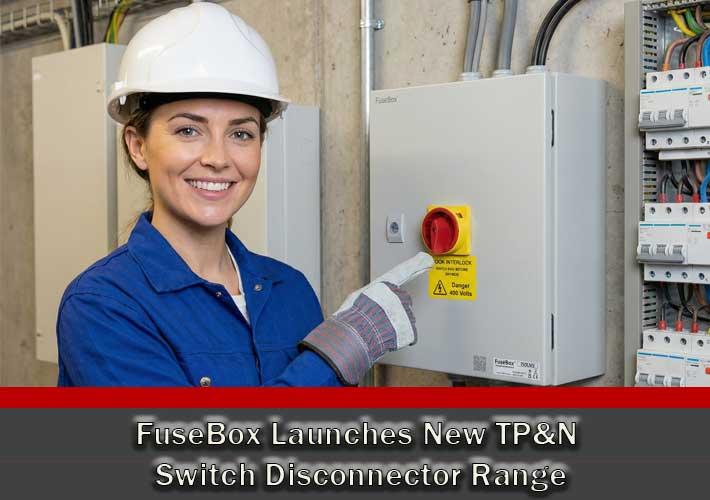
FuseBox has expanded its industrial circuit protection range with two new metal-bodied isolation solutions: a TP&N switch disconnector (isolator) and a TP&N fused switch. Both are supplied in robust IP65 steel enclosures with a door-interlocked handle.
Put simply, these units provide clear, safe isolation at the point of use, with the fused version also offering integrated fuse protection for mixed loads. If you are specifying switch disconnectors, isolators, switch fuses or fused switches for plant rooms, workshops, external plant, small industrial units or commercial distribution, this range is designed to make installation straightforward and isolation procedures clear.
What’s new in the FuseBox range?
Both products are TP&N (three-pole plus neutral) solutions designed for effective disconnection and secure isolation. FuseBox lists an AC-23A duty rating across multiple current options, making them well suited to switching and isolating higher-current equipment under load, as commonly found in commercial and industrial settings.
Available options include:
-
TP&N switch disconnector (isolator): 32A, 63A, 80A, 100A and 125A
-
TP&N fused switch: 32A, 63A, 80A and 100A
This spread of current ratings makes it easier to standardise on a single enclosure style across multiple duties, whether you are isolating a small sub-board feed, a rooftop unit, a commercial extractor or a piece of workshop machinery.
Switch disconnector or fused switch: which should you specify?
A switch disconnector (isolator) is used where you need a dedicated means of isolation and lock-off, but overcurrent protection is provided elsewhere, for example upstream at a distribution board. It is the typical ‘local isolator’ for maintenance and emergency shut-down.
A fused switch is the right choice when you want isolation and local fuse protection at the point of use. FuseBox’s fused option combines a rotary isolator with integrated fuse protection, helping protect equipment where dependable overload protection is required.
Fuse selection is aligned with the rating: the 32A fused switch is supplied with 10 × 38 gG fuses, while the 63A to 100A versions use 22 × 58 gG fuses.
Designed for real-world installs
Both units use a durable 1.2mm steel enclosure with a powder-coated RAL7035 finish, built to withstand knocks while maintaining a strong seal in more demanding environments.
Practical features include:
-
IP65 metal enclosure for added protection on tougher sites
-
removable gland plates at the top and bottom for flexible, tidy cable entries
-
red/yellow rotary handle for clear ON/OFF indication at a glance
-
mechanical door interlock in the ON position to prevent access when energised
-
padlockable in the OFF position (up to three padlocks) to support lock-off and permit-to-work procedures
-
generous internal space for easier termination and cable dressing
FuseBox also specifies an operating temperature range of –25°C to +55°C, which helps in environments with wider temperature swings.
Built to work with the wider FuseBox range
These products are positioned as compatible with FuseBox main switches and TP&N consumer units, making them a neat fit for contractors who already standardise on FuseBox boards and protective devices.
If you are upgrading local isolation on commercial plant or specifying a switch-fused solution for protected isolation, this new range offers consistent IP65 metal enclosures, clear lockable switching and sensible internal space across multiple current ratings.
Frequently asked questions
What is the difference between a switch disconnector and a fused switch?
A switch disconnector (isolator) is used to isolate a circuit safely but does not provide overcurrent protection. A fused switch combines isolation with integrated fuse protection, so the circuit can be protected locally as well as isolated.
When should I use a fused switch instead of a standard isolator?
A fused switch is typically used when additional protection is needed at the point of isolation, such as for plant, machinery or sub-circuits where upstream protection may not be suitable or easily accessible.
Are these FuseBox units suitable for outdoor installations?
Yes. Both products are housed in IP65-rated metal enclosures, making them suitable for outdoor use and harsher environments such as plant rooms, workshops and loading bays.
Can the enclosure be locked off for safe maintenance?
Yes. The rotary handle can be padlocked in the OFF position, and the door is mechanically interlocked when the switch is ON, helping support safe isolation and lock-off procedures.
What current ratings are available?
The switch disconnector range covers 32A to 125A. The fused switch range covers 32A to 100A, allowing installers to select the correct rating for a wide range of applications.
Do the fused switches come supplied with fuses?
Yes. The fused switch units are supplied with appropriately sized gG fuses matched to the selected current rating, helping simplify specification and installation.
Where are these products typically used?
They are commonly used for local isolation of three-phase equipment such as HVAC systems, motors, commercial machinery, distribution feeds and external plant.
For more information on FuseBox Launches New TP&N Switch Disconnector Range talk to Expert Electrical Supplies Ltd