 Get Listed



With cranes, tractors, and stacks of steel boxes, a container terminal looks mechanical, but what actually moves the cargo is electronics.
Ports are among the fastest automating environments in transport, and the pressure is coming from two directions at once. Trade volumes keep climbing, with global containerised trade up more than 6% in 2024.
Emissions rules are tightening at the same time. Grand View Research values the smart port market at USD 4.0 billion in 2025 and forecasts USD 39.1 billion by 2033, a compound annual growth rate of 34.3%.
Process automation was the largest technology segment at 38.1% of 2025 revenue. That investment lands as hardware: controllers, cabinets, displays, sensors, and radios, most of it built by OEMs who need a manufacturing partner that can handle low volumes, long lifecycles, and harsh environments at the same time.
Here are 12 systems doing the work, each with a real product example.
Moving the boxes: Automation and control
1. Port automation control systems
This layer decides what moves where. Kalmar One is an equipment-agnostic automation platform that coordinates automated stacking cranes, automated rubber-tyred gantry cranes, terminal tractors, straddle carriers, and automated guided vehicles through a single interface. Electronically, this is industrial computing, redundant networking, and a lot of safety-rated input and output.
2. Container crane control cabinets
Siemens builds its crane automation as the SIMOCRANE family of modules, covering drive control, anti-sway, and remote operation for ship-to-shore and yard cranes. The physical deliverable is a cabinet containing drives, controllers, terminal blocks, and wiring looms, assembled and tested as a single unit before it ever reaches a quay.
3. Cargo handling automation
Konecranes' Automated Terminal Tractor handles horizontal transport between quay and yard autonomously, with no driver. Autonomous ground vehicles in a live terminal need positioning, perception, vehicle control, and fail-safe communications, which is mechatronics work as much as electronics work.
Guiding the ships: Navigation and communication
4. Vessel communication systems
Icom's IC-M94DE is a handheld VHF marine radio with an integrated automatic identification system (AIS) receiver, Class-H digital selective calling, and GPS. Icom describes it as the first handheld to carry an AIS receiver. Packing a radio, a receiver, and a GPS module into a waterproof handheld is a dense, tightly toleranced build.
5. Sensor and monitoring devices
Trelleborg's SmartDock laser docking aid measures a vessel's speed, distance, and angle on approach, and warns on drift while berthed. It uses a pair of laser sensors, a controller and central PC, and jetty display boards. One system, three quite different electronic assemblies.
6. Marine navigation electronics
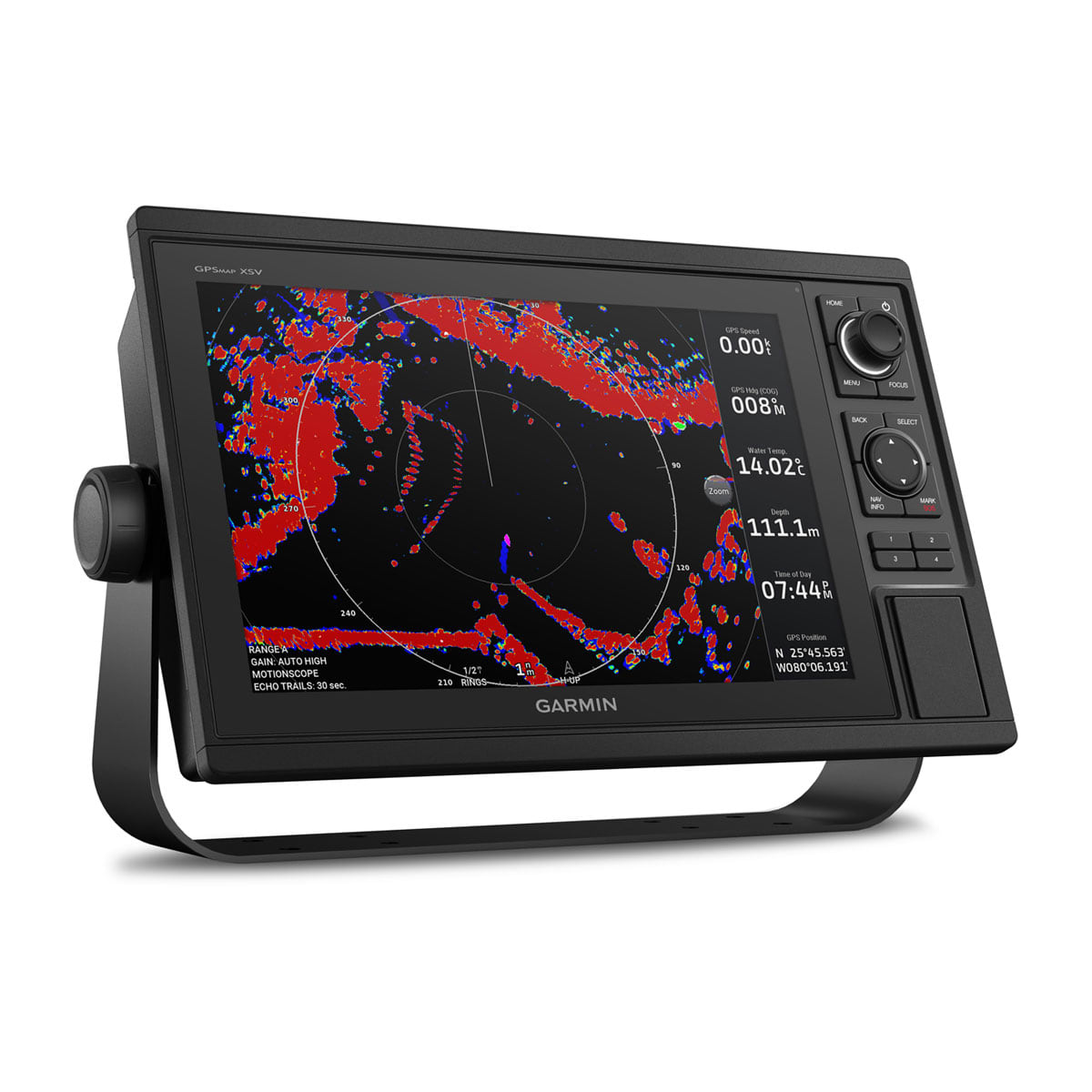
Garmin's GPSMAP 1222 is a 12-inch chartplotter with built-in wireless and support for the Garmin Marine Network, NMEA 2000, and NMEA 0183. Displays like this are a good example of the category's difficulty: sunlight readable, sealed, and expected to work for years in a wet, vibrating wheelhouse.
Powering and protecting the terminal
7. Shore power control equipment
Cavotec's shore-side ShorePower range connects berthed vessels to the grid so they can shut down their generators, using mobile cable management systems such as PowerMove and PowerReach alongside PowerFeed socket boxes. Demand here is regulatory as much as commercial. Under FuelEU Maritime, container and passenger ships above 5,000 gross tonnes must connect to onshore power at TEN-T maritime ports from 1 January 2030.
8. Power distribution and control cabinets
ABB's MNS low-voltage switchgear supports 690 V, 7,300 A, and 100 kA short-circuit ratings, with temperature sensors at critical busbar joints and condition monitoring for predictive maintenance. Switchgear is where electronics manufacturing meets heavy electromechanical assembly.
9. Port security and surveillance systems
Access control at a terminal gate has to be fast, contactless, and auditable. IDEMIA's MorphoWave XP2, integrated with Gallagher Command Centre, reads four fingerprints from a hand wave and supports card and PIN combinations for up to 100,000 users. Optical assemblies, secure elements, and tamper protection make these a specialised build.

The interface layer: Displays, computers, and sensors
10. Industrial human machine interface (HMI) panels
Beijer's X2 marine operator panels are built for bridge, engine room, and cabin use, with an aluminium housing, IP65 front protection, a -10 to +60 °C operating range, and an optional 1,000 cd/m² anti-reflective display for sunlight. Marine approvals are the hard part, not the electronics.
11. Rugged industrial PCs
Moxa's MC-1200 Series is an ultra-compact edge computer rated from -40 to +70 degrees Celsius, with ATEX and IECEx Zone 2 and Class I Division 2 certifications for hazardous areas. Fanless, sealed, and certified is a very different build to a standard industrial PC.
12. Environmental monitoring systems
Vaisala's WM80 Ultrasonic Wind Sensor measures 0 to 90 m/s with no moving parts, housed in an anodised marine-grade aluminium enclosure with eleven controlled heaters and NMEA 0183, ASCII, and Modbus RTU outputs. Ports need wind data because crane operations stop above a certain threshold, so the sensor is an operational instrument rather than a weather station.
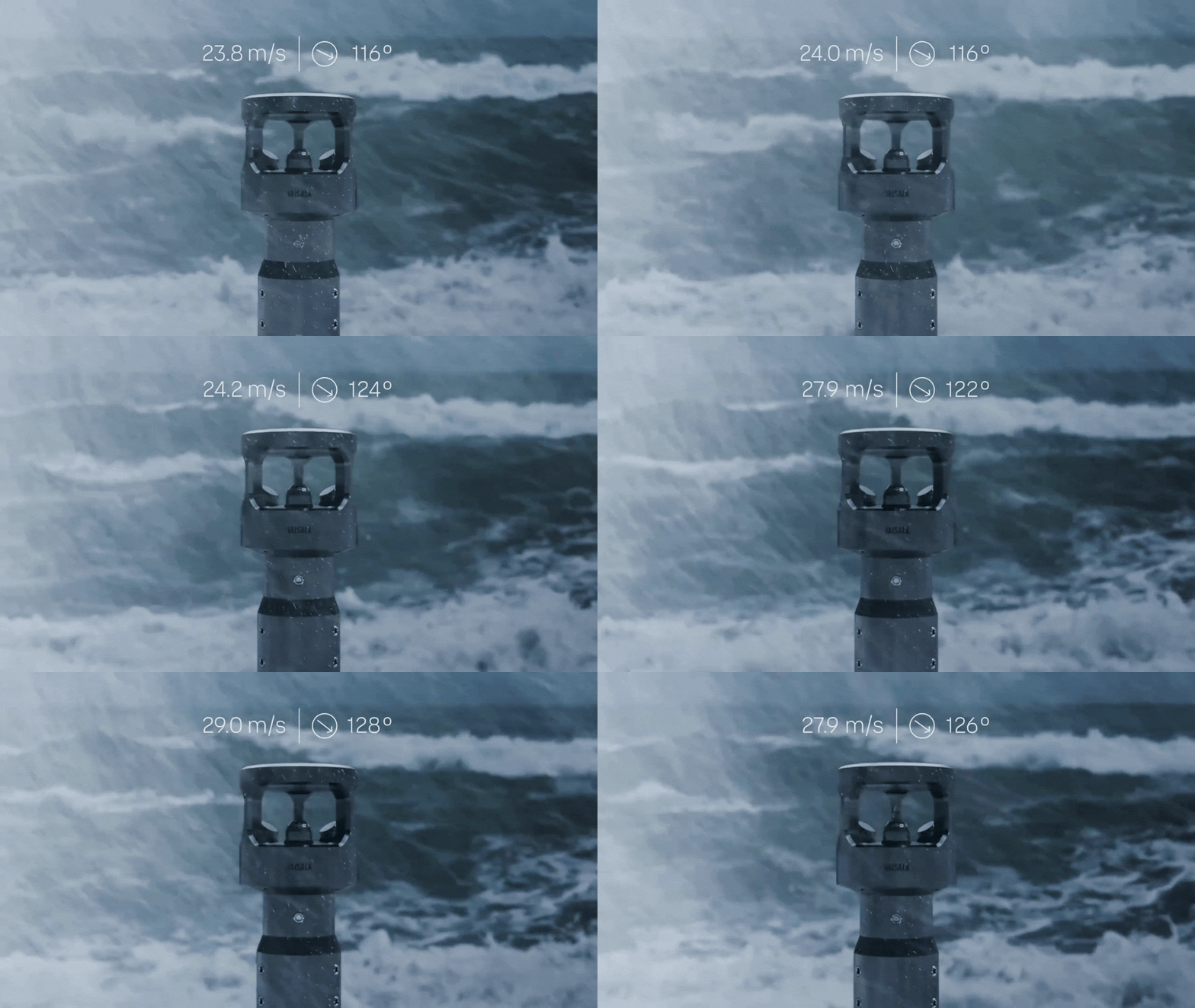
Vaisala's Ultrasonic Wind Sensor WM80
What these 12 systems have in common
The pattern that emerges across all 12 of these products is that almost none of these are high-volume consumer products. They are low- to medium-volume, high-mix, long-lifecycle assemblies, built to withstand salt spray, temperature swings, vibration, and electromagnetic noise, and expected to remain serviceable for a decade or more.
Volumes are the first constraint. A terminal operator might buy forty crane cabinets, not forty thousand, so setup, test, and documentation costs carry far more weight than unit price. Obsolescence is the second. A product specified today may still need spares in 2038, making component lifecycle planning a design decision rather than a purchasing decision.
That combination dictates which electronics manufacturing partner to work with. It puts weight on ruggedisation decisions made at design stage, on conformal coating and sealing, on component obsolescence planning, and on test strategy. It also favours box build assembly over bare board supply, because a crane cabinet, a docking aid, or a shore power controller arrives as a finished, tested system rather than a printed circuit board in a bag.
For more information on Inside the automated port: 12 electronic systems making it work talk to ESCATEC Mechatronics Ltd