 Get Listed

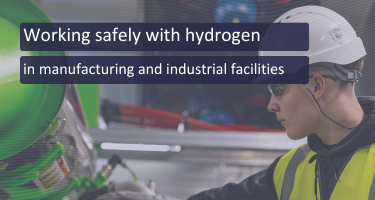
By Martin Constable, Operations Director, EPIT Group
As hydrogen technologies transition from pilot projects into operational use, industrial facilities are increasingly finding themselves on the front line of that evolution. Whether as part of a wider decarbonisation strategy or through direct involvement in production, storage or utilisation, hydrogen is becoming a more visible part of day-to-day industrial operations.
With that visibility comes a pressing responsibility: ensuring that hydrogen is handled safely, competently, and with full awareness of its unique behaviours in hazardous areas.
Hydrogen on the shop floor
The majority of risks associated with hydrogen such as low ignition energy, high diffusivity, or invisible flames are well understood in the design phase. But the reality of maintaining safety depends less on the system specification and more on the people working with it every day.
From electrical maintenance teams to mechanical fitters and instrument technicians, many industrial roles now intersect with hydrogen processes, sometimes indirectly. And while the engineering fundamentals may be similar to those used in oil and gas environments, the behaviours of hydrogen require new instincts.
Common risk areas in industrial settings
While every facility has its own profile, there are recurring safety themes when it comes to hydrogen handling in operational environments:
- Unfamiliar hazardous area zoning
Hydrogen’s flammability range and low ignition energy make it particularly sensitive to release and ignition risk.
Yet, too often, personnel remain unclear on where zoning applies, or how it influences equipment use, isolation procedures, or work planning. - Inappropriate or misunderstood Ex equipment
Electrical equipment certified for hazardous areas is critical — knowing which Ex protection concept (e.g. flameproof, increased safety, intrinsic safety), equipment group, temperature class, and IP rating is suitable is very important. - Non-electrical ignition risks
It’s easy to overlook mechanical sources of ignition — frictional heating, impact sparks, or hot surfaces. For hydrogen, even a small surface temperature anomaly or seal failure can be enough to create a serious hazard. - Inspection, maintenance and oversight
The demands of day-to-day operations can mean that periodic inspections of critical safety equipment are deprioritised or carried out without full understanding of hydrogen-specific degradation risks — such as material embrittlement or valve wear.
The human factor: training, awareness, and confidence
We often talk about safety as a system — and rightly so. But in practice, a system is only as safe as the people working with it.
“It’s not enough for equipment to be certified. The people installing, inspecting, maintaining, and operating it need to know what that certification means, and how to work within its boundaries.” — Martin Constable, Operations Director, EPIT Group
In our work with industrial clients, we frequently encounter technically capable personnel who are highly competent with traditional hydrocarbons — but unfamiliar with how hydrogen behaves differently, or how to apply safety protocols in the context of a hydrogen system.
That’s not a criticism — it’s a reflection of an evolving industry. But it also signals a clear and growing need for formal training that connects theory with day-to-day operations.
Creating hydrogen-ready workforces
At EPIT, our approach is centred around building competence at every level. This means:
- Supporting frontline technicians to recognise hazards and take appropriate action
- Enabling supervisors to plan work safely and interpret Ex zoning confidently
- Helping duty holders meet compliance obligations without compromising operational efficiencyThe goal isn’t just awareness — it’s capability. Because in hydrogen environments, misjudgement carries disproportionate consequences.
Hydrogen offers enormous potential to transform energy use across sectors. But transformation must not come at the expense of operational safety.
Manufacturing and industrial facilities are the environments where hydrogen will prove itself — or not. If we’re serious about scaling hydrogen safely, we must prepare our people as carefully as we prepare our systems.
That preparation starts with recognising that hydrogen safety isn’t only a design challenge — it’s a workforce challenge.
Explore our ongoing blog series at epitgroup.com.
Learn more about our Hydrogen Safety Awareness course, designed to equip industrial personnel with the knowledge, standards, and confidence to work safely in hydrogen environments.
For more information on Working Safely with Hydrogen in Manufacturing and Industrial Facilities talk to EPIT