 Get Listed

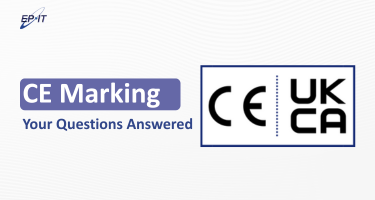
At EPIT, we support companies across energy, engineering, and technical sectors with practical compliance solutions. In this guide, our experts answer your most common questions about CE marking – what it means, who needs it, and how it applies in a post-Brexit landscape.
What does the CE mark stand for and what does it signify?
The CE mark stands for “Conformité Européenne”, or European Conformity. It shows that a product meets EU safety, health, and environmental protection requirements and can be legally placed on the market in the European Economic Area (EEA). In essence, it’s a manufacturer’s declaration that their product complies with all applicable European legislation.
How much should I expect to pay for CE certification in the UK?
The cost of CE certification varies widely depending on the product type, its complexity, and whether third-party assessment is needed. For some products, manufacturers can self-certify at low cost. However, if a Notified Body is required for testing or certification, fees can range from several hundred to several thousand pounds. For accurate costing, it’s best to seek advice from a compliance consultant at EPIT or certification body.
Is CE marking still valid and accepted after Brexit in the UK?
Yes. Although the UK introduced its own UKCA (UK Conformity Assessed) mark after leaving the EU, the government confirmed in August 2023 that CE marking will continue to be recognised indefinitely for most products sold in Great Britain. This move is aimed at reducing regulatory burdens for businesses trading across UK and EU markets.
What are the risks of selling products without a CE mark in Europe or the UK?
If your product falls within the scope of CE marking and does not carry the mark, it cannot be legally sold within the EEA – or in the UK where CE is still accepted. Failure to comply can lead to severe consequences, including enforcement action, fines, product recalls, bans, and even criminal liability in cases of false marking.
Does the CE mark expire?
The CE mark itself has no expiry date. However, manufacturers must ensure that the product remains compliant. If the relevant EU legislation is updated or the product design changes, the conformity assessment may need to be reviewed. Supporting documentation, including the technical file and Declaration of Conformity, must also be kept up to date.
How long does it take to obtain a CE mark?
Timelines vary. For products that qualify for self-certification, the process may take a few days to several weeks. Where third-party testing is needed or complex regulations apply, certification may take several months. Early preparation and guidance from experienced professionals at EPIT can significantly speed up the process.
How do I differentiate between CE and UKCA marks for compliance?
|
Feature |
CE Mark |
UKCA Mark |
|
Region |
European Economic Area (EEA) |
Great Britain (England, Scotland, Wales) |
|
Requirements |
EU Directives & Regulations |
UK Statutory Requirements |
|
Recognition |
EEA and UK (indefinitely) |
UK only |
For more information on CE Marking: your questions answered Latest CE updates 2025 talk to EPIT