 Get Listed

Stainless Steel Common Machinable Grades
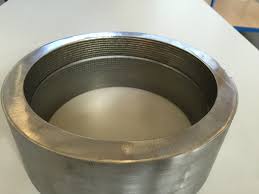
These are our stainless steel common machinable grades we use at Dynamic Die & Steel. We may have other materials not listed here but this will give you a guide of our popular materials.
Incoloy Iron-Based Superalloys
A-286
Incoloy 800
Incoloy 801
Incoloy 825
Incoloy 925
Inconel
Nickel-Based Superalloys
Inconel 600
Inconel 601
Inconel 617
Inconel 625
Inconel 690
Inconel 693
Inconel 718
Inconel 722
Inconel 725
Inconel X-750
Inconel 783
Hastelloy C-22
Hastelloy C-276
Hastelloy X
Hastelloy B-2
Hastelloy B-3
Hastelloy G-30
Monel 400
Monel K-500
Nimonic 75
Nimonic 80A
Nimonic 90
René 41
René 80
Waspaloy
Haynes 188
Haynes 230
Haynes 242
Haynes 263
Haynes 556
Inconel 625
Cobalt-Based Superalloys
Stellite 6
Stellite 21
Stellite 31
Haynes 25 (L-605)
Haynes 188
Mar-M 509
Cobalt Based Superalloys
Austenitic
301
302
303
304
304L
304H
309
310
310S
316
316L
316H
317
317L
321
347
Austenitic
Ferritic
409
410S
430
434
436
Martensitic
403
410
414
416
420
420F
422
431
440A
440B
440C
Duplex / Super Duplex
2101
2205
2304
2507
Zeron 100
Precipitation Hardening
13-8 PH
15-5 PH
17-4 PH
Special Grades
904L
Nitronic 50
Nitronic 60
Stainless Steel Common Machinable Grades
For more information on Stainless Steel Common Machinable Grades contact us today
A–Z CNC Machinable Materials
CNC (Computer Numerical Control) machining can process a vast array of materials, broadly categorised into metals, plastics, and sometimes composites or ceramics. The optimal material choice is always dictated by the final part’s required performance, environment, and budget.
ABS (plastic)
Acetal (POM / Delrin)
Aluminium (all grades)
Alloy Steels
Acrylic (PMMA)
Bakelite
Basswood
Brass (CZ121, CZ108, etc.)
Bronze (phosphor, aluminium, manganese)
Carbon Steel
Carbon Fibre Sheet
Cast Iron (grey, ductile)
Copper (C101, C110)
Delrin (Acetal / POM)
Duplex Stainless Steel
Epoxy Tooling Board
Engineering Plastics (general)
Fibreglass (G10 / FR4)
Foam Board (modelmaking)
Glass-Filled Nylon
Graphite (electrodes, tooling)
Hardened Tool Steel
HDPE (High-Density Polyethylene)
Inconel
Impact-Resistant Polymers (general)
Kovar
Kevlar Composites
Low-Carbon Steel
Leaded Brass
Magnesium
Mild Steel
Molybdenum
Medical-Grade Plastics
Nylon (PA6 / PA66 / PA12)
Nitriding Steels
O1 Tool Steel (and other oil-hardening steels)
PE (Polyethylene)
Polypropylene (PP)
PTFE (Teflon)
Quench & Tempered Steels
Rigid PVC
Stainless Steel (See second page for list )
Superalloys ( see 2nd list I)
Titanium (Grade 2, Grade 5)
Tool Steels (D2, H13, O1, etc.)
UHMWPE
Urethane (machinable tooling board)
Vespel
Vinyl Plastics
Wood (hardwoods & softwoods)
Waspaloy
Xylan-Coated Metals (secondary machining)
Yellow Metals (general term for brass/bronze alloys)
Metals are the cornerstone of CNC, offering superior strength, durability, and conductivity.
Aluminium Alloys (e.g., 6061, 7075): The most common choice. Aluminium is prized for its excellent machinability, high strength-to-weight ratio, and natural corrosion resistance, making it ideal for aerospace and automotive parts.
Stainless Steel (e.g., 304, 316): Selected for its exceptional corrosion resistance, high strength, and aesthetic finish, particularly in medical and food processing applications. Certain grades, like 303, are specifically formulated for better machinability.
Brass and Copper: Excellent for components requiring high electrical and thermal conductivity, such as electrical contacts and heat sinks. Brass is known for its outstanding machinability, often leading to reduced cycle times.
Titanium Alloys (e.g., Ti-6Al-4V): Reserved for demanding, high-performance applications due to its incredible strength-to-weight ratio and biocompatibility, despite being more challenging and costly to machine.
Plastics are chosen for their light weight, electrical insulation, and chemical resistance.
Understanding the material’s machinability, strength, and cost is critical for successful CNC manufacturing.
Understanding the Machinability Index
The Machinability Index (or Machinability Rating) is a comparative measure of how easily a material can be cut. It is expressed as a percentage (%) relative to a standardised reference material. The Machinability Index is a vital tool for manufacturers to quickly estimate the production time and cost associated with machining a new part.
For any information on Stainless Steel Common Machinable Grades email us today.
For more information on Stainless Steel Common Machinable Grades talk to Dynamic Die and Steel