 Get Listed


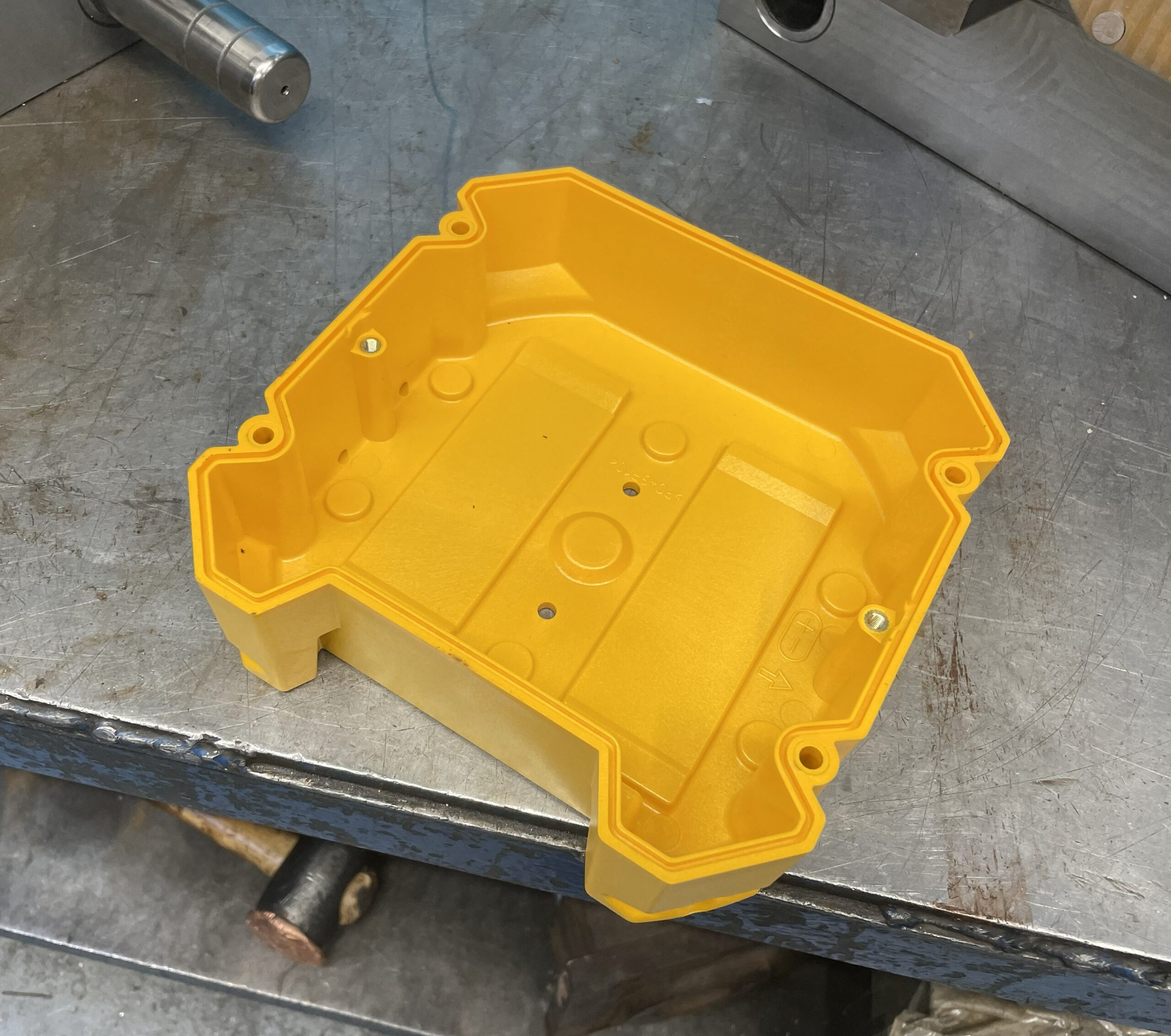
Choosing plastic for an electronic enclosure sounds straightforward until you’re staring at material datasheets trying to work out whether ABS, polycarbonate, or acetal is right for your project.
They all make plastic boxes, so what’s the difference?
Quite a lot, as it turns out. Using the wrong material can result in enclosures that crack under use, turn yellow in sunlight, warp from heat, or fail when exposed to the wrong cleaning agent.
Read on to make a wise choice.
ABS: The Default Choice
ABS is ubiquitous in electronic enclosures. It offers balanced properties at reasonable cost, making it the go-to for most applications.
It machines easily, accepts surface finishes well, and can be painted or printed on to without hassle. Impact resistance is decent enough for normal knocks and drops. Dimensional stability is good – enclosures keep their shape over time.
Temperature is where ABS shows its weaknesses. It softens at around 90-100°C, so avoid it for applications that generate significant heat or operate in hot environments. UV resistance is also poor without additives.
Overall, it’s best for consumer electronics, desktop devices, control panels, and indoor equipment where moderate impact resistance and good appearance matter more than extreme environmental performance.
Polycarbonate: For Tough Environments
Polycarbonate is significantly tougher than ABS. When impact resistance matters, or enclosures face harsh treatment, it brings some strong benefits to the table.
Impact resistance is exceptional, and temperature performance is better than ABS, too.
It costs more than ABS, so you use it where its physical properties justify the price:
- Handheld devices that get dropped regularly
- Outdoor equipment demanding UV resistance
- Housings for heat-generating equipment
- Safety-critical applications where failure isn’t an option
However, chemical resistance is polycarbonate’s weak point. Solvents and cleaning agents that don’t always affect ABS can damage polycarbonate, so they’re sometimes unsuitable for chemically aggressive environments.
Acetal: Precision and Movement
Acetal (POM) is less common for complete enclosures but brilliant for specific applications demanding precision.
Dimensional stability is outstanding. Acetal holds tight tolerances even with temperature and humidity changes. Low friction and good wear resistance suit applications with moving parts – sliding covers, rotating mechanisms, snap-fits that open and close repeatedly.
The trade-offs are cost and appearance. Acetal is pricier than ABS and doesn’t take paint or printing as readily. Surface finishes are limited. Moulding thin walls is trickier too.
Works best for technical housings where precision and mechanical performance outweigh appearance – laboratory equipment, metering devices, industrial controls.
Other Electronics Enclosure Options
There are three other core options:
- ABS/PC blends mix ABS processability with polycarbonate toughness at mid-range cost. Good when you need better impact resistance than pure ABS, without paying the full price of polycarbonate.
- Polypropylene offers excellent chemical resistance and costs less than ABS. Moderate impact resistance and limited appearance options, but handles aggressive chemicals.
- Nylon provides excellent mechanical properties and heat resistance, but absorbs moisture, causing dimensional changes. It needs careful design to accommodate expansion, however.
Making Your Decision
Start with critical requirements. What conditions will the enclosure face? What temperatures? What impacts? Does appearance matter or is function everything?
Key factors to weigh up:
- Environment – indoor vs outdoor, temperature extremes, chemical exposure
- Mechanical demands – impact resistance, precision needs, moving parts
- Cost – initial material and tooling costs vs long-term performance
- Appearance – surface finish requirements, printability
Manufacturing considerations matter too:
- Some materials mould easier than others
- Complex geometries may rule out certain options
- Tooling costs vary by material choice
Choose material that performs properly rather than the cheapest option. Material that fails will cost more than specifying the right one initially. We’re talking warranty claims, replacements, and reputation damage.
At BEC Group, we work through material selection alongside design, balancing performance against cost and manufacturing constraints. Contact us to discuss your enclosure project.
For more information on How to Choose the Right Material for Your Electronic Enclosure talk to BEC Group