 Get Listed

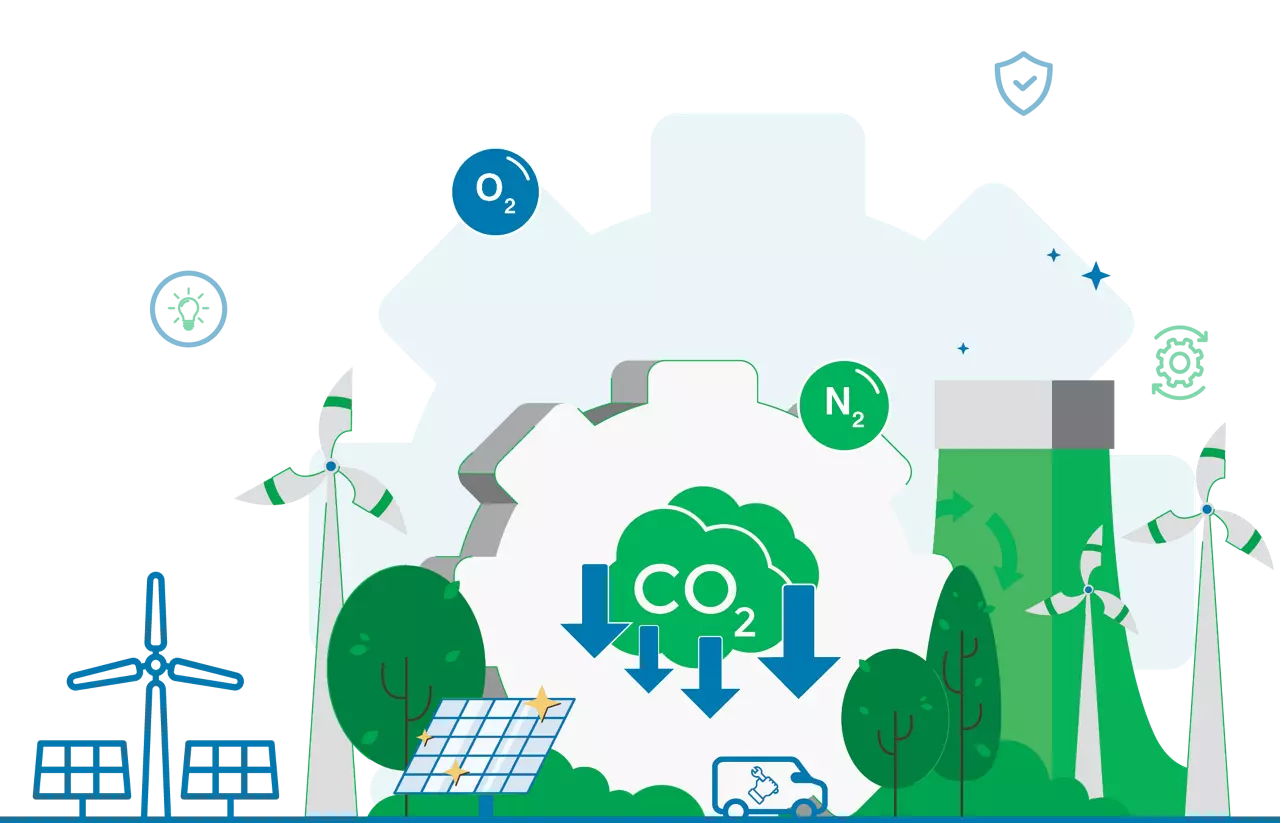
Here, Andrew Butler - Business Development Manager for Industrial Gases at Atlas Copco - explores how onsite oxygen generation is helping high-temperature industries cut emissions, reduce costs and strengthen operational resilience.
Industrial furnaces, heat treatment lines and oxy-combustion systems are the foundation of modern materials production. Whether hardening steel, melting glass or sintering ceramics, these high-temperature processes depend on consistent thermal control and combustion efficiency. In this context, oxygen is not simply a fuel additive but a critical enabler of performance and throughput.
Traditionally, operators have relied on bottled or bulk oxygen delivered to the site, stored in cryogenic tanks or high-pressure cylinders, and distributed through permanent or temporary pipework. This approach has been the norm for decades. However, shifting priorities around energy use, emissions compliance and supply stability are prompting manufacturers to reconsider their options. On-site generation is becoming a viable, and in many cases, preferable alternative.
The core advantage of using oxygen in industrial combustion lies in its ability to displace nitrogen, which makes up roughly 78 per cent of atmospheric air but contributes little to the combustion process. When oxygen-enriched air or pure oxygen is used instead of air, flame temperatures rise significantly, heat transfer becomes more efficient, and combustion is cleaner and more effective.
This translates into practical benefits across a wide range of applications. Furnace operators can reduce fuel consumption, increase production throughput and improve temperature uniformity. In oxy-combustion systems, where oxygen replaces air entirely, the absence of nitrogen also reduces the total volume of flue gas. This simplifies emissions treatment, enables improved heat recovery and reduces energy losses associated with exhaust gases.
For example, typical air-fuel flames reach around 1,870 degrees Celsius. Oxy-fuel flames, by contrast, can exceed 2,750 degrees Celsius. This increase in thermal intensity allows for faster heating and more responsive process control. Case studies have recorded fuel savings ranging from 10 to 40 per cent, and exhaust gas volume reductions of up to 60 per cent, depending on the specific setup and type of fuel used. These are not marginal gains. In high-energy environments such as steel mills or glass manufacturing, they can transform both the economics and sustainability of the operation.

Oxygen enrichment and oxy-fuel combustion are used in a variety of industries where high-temperature processes are central to production. In metal heat treating, higher flame temperatures lead to shorter cycle times and more consistent surface properties. In the glass industry, oxygen reduces the formation of nitrogen oxides and other pollutants while also enhancing melting efficiency and lowering defect rates.
Ceramic kilns, aluminium melting furnaces, cement plants and biomass incineration systems can also benefit from more stable combustion and improved energy utilisation. These advantages are often most pronounced in processes that require tight temperature control, high purity atmospheres or rapid thermal cycling.
Even in sectors with less intensive thermal demands, such as food processing or pulp and paper bleaching, oxygen can support more efficient oxidation reactions, reduce chemical consumption and contribute to emissions compliance.
Despite these advantages, many industrial facilities still rely on bulk or bottled oxygen delivered by road. In many cases, this is the result of legacy contracts, perceived simplicity or a lack of awareness about the alternatives. However, the drawbacks of bottled oxygen are becoming harder to ignore.
Transporting liquid oxygen over long distances carries both financial and environmental costs. Cryogenic storage systems require regular maintenance and carry specific safety risks. Bottled oxygen, particularly in remote or unpredictable usage settings, can lead to unplanned downtime if deliveries are missed or stock levels are misjudged.
On-site generation addresses many of these challenges. Using technologies such as Pressure Swing Adsorption (PSA) and Vacuum Pressure Swing Adsorption (VPSA), operators can produce oxygen on demand, at the point of use. These systems separate oxygen from ambient air using molecular sieves and adsorption media, producing high-purity gas without the need for complex logistics or storage infrastructure.
For medium to large-scale operations, VPSA systems offer reliable, continuous oxygen production with typical purities ranging from 80 to 94.5 per cent. The oxygen is delivered at low pressure but can be boosted to higher levels if required for the process. By comparison, PSA systems are well suited to smaller applications or settings with intermittent demand.

Modern oxygen generation systems have made significant strides in efficiency and automation. Some units can produce oxygen at a specific energy consumption rate as low as 0.55 kilowatt-hours per normal cubic metre, depending on operating conditions and required purity. This is competitive with - or better than - the total energy footprint of delivered oxygen, once production, liquefaction and transport are considered.
The shift to onsite production also removes many of the hidden costs associated with external supply. These include delivery fees, rental charges for tanks or cylinders, and price variability linked to fuel surcharges or seasonal demand. For facilities operating in remote areas or regions with inconsistent logistics, onsite generation provides greater control and resilience.
From an environmental perspective, eliminating the need for regular deliveries can significantly reduce carbon emissions. At a time when many manufacturers are setting ambitious decarbonisation targets, onsite oxygen generation represents a straightforward way to reduce Scope 3 emissions and demonstrate commitment to sustainability.
Safety is another important factor. On-site systems reduce the presence of high-pressure cylinders or large volumes of stored liquid oxygen, both of which carry inherent risks. With fewer deliveries and less manual handling, the potential for accidents or compliance issues is also reduced.
One of the remaining barriers to adoption is awareness. While nitrogen generation is now widely used in applications such as laser cutting, food preservation and chemical blanketing, oxygen generation still suffers from a perception that it is complex or only viable at a very large scale. This is no longer the case.
The latest generation of PSA and VPSA systems is designed to be modular, easy to install and straightforward to operate. They are available with integrated dryers, oil-free blowers and intelligent controls that continuously monitor purity, flow rate and energy usage. These features enable precise performance control and allow the system to adjust dynamically based on demand.
For manufacturers who are still unsure about making the switch, the most compelling case often emerges when oxygen demand becomes inconsistent, seasonal or process critical. If supply interruptions impact product quality, cause production delays, or raise compliance risks, then onsite generation becomes more than a convenience. It becomes a strategic asset.
Atlas Copco’s OGP+ and OGV+ ranges are examples of how these technologies are evolving. The OGP+ series uses PSA with a Variable Cycle Saver control system that adjusts the adsorption cycle in real time to match oxygen demand. This approach reduces air consumption and energy use during off-peak periods, while also extending the service life of key components.
The OGV+ VPSA systems, designed for higher capacities, include integrated drying layers to protect the adsorption media from moisture and carbon dioxide. They also use frequency-controlled blowers and extractors to maintain energy efficiency at part load, along with oil-free components to avoid contamination or fire risk. Intelligent controls and remote monitoring capabilities are standard, allowing operators to track performance and carry out predictive maintenance without the need for constant supervision.
While these features are not unique to Atlas Copco, they reflect a broader shift in how onsite oxygen systems are being engineered. The focus is now on energy efficiency, reliability, and integration with the wider process environment.
The conversation around industrial gases is changing. No longer just a cost centre, oxygen is increasingly seen as a lever for performance, emissions reduction and process innovation. For engineers and plant managers, the decision to move away from delivered oxygen is as much about future-proofing their processes as it is about immediate savings.
With modern oxygen generation systems offering greater flexibility, lower total cost of ownership and minimal disruption to existing infrastructure, the case for onsite production continues to strengthen. In high-temperature industries, where thermal performance and environmental compliance are tightly linked, having oxygen on demand is not just efficient. It is essential.
For more information on Oxygen on Demand: How Onsite Generation is Reshaping High-Temperature Industries talk to Atlas Copco Ltd