 Get Listed


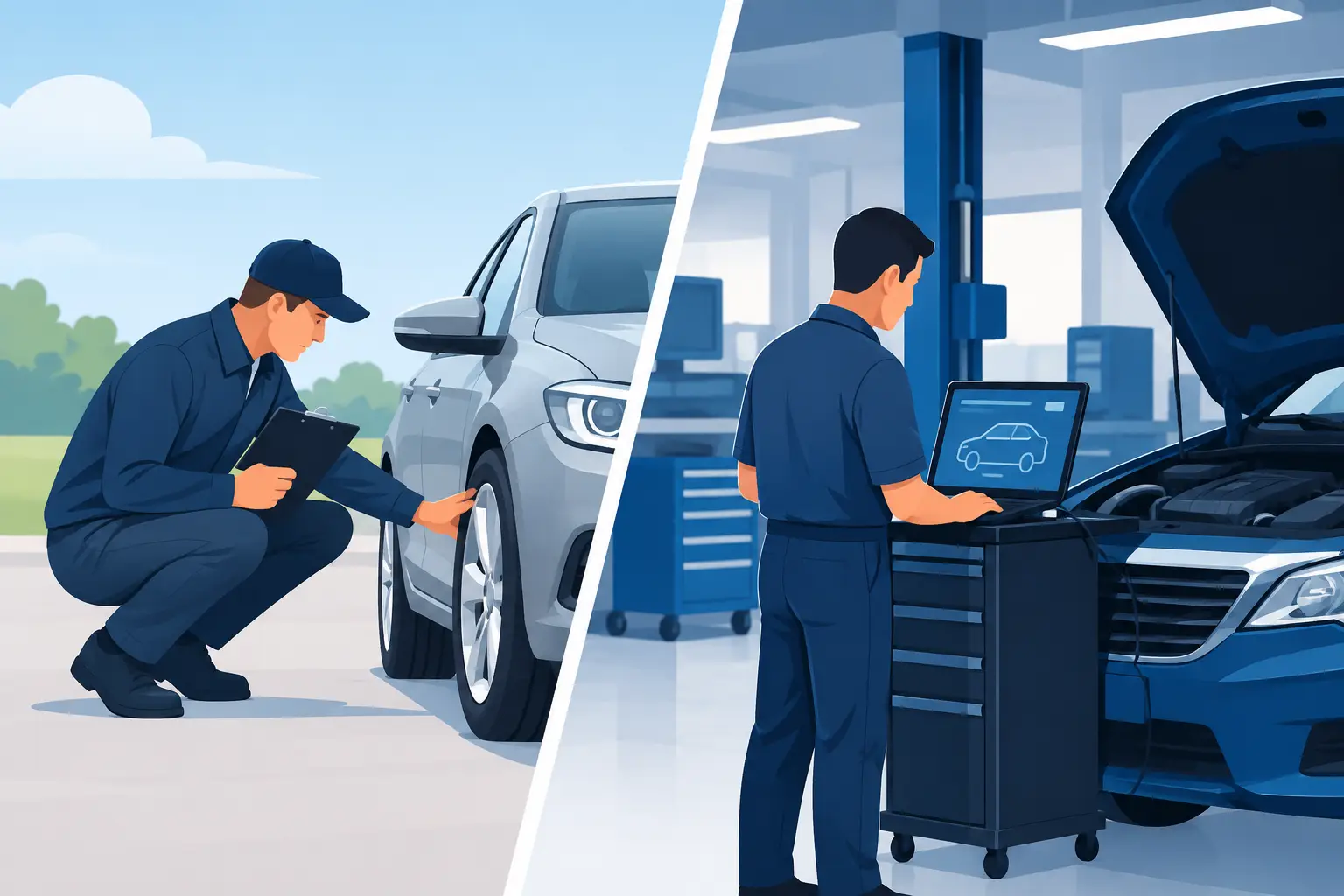
A warning light, an unusual noise or a repair bill that does not resolve the fault can put a vehicle owner in a difficult position. The question of independent inspection versus garage diagnosis is not usually about choosing one instead of the other. It is about understanding what each service is designed to do, what evidence it can provide, and when an impartial engineering opinion may be needed.
A garage diagnosis is often the right first step when a vehicle needs to be repaired. An independent inspection becomes particularly valuable where the cause, responsibility, quality of work or financial consequences are disputed. The distinction matters because a practical repair assessment and an evidence-led examination do not necessarily have the same purpose.
Independent inspection versus garage diagnosis: the key difference
A garage diagnoses faults so that it can recommend and carry out repairs. Its technician may use diagnostic equipment, road test the vehicle, inspect components and refer to manufacturer repair procedures. This is skilled and necessary work. For most routine concerns - such as a failed sensor, worn brake components or a service-related issue - a competent garage is the sensible place to begin.
An independent vehicle inspection has a different function. The examiner investigates the vehicle condition and records findings in a structured report. The aim is not to sell a repair, supply parts or favour one party's account. It is to establish, as far as the available evidence permits, what is present, what may have caused it, and whether the evidence supports the allegation being made.
That difference becomes significant if you are challenging a dealer, manufacturer, warranty provider, repairer, insurer or finance company. A verbal opinion that a garage believes a part has failed may help explain a recommended repair. It may not, on its own, address the questions needed in a formal complaint: Was the fault present or developing at sale? Was the repair undertaken to an appropriate standard? Is the damage consistent with misuse, wear and tear, accident damage or a manufacturing defect? Could the problem have another explanation?
What a garage diagnosis can tell you
A garage's role is operational. It needs to identify the likely fault efficiently and return the vehicle to service. Diagnostic trouble codes, live data, visual checks and component testing can all form part of that process. A good garage will explain what it has found, distinguish between confirmed faults and possibilities, and obtain authority before further work.
Its findings can be highly useful. An invoice, job card, photographs and a written explanation may establish a timeline, record symptoms and show what was replaced. If a repair succeeds, that may be the end of the matter.
There are limits, however. Diagnostic codes do not automatically prove the root cause of a fault. A code can indicate that a system has detected an abnormal condition, not necessarily which component caused it or why. Similarly, a replacement part curing a symptom does not always prove that the replaced part was defective. Intermittent faults, previous repairs, modifications and poor-quality parts can complicate the position.
A garage may also be asked to comment on work completed by another business. It can do so, but it may reasonably be reluctant to become involved in a dispute, particularly where further dismantling, retained parts or detailed technical analysis are required. That reluctance is not evidence that the garage lacks competence. It reflects the difference between repairing a vehicle and providing an independent opinion that may be scrutinised by several parties.
When an independent examination is appropriate
An independent inspection is most useful before a disagreement hardens into competing assertions. It can establish the vehicle's condition while relevant evidence is still available and before repairs alter or remove it.
This is commonly relevant after a vehicle purchase where serious defects emerge, after unsuccessful or repeated repairs, or when a warranty claim has been declined. It may also be appropriate if a dealer says a fault is normal wear and tear, while the owner believes it indicates a pre-existing defect; if a repairer disputes responsibility for damage; or if a vehicle has suffered engine, gearbox, electrical, hybrid or electric-vehicle system concerns with substantial financial consequences.
For used vehicles, timing is especially important. A report cannot turn back the clock, but a prompt examination can document symptoms, mileage, service information, diagnostic data and physical condition closer to the point at issue. If components are removed, disposed of or replaced before they are examined, it may become harder to establish their original condition.
The inspection must still follow the evidence. An independent engineer cannot properly promise that a report will support the owner's position. Sometimes the evidence will indicate expected wear, poor maintenance, a separate fault or that the available material is insufficient to reach a reliable conclusion. That is not an unhelpful outcome. It prevents a customer from pursuing a costly argument on assumptions rather than facts.
Evidence, independence and the repair decision
Independence is not simply a label. It concerns the examiner's role, instructions and approach to the evidence. An engineer instructed to inspect a vehicle should identify what has been seen, what documents have been considered, what testing has been undertaken, and the limits of the examination. Where a conclusion depends on an assumption or a missing item, that should be stated plainly.
This approach is different from a repair estimate. A repair estimate answers, “What work is proposed and what will it cost?” An engineering report may need to answer, “What caused the fault, what evidence supports that view, and does the condition accord with the account given?” Both documents can be important, but they should not be treated as interchangeable.
In a dispute, keep the garage's paperwork. Retain invoices, diagnostic print-outs, photographs, recovery reports, correspondence, service records and details of the dates and mileages involved. If a part has been removed, ask whether it can be retained safely for possible examination. Do not instruct dismantling merely to create evidence, but do consider the evidential position before authorising work that may remove the only physical proof of a defect.
Equally, a vehicle should not be left unsafe or unusable simply because a dispute exists. Safety and reasonable mitigation come first. If urgent repairs are needed, obtain clear photographs and records beforehand where possible, keep replaced parts if appropriate, and ensure invoices describe the work and findings accurately.
Does the report need to be suitable for a formal claim?
Not every matter requires a court-focused report. A straightforward inspection may be enough to help a consumer understand the condition of a vehicle, make an informed repair decision or present a complaint to a business. The appropriate scope should reflect the value and complexity of the issue.
Where litigation is contemplated, or where a report may be relied upon in proceedings, the standard of instruction matters. Expert evidence is governed by duties that differ from ordinary customer advice. Under CPR Part 35 and Practice Direction 35, an expert's overriding duty is to help the court on matters within their expertise. That duty overrides any obligation to the person paying for the report.
This is why a genuine expert report should be balanced, reasoned and transparent about limitations. It should not become an advocate's document. A report that merely repeats the customer's case, without technical analysis or alternative explanations, is unlikely to assist a court, the Motor Ombudsman, the Financial Ombudsman or the opposing party.
Automotive Consulting Engineers provides independent examinations and evidence-based reports for motorists and organisations, including matters requiring this level of procedural awareness. The starting point should always be to clarify the issue, the vehicle's present condition, the evidence already available and the purpose the report must serve. An initial conversation can prevent unnecessary work and help determine whether an inspection is proportionate.
Choosing the right route for your situation
If the priority is getting a vehicle repaired quickly, begin with a reputable garage and ask for a clear written diagnosis. If the repair has failed, the explanation is disputed, a costly claim has been rejected or you need to establish responsibility, an independent inspection may be the more appropriate next step.
There is no conflict in using both. The garage may provide the practical diagnosis and repair history; the independent engineer may assess the evidence objectively where a dispute or significant decision remains. The most useful route is the one that answers the question you actually need resolved, before time, further repairs or missing evidence make that question harder to answer.
If you are unsure which is appropriate, speak to an independent vehicle engineer before committing to substantial work. A short, clear discussion at the outset can protect both your vehicle and your position.
For more information on Independent Inspection Versus Garage Diagnosis talk to Automotive Consulting Engineers Ltd