 Get Listed


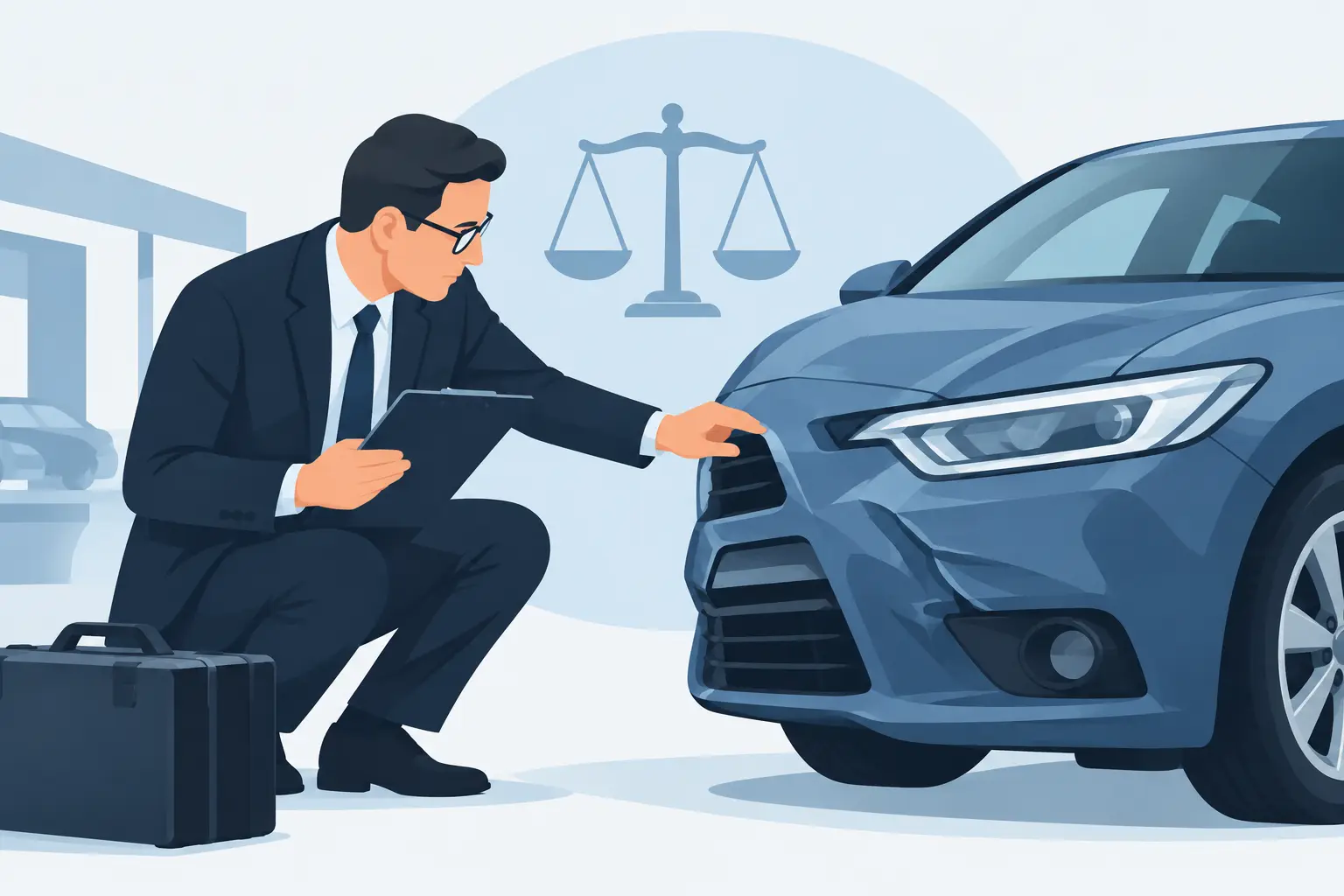
A vehicle may be your largest purchase after your home. When it develops a serious fault, the question quickly moves beyond whether it is inconvenient or expensive: what can actually be proved? This guide to automotive expert evidence explains how independent engineering findings can turn a disputed vehicle problem into a clear, properly documented case.
Whether you are dealing with a rejected repair, a warranty dispute, a dealer complaint, an insurer’s position or potential legal action, the quality of the evidence matters. An opinion based on a warning light, a garage conversation or an online diagnosis is rarely enough. What is needed is an objective examination that identifies the condition of the vehicle, explains the likely cause and records the findings in a form that can withstand scrutiny.
What automotive expert evidence is
Automotive expert evidence is an independent professional opinion founded on examination, testing, technical knowledge and relevant documentation. It is not simply a list of faults. A useful expert report should establish what has been found, how it was found, what that finding means and, where the evidence allows, when or why the problem is likely to have arisen.
For example, an engine-management warning may be caused by several possible defects. Diagnostic fault codes can point an engineer towards a system, but they do not automatically prove the failed component or the underlying cause. An expert examination may involve checking live data, wiring integrity, component operation, service history, previous repairs and signs of misuse or external damage. The report should distinguish between fact, engineering interpretation and any conclusion that cannot safely be reached without further evidence.
This approach protects all parties. It can support a vehicle owner whose complaint is justified, but it may also show that a claimed defect is consistent with wear, accident damage, poor maintenance or a later event. Genuine independence means following the evidence, not shaping it around the outcome a client hopes for.
When an independent inspection is needed
Not every vehicle concern requires a formal expert report. A routine service issue or an obvious consumable item may be resolved directly with the repairing garage. The case changes where the value of the dispute is significant, responsibility is contested or a technical explanation is required.
Independent evidence is commonly useful when a recently purchased used vehicle develops faults, a new vehicle has repeated or unresolved defects, a repair has allegedly caused further damage, or a warranty provider has declined a claim. It can also assist where there is disagreement over accident damage, mechanical failure, poor workmanship, vehicle condition at sale or the reasonableness of proposed repairs.
Timing can be decisive. If a vehicle is repaired, dismantled, sold or returned before it has been examined, vital evidence may be lost. Photographs and invoices are helpful, but they are not always a substitute for an inspection of the vehicle in its condition at the relevant time. Where practical, arrange an examination before authorising major rectification work and retain all removed parts, records and communications.
What a credible expert report should contain
A persuasive report is clear enough for a vehicle owner to understand and detailed enough for a technically informed reader to test. It should identify the vehicle accurately, record its mileage and condition, state the documents considered and set out the scope of the inspection.
The engineer should explain the methodology used. This may include visual examination, road testing where safe and appropriate, diagnostic interrogation, measurement, photographic recording and review of service or repair documentation. If an area could not be inspected because a component was inaccessible or dismantling was not authorised, that limitation should be stated plainly.
A report should also separate observed facts from conclusions. “Oil contamination was present within the cooling system” is an observation. “The contamination is consistent with a failed oil cooler” is an engineering opinion. “The oil cooler failed before the vehicle was sold” is a more specific conclusion that may require supporting information such as mileage, maintenance history, repair records and the condition of associated components.
The best reports do not overstate certainty. Engineering often involves probabilities rather than absolute proof, particularly when a vehicle has been driven after a failure or repaired before inspection. A properly qualified conclusion is not a weakness. It demonstrates that the engineer understands the limits of the available evidence.
Evidence beyond the vehicle itself
The vehicle is central, but supporting material can materially affect the conclusion. Keep the purchase invoice, advertisement, finance agreement where relevant, warranty terms, service book, repair estimates, job cards, diagnostic print-outs, recovery reports and correspondence with the supplying dealer or repairer.
A chronological record can be especially valuable. Note the date a symptom first appeared, the mileage, any warning messages, who inspected the vehicle and what work was carried out. Avoid altering or annotating original documents. If you take photographs or video, retain the originals where possible and make a note of when and where they were taken.
Automotive expert evidence for complaints and disputes
For a complaint to a dealer, manufacturer, repairer or warranty provider, the report needs to address the issue that is actually in dispute. A lengthy technical document is of limited value if it never answers whether the defect was likely present at sale, whether the repair work met a reasonable standard, or whether the claimed failure falls within the relevant warranty terms.
The Motor Ombudsman and the Financial Ombudsman may consider independent technical evidence alongside contracts, correspondence and the parties’ own records. An impartial report can help clarify competing accounts, but it does not decide the legal or contractual outcome on its own. The decision-maker will consider the full circumstances.
It also helps to be realistic about what an inspection can establish. A current defect may be demonstrable, yet its precise age may not be. Equally, the absence of a fault on the day of inspection does not always disprove an intermittent concern. An experienced automotive engineer should explain these distinctions rather than offering a convenient but unsupported answer.
Expert evidence in court proceedings
Where a dispute may reach court, the standard expected of an expert is higher than that of a general vehicle condition report. Expert evidence must be independent, objective and prepared with an overriding duty to the court, rather than to the party paying for it.
In England and Wales, Civil Procedure Rules Part 35 and Practice Direction 35 set out key requirements for expert evidence. Depending on the instruction and stage of proceedings, the report may need to include the expert’s qualifications, the facts and materials relied upon, the range of opinion where appropriate, any reservations or limitations, and a statement confirming the expert’s understanding of their duty.
A court-compliant report is not merely a more strongly worded complaint letter. Its purpose is to assist the court on matters within the expert’s field. It should not stray into legal argument, make findings on witness credibility or offer conclusions beyond the available engineering evidence.
If litigation is possible, seek advice before commissioning the report. The court may require permission for expert evidence, may limit the issues an expert can address or may direct that a single joint expert is instructed. Early, properly framed instruction can prevent unnecessary cost and reduce the risk of obtaining a report that is unsuitable for the proceedings.
Choosing the right automotive expert
The title “vehicle inspector” can cover very different levels of experience and scope. Ask whether the consultant has relevant engineering expertise, experience of the type of fault involved and an understanding of formal dispute processes. Independence matters too. An expert whose business depends on selling repairs, parts or vehicles may face a perceived conflict, even if their findings are technically sound.
You should also ask what the inspection will cover, whether diagnostics or a road test are included, what records should be provided in advance and whether the report is intended for a complaint, ombudsman referral or court-related matter. Price is relevant, but the cheapest inspection can prove costly if it fails to address the questions that matter.
Automotive Consulting Engineers provides independent vehicle examinations and evidence-based reports for private motorists, organisations and legal professionals. The findings follow the engineering evidence, including where it does not support the client’s preferred position. That impartiality is the foundation of evidence that others can trust.
Before agreeing to repairs, disposal or return of a disputed vehicle, take a moment to preserve the facts. A free, no-obligation discussion with an independent consultant can help you decide whether an inspection is proportionate and what evidence should be secured while it is still available. We are just at the end of a phone.
For more information on A Practical Guide to Automotive Expert Evidence talk to Automotive Consulting Engineers Ltd