 Get Listed

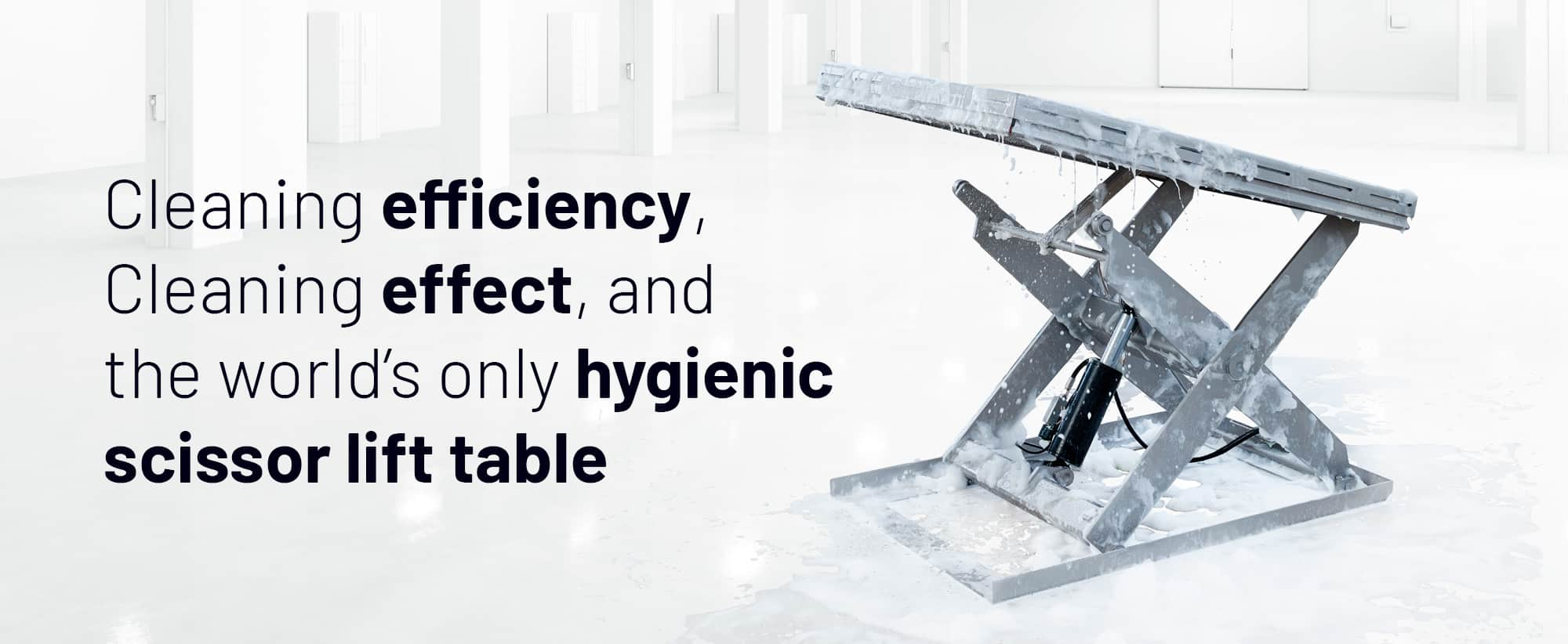
Translyft’s hygienic scissor lift design focuses on access for cleaning, removal of product residues and effective disinfection. The company’s technical guide explains how equipment design can influence both the time needed to clean a lift and the result achieved.
Cleaning efficiency
Efficient cleaning depends on reaching surfaces quickly and applying detergent where it is needed. Visible contamination must be removed before the final disinfection stage can work effectively. Residues left in inaccessible areas can create places for bacteria to accumulate.
The guide identifies several practical requirements: surfaces should be visible, easy to reach and free from corrosion-related irregularities. Operators need access for detergent, inspection after cleaning and physical cleaning with a brush where necessary.
Cleaning effect
A visibly clean surface is an initial check, rather than the whole process. Translyft explains that an effective final disinfection stage is also required. The aim is to avoid retained contamination and reduce the risk of residues affecting products handled nearby.
Hidden angles and corners make this more difficult. Designing them out allows operators to see and remove deposits, supporting more consistent cleaning in food, pharmaceutical and cleanroom environments.
Developing the hygienic lift
Translyft reviewed the cleaning risks associated with conventional stainless steel scissor lifts, then redesigned, tested and adjusted its equipment. The development included work with the Danish Technological University on cleaning efficiency and effect.
The resulting design seeks to make surfaces accessible and remove blind corners. It is intended to continue developing as the company adapts its equipment to individual applications and cleaning requirements.
Design details
Slots in the top plate improve cleaning access. An open safety trip bar reduces areas where contamination might collect beneath the table, while drain holes in the bottom plate allow residues to be washed away more easily. A rail system can replace the base frame where appropriate.
The top can be raised to an angle of at least 45 degrees for cleaning. This exposes the underside of the plate and gives access to parts of the scissor mechanism that would otherwise be difficult to reach.
Translyft reports that these details can reduce cleaning time and expenditure on water and detergent by up to 50%. The precise combination of components is selected for each application, matching the lift to the products handled and the customer’s operating environment.
For more information on Cleaning Efficiency and Hygienic Scissor Lift talk to Translyft UK Ltd