 Get Listed

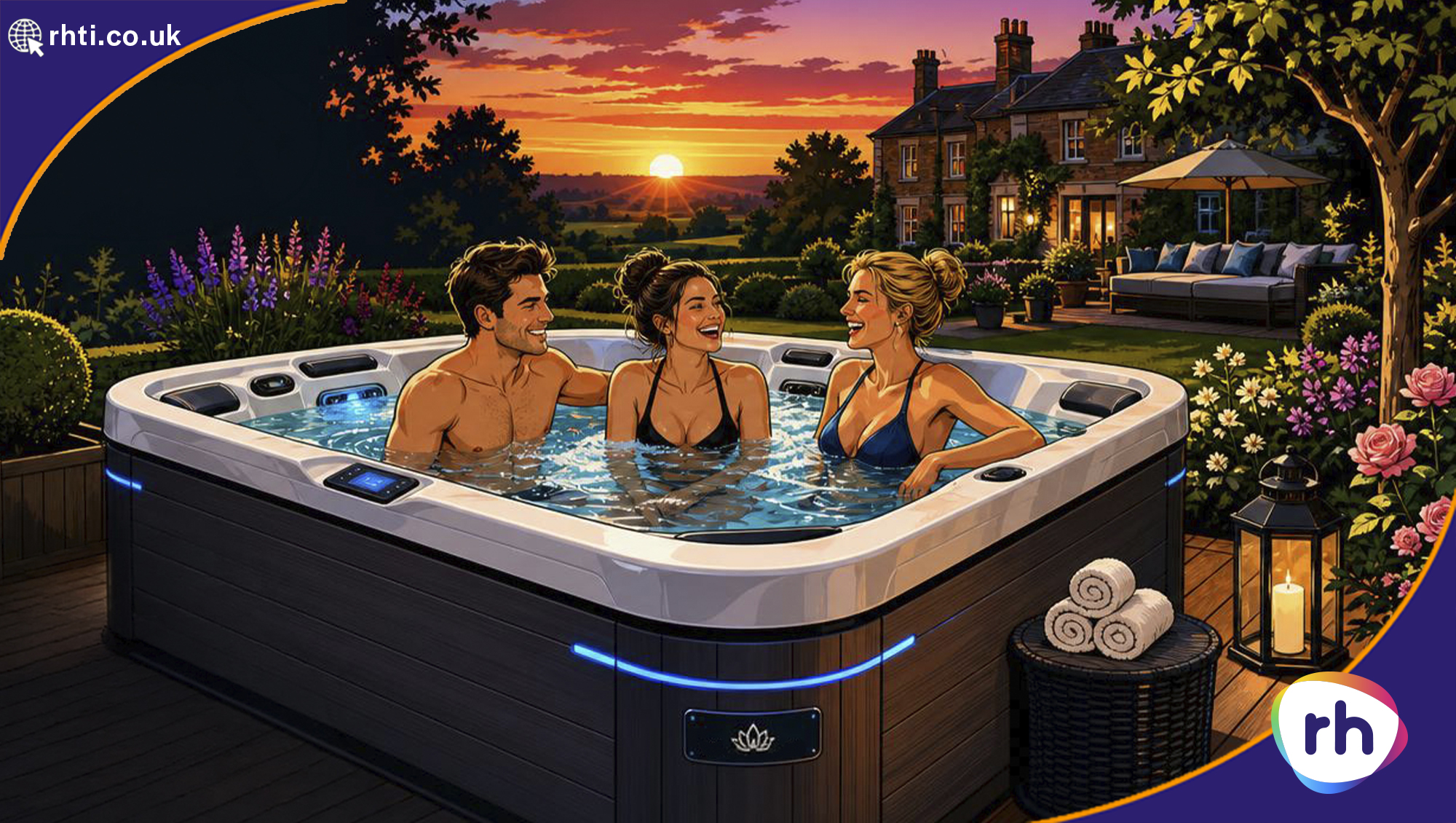
RH Technical Industries is highlighting the engineering considerations involved in designing water-resistant Human-Machine Interfaces (HMIs), membrane keypads and control panels for equipment operating in demanding wet environments.
From luxury hot tubs exposed to water, steam and cleaning chemicals to marine control equipment operating in challenging conditions, moisture can present a significant threat to electronic interfaces.
For manufacturers, protecting the electronics behind a control panel requires more than simply selecting a water-resistant outer material. The complete interface needs to be considered, including its graphic overlay, sealing, adhesives, switching technology, enclosure and intended operating environment.
RH Technical Industries works with manufacturers to develop bespoke interfaces around these requirements, combining material selection and sealing with durable graphics and appropriate HMI construction.
 Why Wet Environments Are Challenging for Electronic Interfaces
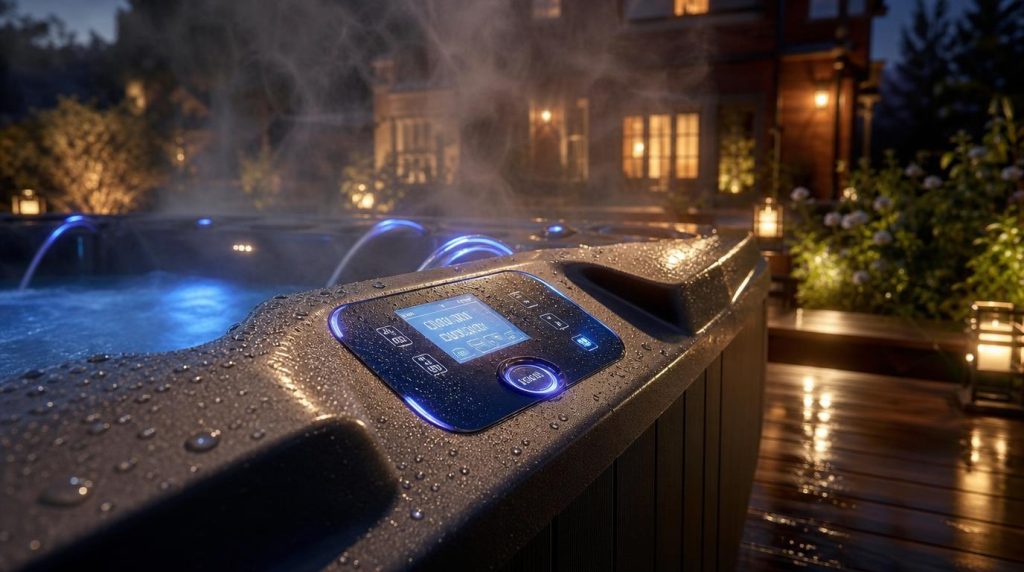
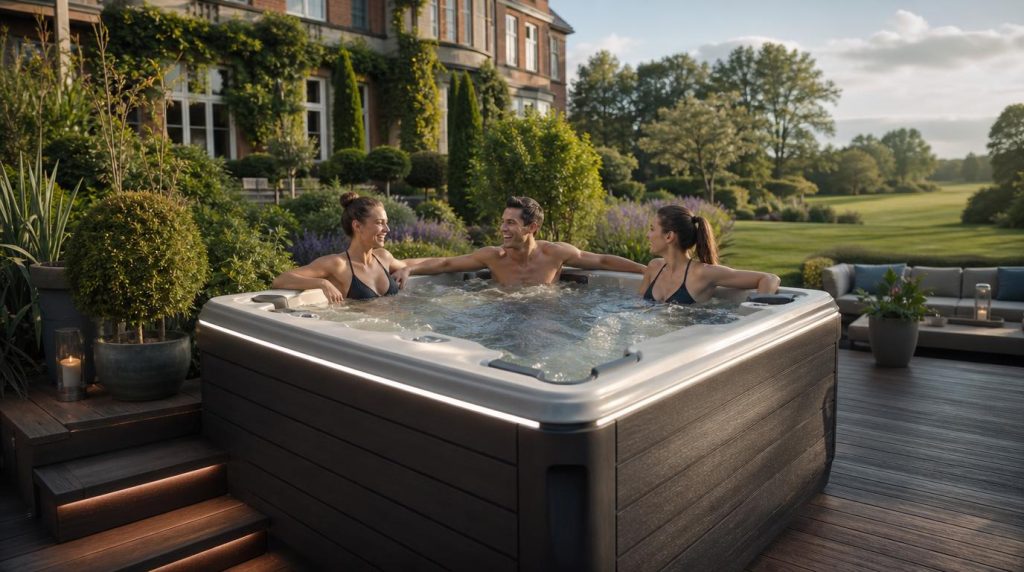
A hot tub provides a useful example of the different conditions a control interface may need to withstand.
Rather than dealing with occasional splashes alone, an outdoor hot tub control panel can potentially encounter:
-
Water and steam
-
Significant temperature changes
-
Chlorine and bromine
-
Prolonged UV exposure
-
Repeated operation with wet hands
-
Cleaning chemicals and detergents
Each can affect an interface differently.
Moisture entering an inadequately sealed switch can reach internal circuitry, while repeated heating and cooling can cause materials to expand and contract. Chemicals may attack unsuitable plastics or adhesives, and UV exposure can contribute to discolouration and material degradation.
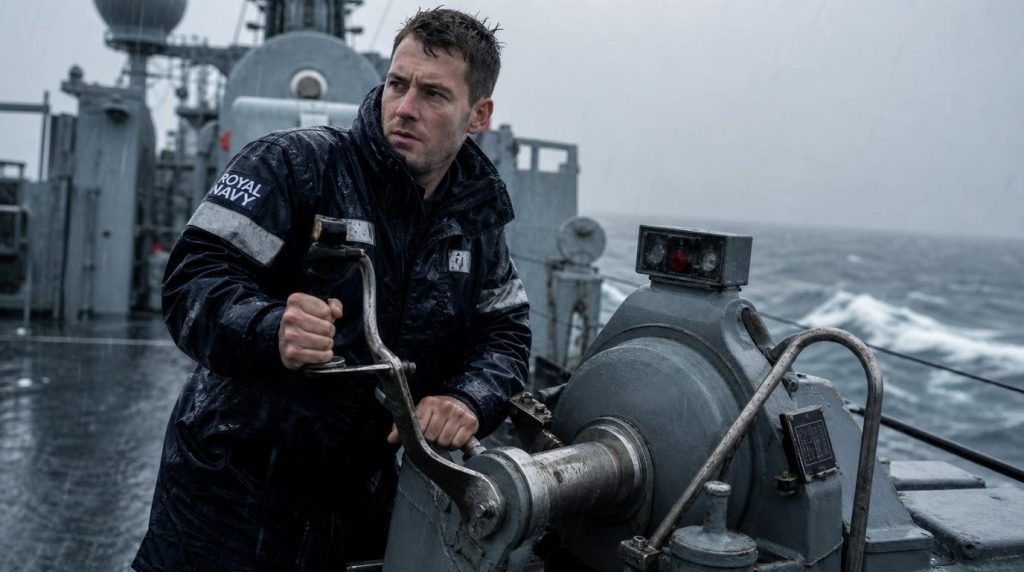
Similar considerations apply in marine and other industrial environments, where interfaces may encounter water, cleaning processes and demanding operating conditions.
RH Technical Industries therefore considers the complete operating environment when designing a water-resistant interface rather than treating moisture protection as an isolated requirement.
Starting with the Operating Environment
The first stage is understanding exactly where and how the finished interface will be used.
Will the control panel experience splashes or more substantial water exposure? Could it encounter saltwater? Will the equipment be regularly cleaned? What temperatures will it experience, and will it be exposed to direct sunlight?
These questions influence decisions throughout the HMI design.
By considering environmental threats during development, materials, sealing methods and adhesives can be specified around the conditions the finished product is expected to encounter.
 Selecting Materials for Water-Resistant HMIs
Material selection is particularly important for graphic overlays and membrane keypads intended for wet or chemically aggressive environments.
RH Technical Industries can use high-performance polyester for applications where chemical resistance and repeated flexing are important considerations.
Appropriate UV-resistant materials can also be selected for interfaces intended for outdoor equipment, helping the assembly withstand prolonged exposure to sunlight.
The objective is to ensure that the materials throughout the interface work together rather than relying on a single component to provide environmental protection.
Designing for IP67 Protection
Where a higher degree of environmental protection is required, an interface can be designed around an appropriate IP rating.
IP67, for example, describes protection against dust ingress and temporary immersion in water under the defined conditions of the rating.
Achieving the required protection involves considering the complete assembly. RH Technical Industries can incorporate perimeter sealing and gasket arrangements designed to prevent moisture and contaminants reaching the internal switching components.
The relationship between the membrane keypad and the equipment enclosure is therefore an important part of the design.
Subsurface Printing Protects Interface Graphics
Water resistance is only one requirement. Graphics also need to remain clear throughout the working life of the equipment.
RH Technical Industries uses subsurface printing, where graphics are printed on the reverse of a transparent graphic overlay.
The printed ink is consequently protected behind the outer material rather than sitting directly on the exposed surface.
This helps protect logos, legends, symbols and operating instructions from direct contact with wet hands, cleaning products and everyday abrasion.
For equipment that is regularly cleaned or operated in demanding environments, protecting the graphics in this way can help maintain the appearance and legibility of the interface.
Sealed Membrane Switching Technology
Conventional mechanical switches can contain openings and gaps through which moisture and contamination may enter.
A membrane switch provides a different approach, using a predominantly flat interface with the conductive switching layers contained within the assembly.
Tactile metal domes can also be incorporated beneath the graphic overlay to provide physical feedback when a button is pressed.
This can be useful where operators need clear confirmation of activation, including applications where controls may be operated with wet hands or gloves.
Choosing the Right Adhesive
Even a carefully designed keypad can experience problems if its adhesive system is unsuitable for the application.
Water, chemicals, heat and the material used for the equipment housing can all influence adhesive selection.
RH Technical Industries therefore considers the substrate to which the interface will be bonded and can specify high-performance acrylic adhesive systems for demanding environments.
Selecting an adhesive around the actual enclosure material and operating conditions helps maintain the bond between the HMI and the equipment while supporting the overall sealing strategy.
 Testing Before Production
Prototyping and testing provide an opportunity to assess a water-resistant interface before it moves into full production.
RH Technical Industries develops prototypes around the expected real-world conditions, allowing the proposed sealing, materials and construction to be assessed before a product is launched.
This stage can help identify potential weaknesses earlier in the development process, when alterations are generally easier to make than after equipment has entered service.
Engineering the HMI Around the Complete Product
RH Technical Industries positions its role as extending beyond simply printing a graphic overlay or supplying an individual switch.
Its engineering team can work with manufacturers during product development, considering the equipment housing, circuit boards, gasket arrangements and bonding surfaces alongside the membrane keypad itself.
This can help determine how the interface fits into the enclosure and how potential routes for moisture ingress should be managed.
The company can also incorporate additional HMI features where required.
These include dead-front or 'secret-until-lit' graphics, where selected symbols become visible only when illuminated, as well as embossed controls that provide tactile identification for operators.
Such features can be particularly useful where visibility is affected by environmental conditions or where users need to identify controls by touch.
 Water-Resistant Interfaces for Demanding Applications
From outdoor leisure equipment to demanding marine applications, water-resistant interface design requires several elements to work together.
RH Technical Industries combines membrane keypad design, graphic overlays, material selection, subsurface printing, sealing, adhesives and prototyping to develop bespoke HMIs around the conditions in which the finished equipment will operate.
By considering environmental exposure during the design stage, manufacturers can reduce the risk of moisture, chemicals and physical wear compromising an otherwise well-engineered product.
For businesses developing equipment for wet, outdoor or otherwise challenging environments, RH Technical Industries can provide engineering support from initial HMI design through to prototype and production.
The RH Technical Industries engineering team can be contacted on 01264 721450 or sales@rhti.co.uk to discuss water-resistant membrane keypads, graphic overlays and bespoke HMI requirements.
For more information on From Hot Tubs to Battleships: Designing Water-Resistant Interfaces talk to RH Technical Industries Ltd