 Get Listed


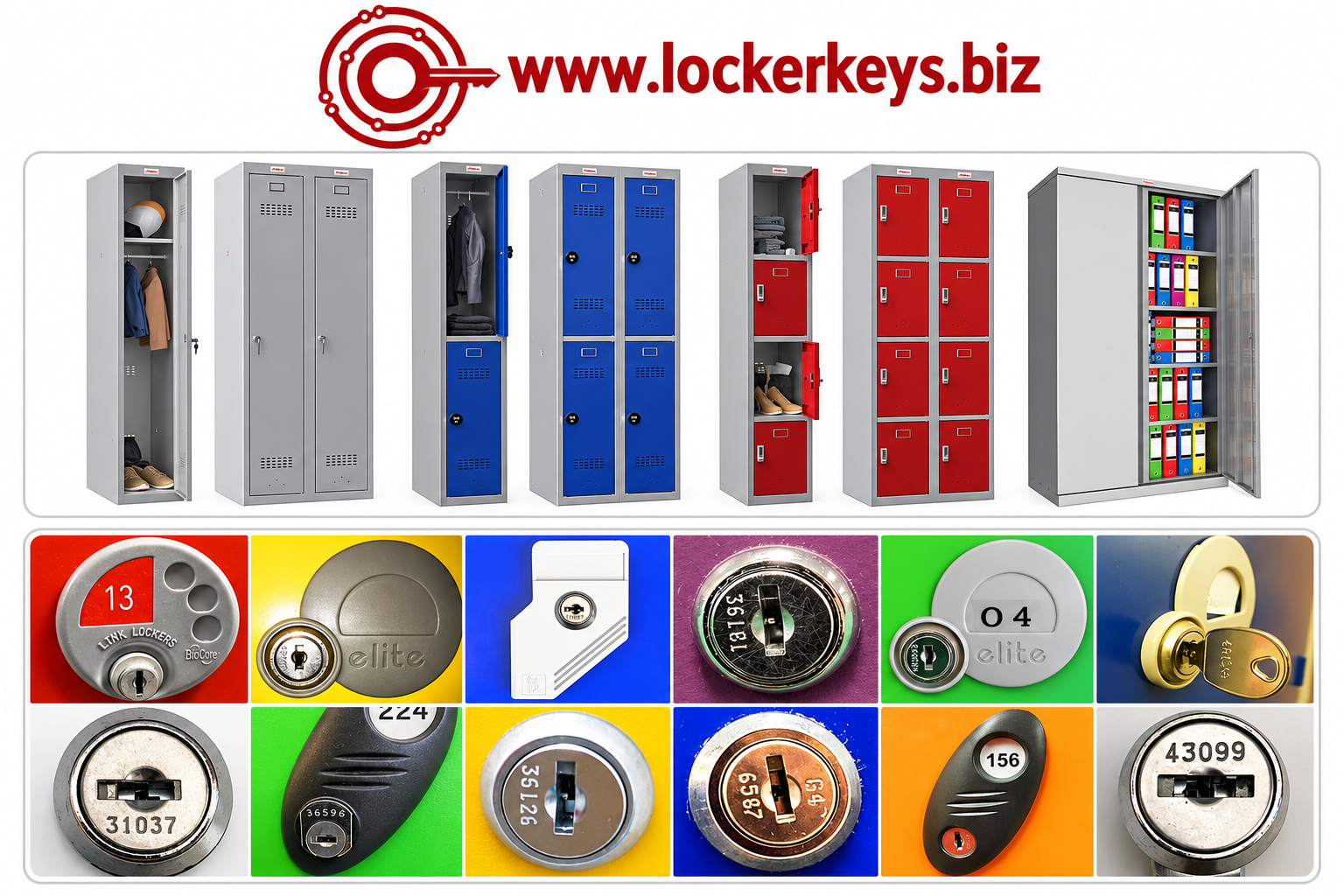
The key number is usually stamped on the front of the lock, known as the lock face, and on the original key.
Enter it at lockerkeys.biz and you will see the matching key types with examples. If you cannot find it, email a photo of the lock face or key.
Key numbers are usually short codes of numbers or letters and numbers. They are stamped into the metal of the lock face, often near the keyhole.
On the key, the number is usually stamped on the bow, the part you hold.
If neither is readable, a photo can help identify the key.
Speed matters when someone is locked out of their storage. Many replacement keys are available for same day dispatch on orders placed before 2pm, Monday to Friday, with delivery anywhere in the UK, usually next day.
Every replacement key is cut by computer to the manufacturer's code, so it matches the quality of an original. All you need is the key number, which is stamped on the lock face and usually on the key itself. No original key is needed.
Master keys are part of the range too, giving authorised staff a quick way into lockers when a key goes missing. Master keys such as QMP master keys can be made from the number stamped on the lock face or original key.
Where keys keep going missing, codelocks are worth considering. There is no key to lose, and the code can be changed when people move on. Euro cylinders give a quick, low cost way to update door security too.
A national supplier means the same service wherever your sites are. Whether you have one building or dozens spread across the country, replacement locks and keys can be delivered anywhere in the UK, usually next day.
The number is the shortcut to a fast replacement.
For more information on Where to Find Your Key Number talk to lockerkeys.biz