 Get Listed
Sign In


Decking Fixings: Safer, Faster, Simpler
15/05/2026
Written by: Edina Ciuchilan
15/05/26 - 5 Min read
In structural steel and composite flooring construction, fixing methods are frequently treated as a minor detail. In reality, they influence installation speed, structural integrity, lasting durability, and critically, worker health.
One specific risk arises when drilling through the steel decking profile into the concrete slab above. This process releases respirable crystalline silica dust from the hardened concrete. These microscopic particles become airborne and, if inhaled, can penetrate deep into the lungs. Prolonged exposure is associated with serious and irreversible health conditions, including silicosis, COPD and lung cancer.
At Lindapter, our decking fixing solutions are purpose-built to avoid that scenario entirely.
Traditional drilling into concrete, through decking introduces not just dust, but:
Exposure to silica dust, which cannot be mitigated simply by surface cleaning; Increased labour and programme time, especially when working around live services or restricted access areas; Disruption to protective coatings on the decking profile, potentially inviting corrosion over time; Complicated hot works procedures, which bring restrictions, permits and risk assessments that slow progress.
Eliminating the Need to Drill Into Concrete
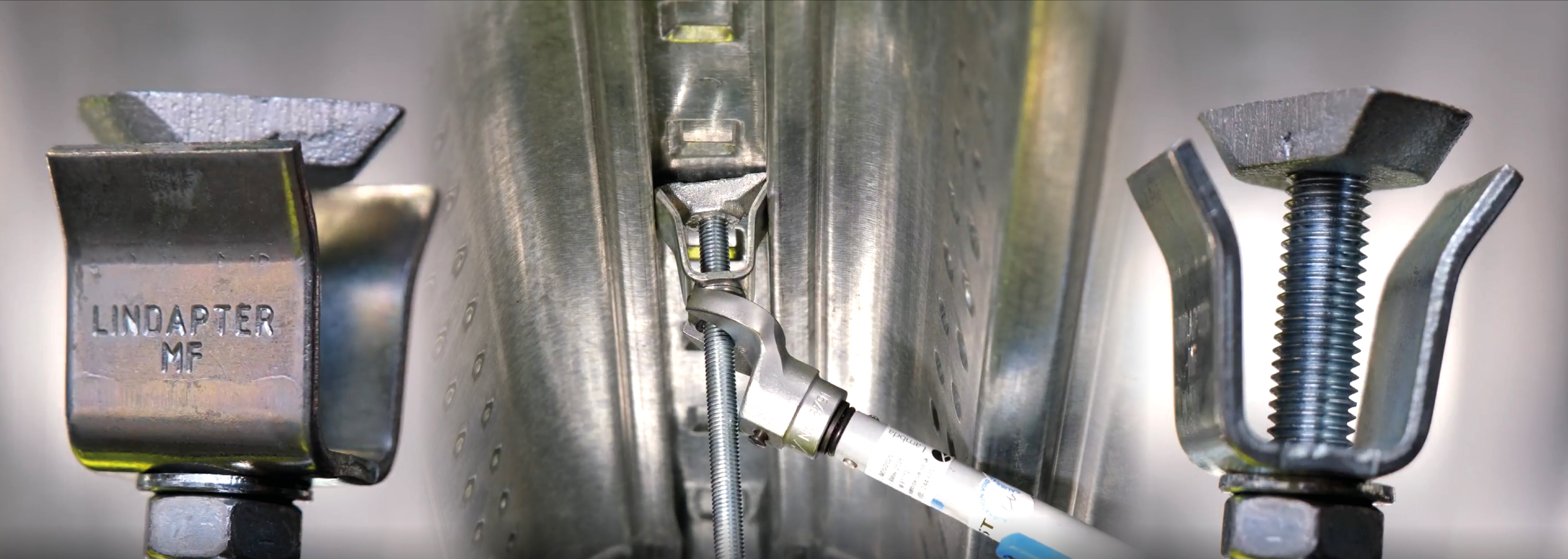
Lindapter's range of decking fixings are engineered to work within the existing decking geometry - they locate in the dovetail re-entrant channel of popular composite profiles and clamp securely without penetrating the decking surface. As a consequence:
No at the project site welding or drilling is required; Installation is faster, safer and less disruptive; Protective coatings and deck integrity are preserved; Silica dust exposure is eliminated at source.
Why This Matters in Practice
Drilling through decking into concrete isn't just a health issue. It also:
Increases time required for installation Requires dust suppression and extraction controls Introduces noise and vibration Risks misalignment or rework Compromises protective finishes Creates additional approval and safety processes
By contrast, clamp-based decking fixings preserve the integrity of the deck while providing secure, tested attachment points for services and secondary steelwork.
For projects operating under strict health and safety controls or aiming to proactively reduce lasting occupational exposure risks, eliminating the need to drill into concrete is a meaningful step forward.
Supporting Best Practice Through Training
To help contractors, engineers and specifiers understand both the technical and practical benefits provided by these solutions, we have produced a dedicated training video series covering:
What decking fixings are and how they function Profile compatibility considerations Correct installation procedures Common best practice on the project site The benefits provided by avoiding drilling into the concrete slab
The first videos focus on the TR60, MF & MW2 decking fixing. Each video demonstrates real installation methods and explains how the fixing engages within the decking profile, without penetrating the slab above.
These videos provide a clear, accessible starting point for teams looking to modernise their approach.
From Video Learning to Accredited CPD
While the videos introduce the core principles, many organisations require deeper technical understanding, particularly when writing specifications, assessing risk, or selecting compliant fixing strategies.
That's where our CPD programme adds further value.
Our accredited Continuing Professional Development sessions, delivered either online or face to face, cover:
Structural and load considerations Deck profile compatibility and limitations Compliance and testing data Health and safety implications of different fixing methods Best practice specification strategies Risk reduction through elimination of concrete drilling
These sessions are tailored to designers, consultants, contractors and site teams who want over product awareness, they want technical confidence and informed decision-making.
Better decisions at connection level create better outcomes across the build.
If you'd like to arrange a CPD session for your team, our specialist engineering team would be pleased to support you.
15/05/26 - 5 Min read
In structural steel and composite flooring construction, fixing methods are frequently treated as a minor detail. In reality, they influence installation speed, structural integrity, lasting durability, and critically, worker health.
One specific risk arises when drilling through the steel decking profile into the concrete slab above. This process releases respirable crystalline silica dust from the hardened concrete. These microscopic particles become airborne and, if inhaled, can penetrate deep into the lungs. Prolonged exposure is associated with serious and irreversible health conditions, including silicosis, COPD and lung cancer.
At Lindapter, our decking fixing solutions are purpose-built to avoid that scenario entirely.
Traditional drilling into concrete, through decking introduces not just dust, but:
Exposure to silica dust, which cannot be mitigated simply by surface cleaning; Increased labour and programme time, especially when working around live services or restricted access areas; Disruption to protective coatings on the decking profile, potentially inviting corrosion over time; Complicated hot works procedures, which bring restrictions, permits and risk assessments that slow progress.
Eliminating the Need to Drill Into Concrete
Lindapter's range of decking fixings are engineered to work within the existing decking geometry - they locate in the dovetail re-entrant channel of popular composite profiles and clamp securely without penetrating the decking surface. As a consequence:
No at the project site welding or drilling is required; Installation is faster, safer and less disruptive; Protective coatings and deck integrity are preserved; Silica dust exposure is eliminated at source.
Why This Matters in Practice
Drilling through decking into concrete isn't just a health issue. It also:
Increases time required for installation Requires dust suppression and extraction controls Introduces noise and vibration Risks misalignment or rework Compromises protective finishes Creates additional approval and safety processes
By contrast, clamp-based decking fixings preserve the integrity of the deck while providing secure, tested attachment points for services and secondary steelwork.
For projects operating under strict health and safety controls or aiming to proactively reduce lasting occupational exposure risks, eliminating the need to drill into concrete is a meaningful step forward.
Supporting Best Practice Through Training
To help contractors, engineers and specifiers understand both the technical and practical benefits provided by these solutions, we have produced a dedicated training video series covering:
What decking fixings are and how they function Profile compatibility considerations Correct installation procedures Common best practice on the project site The benefits provided by avoiding drilling into the concrete slab
The first videos focus on the TR60, MF & MW2 decking fixing. Each video demonstrates real installation methods and explains how the fixing engages within the decking profile, without penetrating the slab above.
These videos provide a clear, accessible starting point for teams looking to modernise their approach.
From Video Learning to Accredited CPD
While the videos introduce the core principles, many organisations require deeper technical understanding, particularly when writing specifications, assessing risk, or selecting compliant fixing strategies.
That's where our CPD programme adds further value.
Our accredited Continuing Professional Development sessions, delivered either online or face to face, cover:
Structural and load considerations Deck profile compatibility and limitations Compliance and testing data Health and safety implications of different fixing methods Best practice specification strategies Risk reduction through elimination of concrete drilling
These sessions are tailored to designers, consultants, contractors and site teams who want over product awareness, they want technical confidence and informed decision-making.
Better decisions at connection level create better outcomes across the build.
If you'd like to arrange a CPD session for your team, our specialist engineering team would be pleased to support you.
For more information on Decking Fixings: Safer, Faster, Simpler talk to Lindapter International
Welcome back to FindTheNeedle.
Not registered? Get listed — most visitors don't have an account yet.
List your company on FindTheNeedle.