 Get Listed

Small Batch Packaging
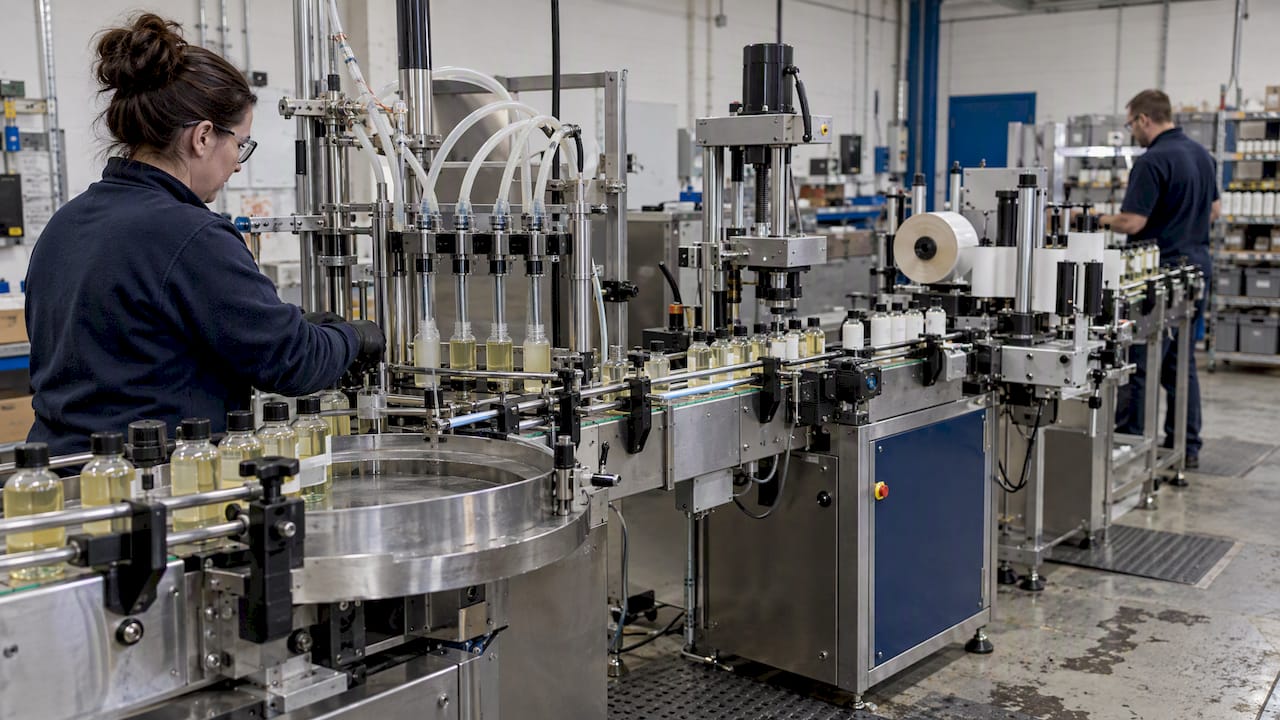
Frequent changeovers can determine the performance of a small packaging operation more than its maximum running speed. KBW Packaging's small batch guide explains why equipment should be selected around the product mix, cleaning requirements and time available between runs, rather than a headline output figure alone.
The guide addresses businesses moving from hand packing to machinery across cosmetics, food and drink, supplements and pharmaceutical applications. It distinguishes the machines that fill, count, close and label products from the printed packaging materials used around them.
Understand what makes a batch small
There is no single operational definition. Typical examples include runs of a few hundred or a few thousand units, multiple product variants and regular changes of bottle, dose or label. A supplement brand may launch several blends, a cosmetics producer may make seasonal lotions and a food business may work through a range of sauces.
In each case, repeatable setup and flexibility can matter more than high continuous speed. Equipment that spends much of the shift being cleaned or adjusted may deliver less useful output than a slower machine that changes over readily.
The pack design is part of this decision. Containers and closures need to be compatible with the machinery that will handle them, even when the initial run is filled or closed by hand.
Calculate capacity using the full production week
KBW recommends listing every product and pack size, its weekly quantity and the number of batches needed. The calculation should then include cleaning, changing parts, setting guides, making first-off samples and obtaining approval, alongside actual running time.
The guide uses an illustrative requirement of 6,000 units across four 1,500-unit batches. Four changeovers taking 90 minutes each consume six hours before filling time is considered. Reducing each changeover to 30 minutes saves four hours; increasing the machine's running speed alone would not remove that setup burden.
Tool-free adjustments, readable scales and settings that operators can record and repeat therefore deserve a place in the specification. The resulting schedule must also fit the shifts and staff the business can actually provide.
Automate the biggest constraint first
A complete automatic line is not always necessary at the outset. The first investment should address the manual task causing the greatest loss of time, accuracy or consistency, while allowing later equipment to work with it.
For liquids, creams and gels, filling machinery can improve dose repeatability and reduce product giveaway. Important questions include the available fill range, compatibility with different viscosities and how quickly contact parts can be removed for cleaning. KBW identifies the semi-automatic AF0010 as one possible starting point for lower volumes.
For tablets, capsules and soft gels, counting machinery can address repetitive manual counting and its associated error risk. Adjustable count settings and suitability for the products being packed need to be established; the AC500 is among KBW's compact examples.
Capping equipment addresses inconsistent closure application, while induction sealing can provide a foil seal where the pack requires one. These stations should be specified around the actual closure and container rather than treated as interchangeable accessories.
Labelling can become a particular constraint when each product variant uses different artwork or coding. A suitable machine needs to accommodate container shapes, change readily and apply the information required for each run. Accumulation and rotary tables can then provide a buffer between stations and reduce repetitive feeding and collection work.
Compare semi-automatic and automatic operation
Semi-automatic machines normally require an operator to load a container and start each cycle. They can offer a compact footprint and relatively straightforward setup for varied short runs. Automatic machinery is more suited to steadier volumes but needs its guides, sensors, nozzles and handling arrangements set correctly for each format.
The choice should be based on the complete cost of ownership. Initial price, operator time, cleaning, changeovers and future integration all influence the result. A semi-automatic machine can remain a useful investment as other stages are automated, provided the layout and handling arrangements have been planned in advance.
KBW supplies configurable equipment rather than a single fixed package, so quotations are based on the products, containers and output required. Businesses should ask suppliers to demonstrate their full intended product range, not simply the first item they plan to launch.
Keep quality and compliance within the specification
Small production runs still require appropriate quantity control, labelling and sector-specific quality processes. The machinery should make checks practical: repeatable filling or counting, accessible cleaning parts and clear batch and date coding can all help operators carry out the agreed procedures.
Quantity-control arrangements should be confirmed for the products concerned. Government guidance covers both minimum and average packing systems; the appropriate records and checks depend on the method used. The size of the business does not by itself establish that its packs are outside the rules.
Medicine and cosmetic packaging introduce their own approval, information and traceability requirements. Artwork or component changes should be reviewed by the relevant quality personnel. Packaging waste responsibilities also need to be considered as the operation grows, with current official guidance used to establish the business's position.
Assess the safety of the combined line
Joining individual machines can create new interfaces and hazards. Before equipment is connected, responsibilities for the complete arrangement, guarding, interlocks, instructions and assessment should be agreed with competent suppliers or assessors. Existing conformity documentation for one machine does not answer every question about the way the machines will work together.
This matters when a company expands gradually. Conveyor connections, container transfer points and operator access can change as a filler is joined to a capper or labeller. Safety and cleaning access should be considered alongside speed and available floor space.
Buy with later products in mind
KBW advises businesses to describe their next two or three likely products before selecting machinery. Different viscosities, container dimensions or labels may expose limitations that are not obvious during the first purchase. Changeover time should be treated as a requirement with the same importance as nominal speed.
Sector priorities will vary. Pharmaceutical and veterinary operations may concentrate on accurate counting and traceability; supplements often introduce frequent formulations and pack sizes; cosmetics add viscous handling and presentation requirements; pet care can involve liquids, supplements and treats.
The company can discuss filling, counting, capping, sealing and labelling equipment as part of a staged investment. Its guide encourages customers to supply realistic weekly volumes and packaging samples, agree the training and support needed, and choose a route that can grow without forcing the whole operation to start again.
Source: KBW Packaging
For more information on Small Batch Packaging talk to KBW Packaging Ltd