 Get Listed
Sign In

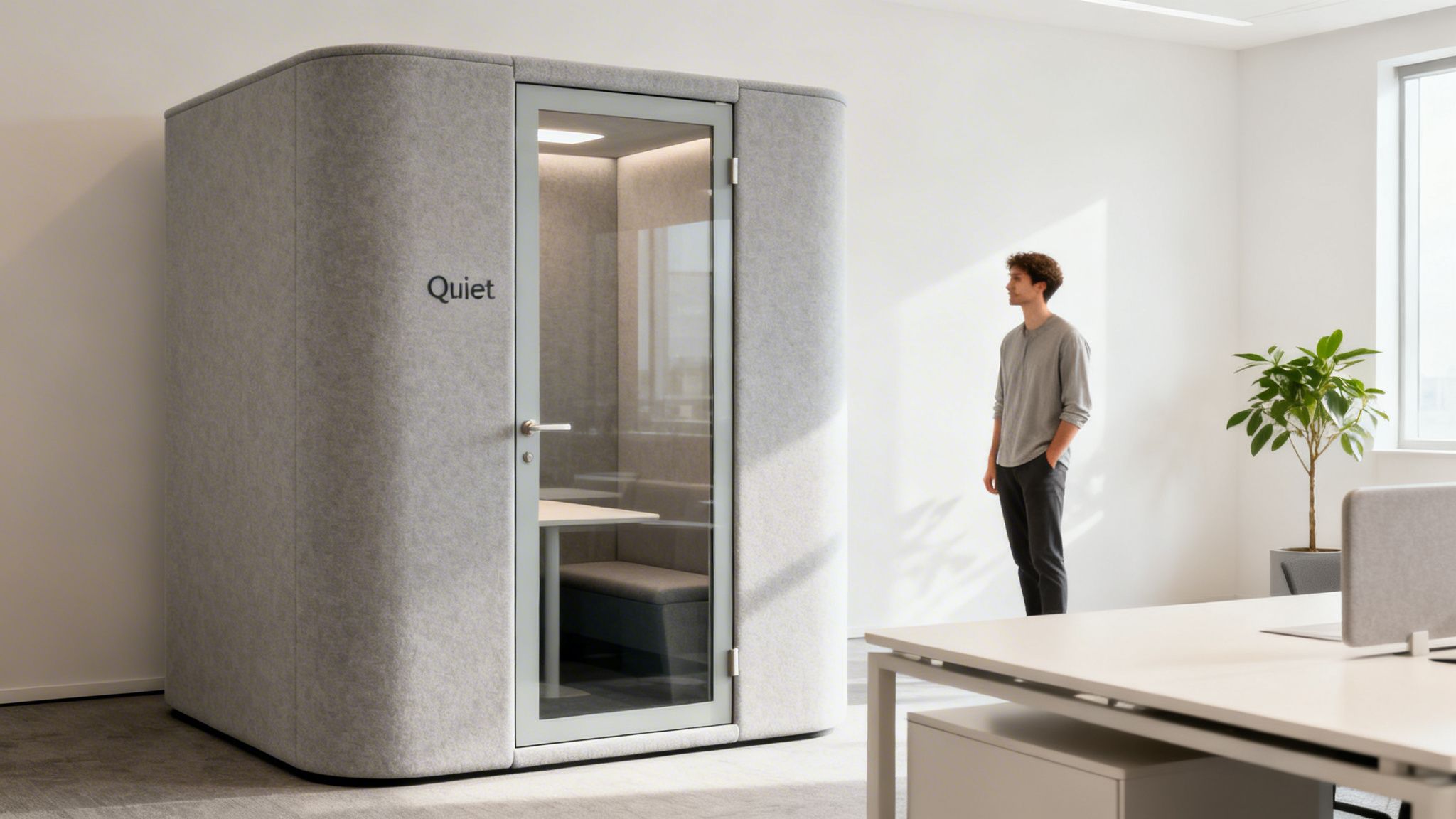
Different acoustic materials solve different problems, so choosing the 'best' one depends on whether the priority is absorption, sound transmission or both.
What to consider
Mineral wool and dense insulation are commonly used inside partitions to reduce transmission. Multiple plasterboard layers add mass, while acoustic seals help close the gaps where sound escapes. Fabrics, ceiling panels and wall absorbers reduce reverberation within a room rather than stopping sound passing into the next one.
The strongest results come from treating the full construction as a system. A high-spec wall will still underperform if doors, glazing or ceiling junctions are weak. For flexible offices, tested acoustic pods can provide a predictable enclosed solution without rebuilding large areas.
What to consider
Mineral wool and dense insulation are commonly used inside partitions to reduce transmission. Multiple plasterboard layers add mass, while acoustic seals help close the gaps where sound escapes. Fabrics, ceiling panels and wall absorbers reduce reverberation within a room rather than stopping sound passing into the next one.
The strongest results come from treating the full construction as a system. A high-spec wall will still underperform if doors, glazing or ceiling junctions are weak. For flexible offices, tested acoustic pods can provide a predictable enclosed solution without rebuilding large areas.
For more information on The Best Materials for Sound Insulation for the Modern Office in 2026 talk to GIBBSONN Limited
Welcome back to FindTheNeedle.
Not registered? Get listed — most visitors don't have an account yet.
List your company on FindTheNeedle.