 Get Listed

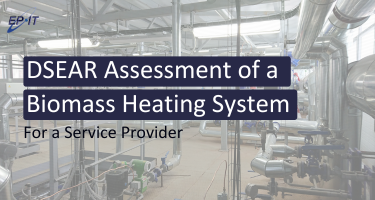
A UK service provider required support to assess compliance with the Dangerous Substances and Explosive Atmospheres Regulations 2002 (DSEAR) in relation to a biomass heating system installed at one of its facilities.
EPIT was appointed to carry out a site assessment and evaluate the risks associated with the use of wood pellets as a fuel source, ensuring alignment with regulatory requirements.
Challenge
The building had recently been acquired, and the client wanted to verify that existing surveys and documentation were accurate and still applicable. The site utilised a wood pellet burner system, where fuel handling and storage introduced the potential for combustible dust and hazardous gas formation.
Key challenges identified included:
- Risk of dust cloud generation during fuel transfer into the hopper
- Potential ignition sources from hot surfaces and electrical equipment
- Lack of documented procedures for safe operation and fuel handling
- No evidence of staff training or competency records
- Absence of suitable ventilation or dust extraction systems
- Inadequate fire and gas detection arrangements
The assessment also identified that aspects of the system design and operation could increase the likelihood of fire or explosion if not properly controlled.
Solution
EPIT delivered a focused consultancy approach tailored to the environment:
- Conducted a site visit to assess the biomass heating system and surrounding area
- Reviewed existing controls, equipment design, and operational practices
- Identified gaps in compliance with DSEAR requirements
- Evaluated risks associated with combustible dust and ignition sources
- Assessed ventilation, storage arrangements, and safety system
Clear, practical recommendations were provided to support compliance, including:
- Developing documented safe systems of work for fuel handling
- Implementing training and competency records for staff
- Improving ventilation and considering dust control measures
- Reviewing equipment design and fire detection arrangements
- Assessing whether hazardous area classification is required
Outcome
As a result of the assessment, the client achieved:
- A clear understanding of the risks associated with their heating system
- Identification of gaps in current safety and compliance arrangements
- A structured action plan to support DSEAR compliance
- Practical guidance aligned to their operational setting
The project provided the organisation with a clear pathway to improve safety controls and demonstrate compliance, supporting a safer environment for both staff and building occupants.
For more information on Supporting a Service Provider to Assess DSEAR Risks in Heating Systems talk to EPIT