 Get Listed
How Kitting Maintains IPC + RoHS Compliance
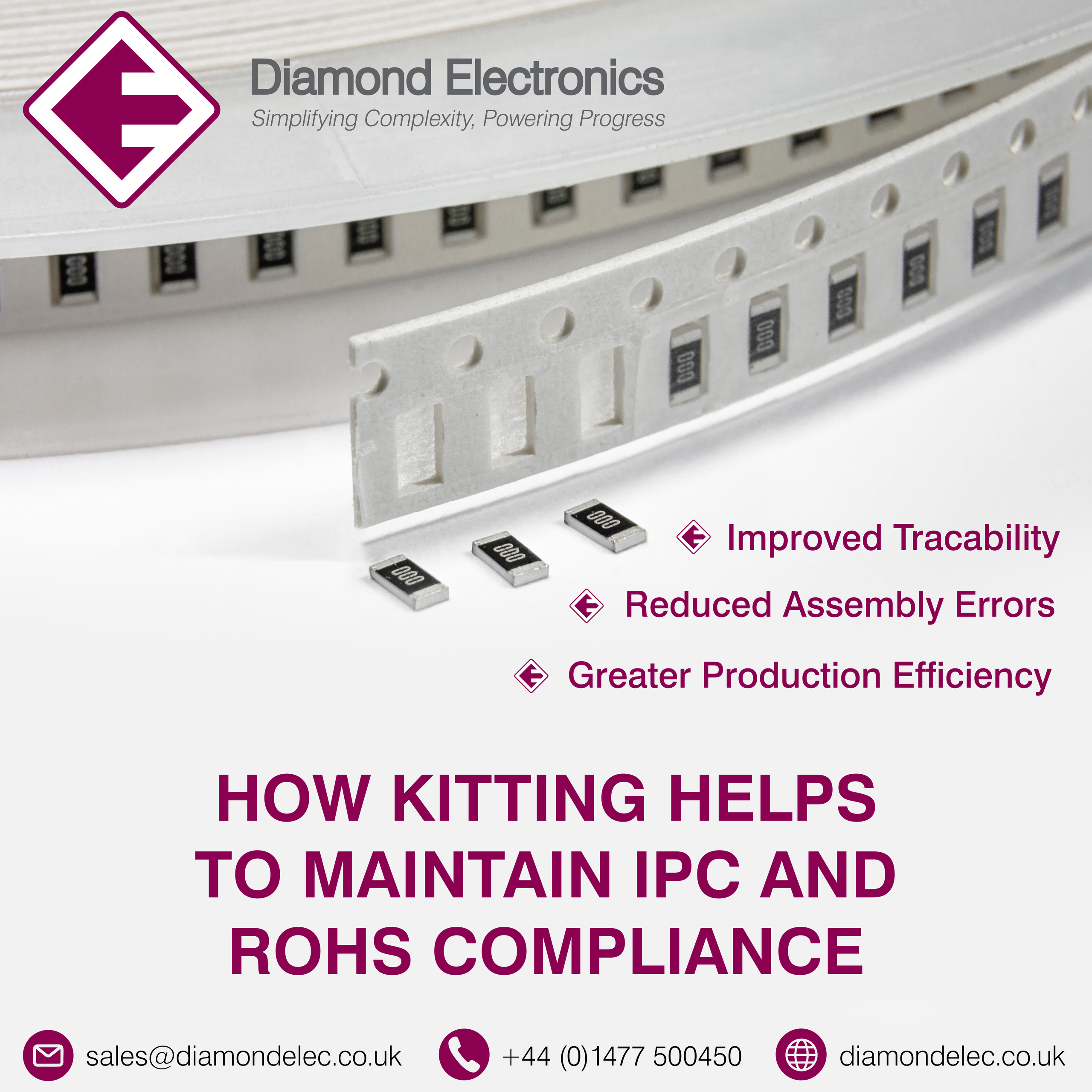
Diamond Electronics Group is highlighting the role electronic component kitting can play in supporting IPC and RoHS compliance, providing manufacturers with a more controlled and traceable process for managing components before they reach the production line.
Effective component kitting goes beyond simply grouping together the parts required for an assembly. By verifying, recording and controlling components before production, the process can improve traceability, reduce assembly errors and help manufacturers maintain more consistent compliance records.
Potential benefits include:
- Improved component traceability
- Reduced risk of RoHS compliance issues
- Greater audit readiness
- Lower assembly defect rates
- Reduced rework and scrap
- Faster containment of quality issues
- Improved supplier accountability
Supporting RoHS Compliance Through Component Kitting
RoHS – the Restriction of Hazardous Substances – places restrictions on specified hazardous substances within electrical and electronic equipment.
Component kitting can support a manufacturer's RoHS processes by providing a controlled point at which components are checked and verified before being released into production.
Preventing Component Mix-Ups
Separating component procurement and verification from the production process can help ensure that the correct parts are supplied to the assembly line.
This reduces the possibility of an incorrect or non-approved version of a component being inadvertently introduced during manufacturing.
Improving Material Traceability
Traceability is another important benefit of a structured electronic component kitting process.
Individual component lots can be associated with information including:
- Supplier details
- Batch and lot numbers
- Certificates of Conformity
- RoHS declarations
Centralising this information creates a more consistent record of the components entering production while allowing manufacturing teams to concentrate on the assembly process itself.
Should a supplier subsequently identify an issue, these records can also help determine which components were used, when relevant products were manufactured and which orders may be affected.
This can make investigations and corrective actions more targeted while reducing unnecessary disruption.
How Kitting Supports IPC Requirements
Electronic component kitting can also support manufacturers working to IPC requirements covering areas such as workmanship, assembly quality, handling, traceability and process control.
One of the key advantages is improved component control before production begins.
Verifying part numbers, board revisions and required quantities at the kitting stage can reduce the likelihood of incorrect components reaching assembly and potentially contributing to workmanship or quality problems.
Enhanced Electronic Component Traceability
Diamond Electronics Group's kitting process can provide traceability information including:
- Part numbers
- Supplier details
- Date supplied
- Order numbers
- Lot codes
- Date codes
- Picking information
Maintaining these records can provide customers with greater visibility over component provenance and help demonstrate that the appropriate parts have been selected for the required fit and functionality.
Reducing the Risk of Counterfeit and Unapproved Components
Component authenticity is another important consideration within the electronics supply chain.
Diamond Electronics Group sources parts through its verified supplier network and incorporates a multi-point inspection process, together with X-ray quantity verification, as part of its component kitting service.
These controls are designed to reduce the likelihood of counterfeit, obsolete, incorrect or damaged components progressing into customer production.
By introducing these checks before parts reach the assembly line, manufacturers have an additional quality-control point within their supply chain.
Supporting Stock Rotation and MSL Management
Electronic components can also have specific storage and handling requirements, particularly where Moisture Sensitivity Level (MSL) controls are required.
Through Diamond Electronics Group's kitting service, components can remain within appropriate storage conditions until they are required for production.
The company can provide full MSL handling, helping customers manage moisture-sensitive components without necessarily having to invest in their own dry cabinets or MSL sealing systems.
Kitting as a Quality and Compliance Control Point
Electronic component kitting can therefore provide considerably more value than simply preparing parts for assembly.
By controlling component identity, supplier information, declarations, lot numbers and usage records before production, the process can support manufacturers with RoHS compliance, IPC requirements, component traceability and quality management.
For Diamond Electronics Group, the objective is to ensure approved and traceable components reach production in the correct quantities and condition, while reducing the administrative and quality risks associated with managing complex electronic component supply chains.
Further updates from Diamond Electronics Group are available through the company's LinkedIn page.
For more information on How Kitting Maintains IPC + RoHS Compliance talk to Diamond Electronics Ltd