 Get Listed
Sign In


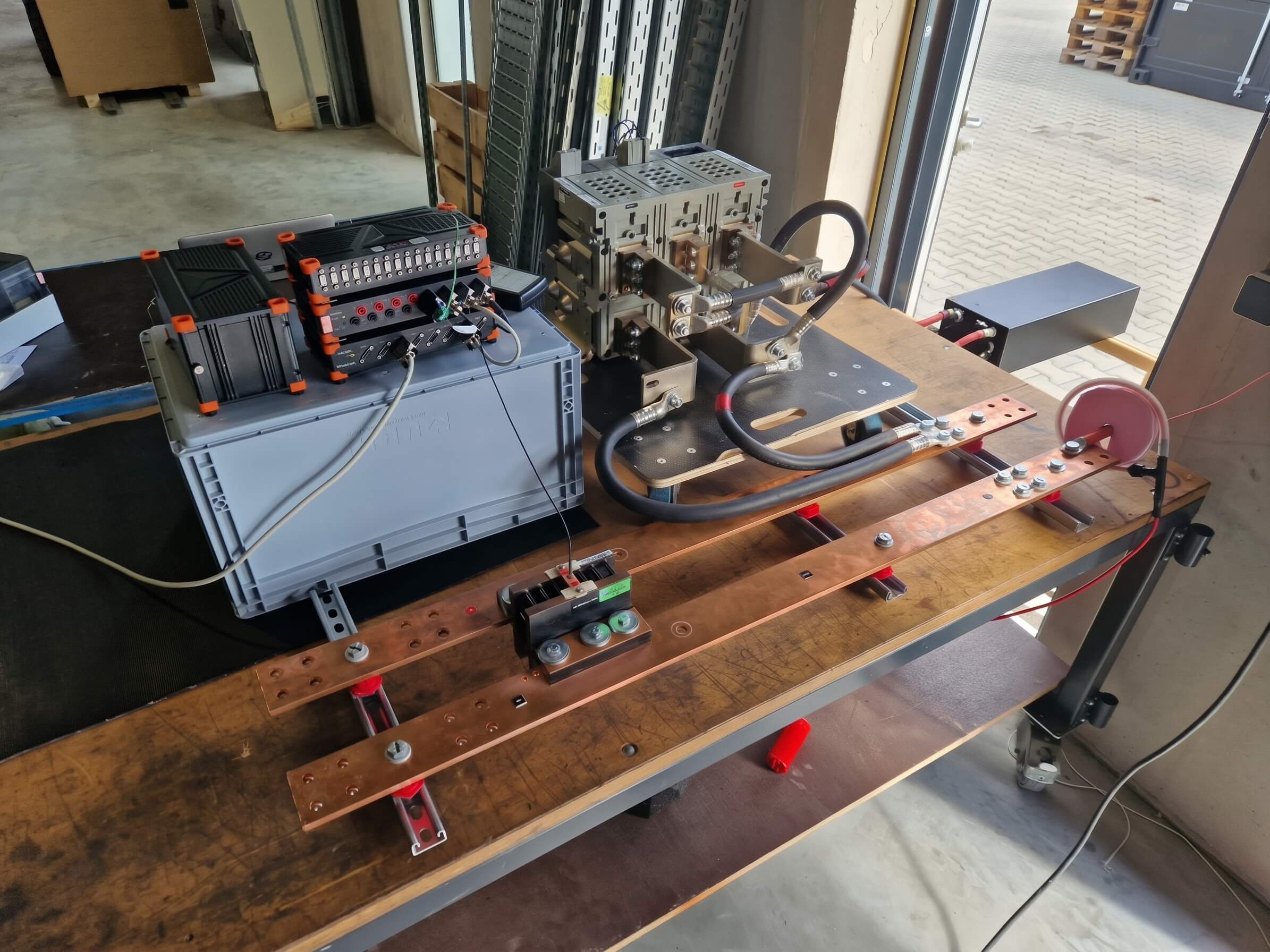
Understanding how battery modules behave under extreme fault conditions is critical to designing safe and reliable energy storage systems.
The AIT Austrian Institute of Technology performed a short-circuit test on a high-current battery module with an expected current of up to 10 kA, highlighting both the measurement techniques and the required safety precautions. Key insights from the test include the effects of internal resistance and inductance on current dynamics, as well as the evaluation of I²t for thermal and protective device stress assessment.Why battery modules are short-circuit testedA battery module short-circuit test answers a questions no datasheet can:how much current does a module actually deliver when its terminals are bridged by a near-zero-resistance path, how fast does that current arrive, andhow much energy does the fault dump into the surrounding hardware before protection can clear it?At the AIT Austrian Institute of Technology, we short-circuited a 28.9 V battery module expected to deliver up to 10 kA, and measured a peak of 7,801 A reached in 7.5 ms.A short circuit occurs when current flows along an unintended, low-resistance path that bypasses the normal load.
The AIT Austrian Institute of Technology performed a short-circuit test on a high-current battery module with an expected current of up to 10 kA, highlighting both the measurement techniques and the required safety precautions. Key insights from the test include the effects of internal resistance and inductance on current dynamics, as well as the evaluation of I²t for thermal and protective device stress assessment.Why battery modules are short-circuit testedA battery module short-circuit test answers a questions no datasheet can:how much current does a module actually deliver when its terminals are bridged by a near-zero-resistance path, how fast does that current arrive, andhow much energy does the fault dump into the surrounding hardware before protection can clear it?At the AIT Austrian Institute of Technology, we short-circuited a 28.9 V battery module expected to deliver up to 10 kA, and measured a peak of 7,801 A reached in 7.5 ms.A short circuit occurs when current flows along an unintended, low-resistance path that bypasses the normal load.
For more information on Battery Short-Circuit Test: Measuring 7.8 kA Peak Current and I²t talk to Dewesoft UK Ltd
More News
List your company on FindTheNeedle.