 Get Listed


White Square UPVC Internal Window Sill & Board
Product Code: F410PW.
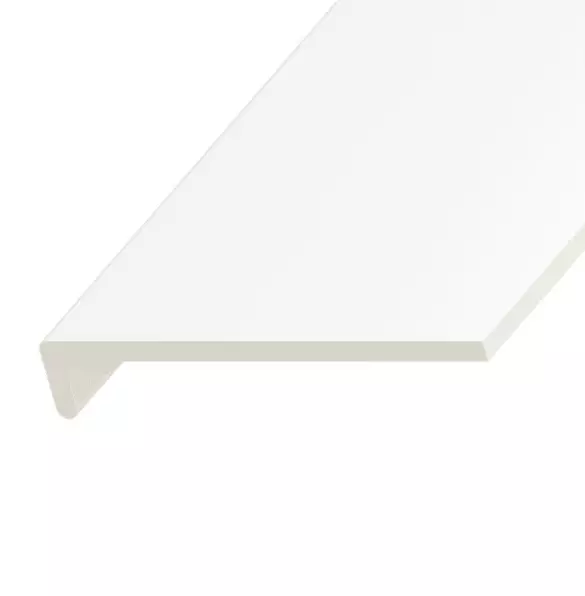
White Square UPVC Internal Window Sill & Board – 410mm
For window finishing, consider the White Square UPVC Internal Window Sill & Board. Selected option: 410mm. Use product code F410PW. when selecting or ordering this item.
Our White UPVC Square Window Board and sill combine stylish elegance with practical durability. Designed for long-lasting performance, it is resistant to scratches and stains, ensuring a pristine appearance for years to come. Unlike traditional wood, this UPVC option will not rot, shrink, or warp, and it features a sealed surface to protect against moisture, making it ideal for any environment.
Design and features; Smooth gloss finish for a modern, elegant look; Scratch and stain-resistant for lasting good looks; Will not rot, shrink, or warp over time; Low maintenance – no sanding, painting, or sealing required; Easy to install and trim to size; Cost-effective alternative to traditional wooden boards; Matching end caps available for a seamless finish; Technical Specifications; Length: 5000mm.
Width: Available in 100mm, 125mm, 150mm, 175mm, 200mm, 225mm, 250mm, 300mm, 400mm, 410mm, 450mm & 605mm
Note: 410mm x 605mm Double Lipped; Thickness: 10mm; Fire Resistance: Class 1 fire resistance rating; UV Stability: UV stable and non-toxic; Recyclability: Fully recyclable; Guarantee: 10-year manufacturer’s guarantee; Applications.
This versatile window board and sill is suitable for replacing old wooden boards or completing new projects. It is suitable for extensions, conservatories, summerhouses, and garden offices and fits seamlessly into both renovations and new builds. Whether installed by a DIY enthusiast or a professional, this low-maintenance product is a practical and attractive choice for any home or workspace.
Before ordering, inspect the opening and measure the sill or window board at several points. Walls and reveals are not always square, especially in refurbishment work. Take account of any projection beyond the wall, the depth beneath the window and the way the ends will meet the surrounding finish. Use those measurements to establish the appropriate profile and cutting allowance.
Consider the window board, end caps and surrounding trims as a single visual detail. Confirm that the profile shapes match, rather than choosing accessories on colour alone. When matching an existing installation, a sample is more reliable than a screen image for judging both surface texture and shade. Check whether the selected item is intended for internal or external use before fitting.
The condition of the background is important in a refurbishment. Inspect the existing sill and surrounding area for signs of movement, damp or damage, and deal with any underlying issue before covering or replacing the visible finish. Follow the appropriate support, fixing and jointing guidance for the chosen product and the material beneath it, without assuming that every window board is fitted in the same way.
Plan the cut ends and the way they will meet the reveals before committing to the final dimensions. Trial positioning helps identify an uneven wall or an awkward junction while adjustments are still possible. Keep the finish protected while other work is taking place nearby, and use only cleaning methods recommended for the selected surface when removing installation residue.
Before making irreversible cuts or alterations, compare the item with the actual installation and check the necessary clearances. Where the system instructions permit trial positioning, use it to assess the layout before final fixing. If a proposed change affects the product's function or compatibility, obtain advice specific to the item before proceeding.
Think about how the finished area will be accessed after the work is complete. If inspection, cleaning or replacement is likely to be necessary, consider whether the planned layout allows for it without disturbing unrelated materials. Follow the maintenance and access requirements for the particular system, especially where a component will be concealed by subsequent work.
Any project with particular performance or regulatory requirements should be checked against the relevant technical documentation. The catalogue description is useful for identifying the product, but is not a substitute for confirmation of suitability in the intended application. Seek clarification about any required rating, classification or guarantee that is not explicitly stated in the available product information.
For larger projects, prepare a list of materials and check quantities against the final measured layout. Group items by their intended position so that similar components are not confused during fitting. This also makes it easier to identify which sizes or finishes still need to be ordered if the design changes before the work is complete.
For more information on White Square UPVC Internal Window Sill & Board talk to Building Plastics Online Limited