 Get Listed


White 10mm uPVC Hollow Soffit - 5m
Product Code: HS300W
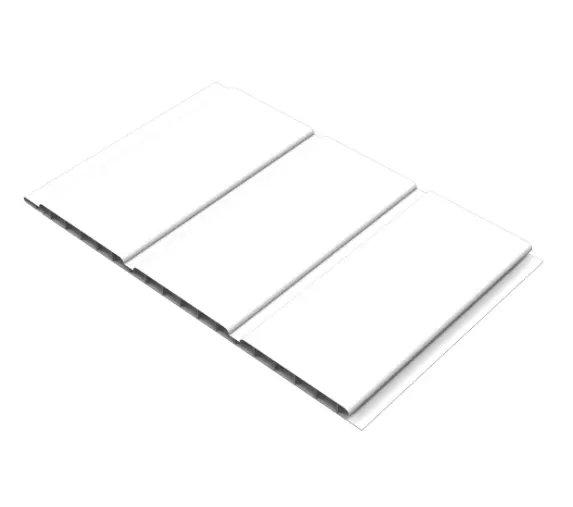
White 10mm uPVC Hollow Soffit - 5m
For soffit installations, consider the White 10mm uPVC Hollow Soffit - 5m. Use product code HS300W when selecting or ordering this item.
Add both style and function to your roofline with the Freefoam 300 mm White uPVC Hollow Soffit Board. Its sleek panelled appearance and lightweight hollow structure make it a brilliant choice for modern roof edges. Supplied in a convenient 5 metre length, this board ensures smooth coverage with fewer joins, perfect for both residential and commercial projects.
Elegant Panelled Design with Straightforward fitting.
The soffit features a tongue-and-groove groove and panelled effect, giving a tidy, professional look, while easing installation. This design also allows boards to slot together neatly, significantly reducing visible joints. The 300 mm width ensures wide-span coverage with fewer pieces.
Robust, Weather-Resistant Performance.
Made from quality PVC (uPVC), this soffit resists warping, rotting and discolouration—even in the face of UV exposure, rain, and frost. Its durable construction promises long-lasting visual and structural integrity with minimal upkeep. Backed by a 20-year warranty, it delivers reliable roofline protection.
Versatile Use and Design Compatibility.
At 10 mm thickness, the board is lightweight yet sturdy, suitable for both refurbishment and new installations. It’s available in the popular 300 mm width, with trims and accessories that help complete a seamless finish. Freefoam’s hollow soffits also come in 100 mm width alternatives for versatility in design.
The Freefoam 300 mm Hollow Soffit Board combines a sleek aesthetic with practical performance—an excellent choice for anyone looking for an elegant, durable, and easy-to-install soffit solution.
The soffit is the visible underside of the roof overhang, so the layout needs to account for the fascia, wall junction and any changes in the width of the eaves. Measure the overhang at several positions rather than assuming it is uniform. Consider the direction of the visible joints and the finishing detail where the soffit meets a corner or a projecting feature.
Ventilation requirements should be considered as part of the roof design, not inferred from the appearance of a soffit board. If the roof requires ventilation, check the necessary free area and the arrangement of air paths with the relevant system guidance or a competent installer. An existing opening should not be blocked simply because a continuous finish would look neater.
The choice of finishing components affects both the appearance and the practical assembly of the roofline. Identify the supporting framework and compatible edge trims before cutting any material. If replacing an existing soffit, inspect the concealed area for damage or other defects and make any necessary repairs before enclosing it again. Follow the specified support and fixing arrangement for the selected product.
For a consistent finish, compare the soffit with the fascia and other visible roofline components in daylight. Colours and textures that look similar in a catalogue image can appear different when installed next to one another. Allow for corners, joints and cut ends when calculating the total requirement, and keep an accurate note of the chosen range for later repairs.
Think about how the finished area will be accessed after the work is complete. If inspection, cleaning or replacement is likely to be necessary, consider whether the planned layout allows for it without disturbing unrelated materials. Follow the maintenance and access requirements for the particular system, especially where a component will be concealed by subsequent work.
Allow time to inspect the delivered materials before installation. Compare their identifying labels with the order and check for obvious damage or missing components. Keep items in the condition recommended by the manufacturer until they are needed, and avoid exposing finished surfaces to unnecessary damage during other building work. This is easier than discovering a problem once the materials have already been cut or fitted.
If the product is being purchased for a repair, record the existing item and its surroundings before removing anything. Photographs, measurements and manufacturer references can make it easier to compare the replacement with the original. Where an exact replacement is unavailable, check the implications of a different profile or specification for the remaining components, rather than assuming it can be substituted without changes.
For more information on White 10mm uPVC Hollow Soffit - 5m talk to Building Plastics Online Limited