 Get Listed


Star Screws (5mm)
Product Code: GSS590
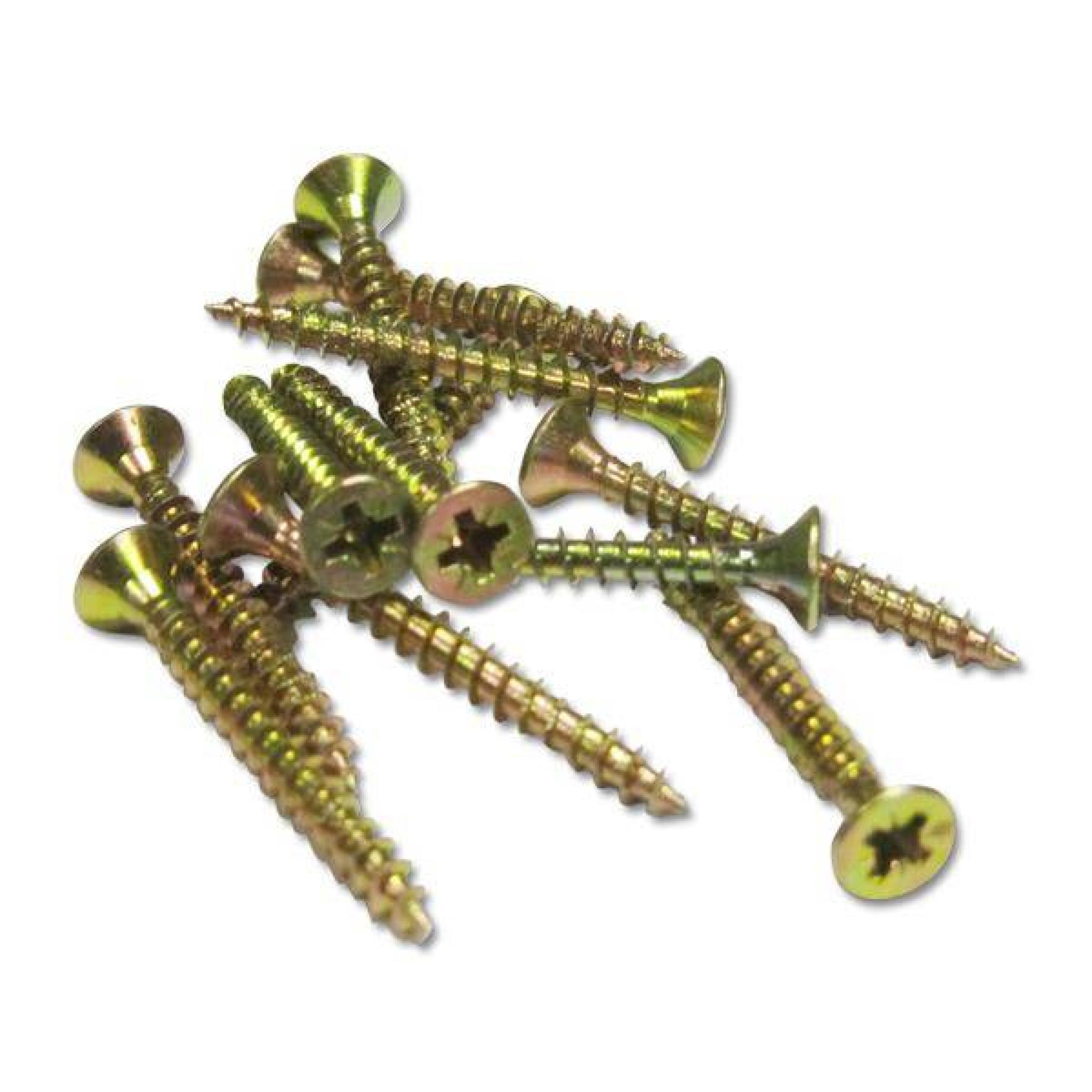
Star Screws (5mm)
When comparing products for your project, use the specifications for Star Screws (5mm) to check the required configuration. Use product code GSS590 when selecting or ordering this item.
Reliable and Efficient Screws for a Range of Installations.
Star Screws 5mm are specially designed to provide superior holding power, making them suitable for a range of construction tasks, including the installation of guttering systems, fascias, and soffits.
Features You Will Love.
Superior Holding Power: The 5mm diameter offers a strong and secure anchor, ensuring components stay firmly in place over time.
Star Shaped Drive: Provides better torque control and reduces the risk of cam out, making installation smoother and more efficient.
Durable Construction: Designed to resist challenging conditions, these screws are suitable for use in outdoor and heavy-duty applications.
Ease of Use: The star drive design ensures a secure fit and reduces slipping, enhancing the overall efficiency of the installation process.
Versatile Application: Ideal for a variety of tasks, from fixing guttering to securing fascias, soffits, and other construction components.
Achieve a Secure and Efficient Installation Every Time.
With their robust design and advanced drive mechanism, Star Screws 5mm offer exceptional performance, offering a dependable solution for a range of construction applications.
The choice of fixing or sealing material should be made alongside the materials being joined, rather than on colour or appearance alone. Check the manufacturer's advice on compatible surfaces, preparation and working conditions. If a joint is expected to move, or the application is exposed to water, heat or repeated cleaning, confirm that the chosen product is suitable for those conditions before starting.
Prepare a small representative area before committing to the full installation. Remove loose material and contamination as directed by the product instructions, and make sure the surfaces are in the condition specified for the fixing or sealant. A trial on an offcut is useful where visible finishes could be marked or where two different materials meet. Do not assume that a product suitable for one substrate is suitable for every other substrate.
Work out the quantity required from the actual number of joints or fixing positions. For a sealant or adhesive, refer to the stated coverage for the bead size or application method; for mechanical fixings, use the spacing specified for the system being installed. Allow for the practical demands of the job without relying on an estimated coverage figure that may not apply to your particular surface.
Keep the original packaging and fitting information available until the work is complete. Observe the manufacturer's instructions for storage, application, personal protection and any curing time. Where a fixing is part of a load-bearing assembly, the system design and suitability of the substrate need to be established separately. The appearance of the finished joint is not a substitute for checking its integrity.
Any project with particular performance or regulatory requirements should be checked against the relevant technical documentation. The catalogue description is useful for identifying the product, but is not a substitute for confirmation of suitability in the intended application. Seek clarification about any required rating, classification or guarantee that is not explicitly stated in the available product information.
If the product is being purchased for a repair, record the existing item and its surroundings before removing anything. Photographs, measurements and manufacturer references can make it easier to compare the replacement with the original. Where an exact replacement is unavailable, check the implications of a different profile or specification for the remaining components, rather than assuming it can be substituted without changes.
Think about how the finished area will be accessed after the work is complete. If inspection, cleaning or replacement is likely to be necessary, consider whether the planned layout allows for it without disturbing unrelated materials. Follow the maintenance and access requirements for the particular system, especially where a component will be concealed by subsequent work.
For larger projects, prepare a list of materials and check quantities against the final measured layout. Group items by their intended position so that similar components are not confused during fitting. This also makes it easier to identify which sizes or finishes still need to be ordered if the design changes before the work is complete.
For more information on Star Screws (5mm) talk to Building Plastics Online Limited