 Get Listed


Sandstone Pastel Wall Cladding External Corner Joint
Product Code: 12616
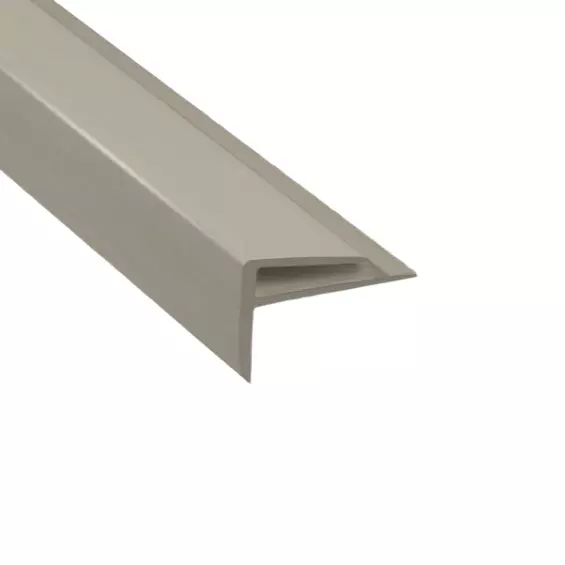
Sandstone Pastel Wall Cladding External Corner Joint
Finish an outward-facing corner. The Sandstone Pastel Wall Cladding External Corner Joint is the product specified here. Use product code 12616 when selecting or ordering this item.
Our Hygienic Wall Cladding External Corner Joint is expertly crafted to ensure a smooth and professional finish around external corners, such as window reveals, during your cladding installation. It effectively conceals minor imperfections at the edges of your cladding sheets, providing a clean and polished result.
Featuring a sophisticated Sandstone Pastel colour, this profile perfectly complements Sandstone Pastel Hygienic Wall Cladding, enhancing both functionality and aesthetics.
Product Details; Colour: Sandstone Pastel; Length: Available in 10ft (3050mm) sizes; Material: Durable UPVC profile; Design and features; Seamless Corner Finish: Hides uneven cuts, ensuring a tidy and professional appearance.
Elegant Sandstone Pastel Colour: Matches Sandstone Pastel Wall Cladding for a cohesive design.
Robust and Reliable: Made from quality UPVC, offering durability and resistance to moisture and impacts.
Fitting considerations: Designed for quick and hassle-free fitting, saving time and effort.
Enhance the quality and visual appeal of your Hygienic Wall Cladding Installation with the Sandstone Pastel External Corner Joint, delivering a flawless and long-lasting finish for your space.
Plan the wall layout before cutting sheets, panels or matching finishing profiles. Identify the positions of internal and external corners, door openings, windows, service penetrations and junctions with other finishes. Working from the actual wall dimensions helps establish where the joints will fall and whether an alternative layout could reduce small cuts or awkward strips near the edges.
The underlying wall must be appropriate for the selected cladding system. Check its flatness, condition and suitability for the specified adhesive or mechanical fixing method. Existing damp, loose coatings or damaged backgrounds need to be addressed rather than hidden behind the new surface. Follow the manufacturer's preparation guidance, particularly in areas where water exposure or frequent cleaning is expected.
Look at the visible surface and the associated trims as a coordinated finish. Similar colours can differ in sheen or undertone, and a mismatch is often more noticeable at a corner than across a broad wall. Where appearance is important, compare samples under the actual lighting in the room. Confirm the profile dimensions and the compatibility of each finishing component with the chosen panels.
A hygienic or decorative wall surface is only one element of the finished installation. Joints, cut-outs and transitions to other materials require the correct detailing for the intended use. If the project has specific hygiene, fire, waterproofing or building compliance requirements, obtain the relevant product and system documentation before specifying it. Do not rely on the visual finish alone as evidence of compliance.
Any project with particular performance or regulatory requirements should be checked against the relevant technical documentation. The catalogue description is useful for identifying the product, but is not a substitute for confirmation of suitability in the intended application. Seek clarification about any required rating, classification or guarantee that is not explicitly stated in the available product information.
Check what is supplied with the item and what is required separately before arranging work. A description of a larger system does not necessarily mean that all of its components are included in a single listing. Refer to the product information and packing details for the chosen option, and contact the supplier if the required contents or compatible accessories are not clear.
If the product is being purchased for a repair, record the existing item and its surroundings before removing anything. Photographs, measurements and manufacturer references can make it easier to compare the replacement with the original. Where an exact replacement is unavailable, check the implications of a different profile or specification for the remaining components, rather than assuming it can be substituted without changes.
For larger projects, prepare a list of materials and check quantities against the final measured layout. Group items by their intended position so that similar components are not confused during fitting. This also makes it easier to identify which sizes or finishes still need to be ordered if the design changes before the work is complete.
For more information on Sandstone Pastel Wall Cladding External Corner Joint talk to Building Plastics Online Limited