 Get Listed


Rustic Green Plastic Headed Pins & Nails
Product Code: GP30RG.
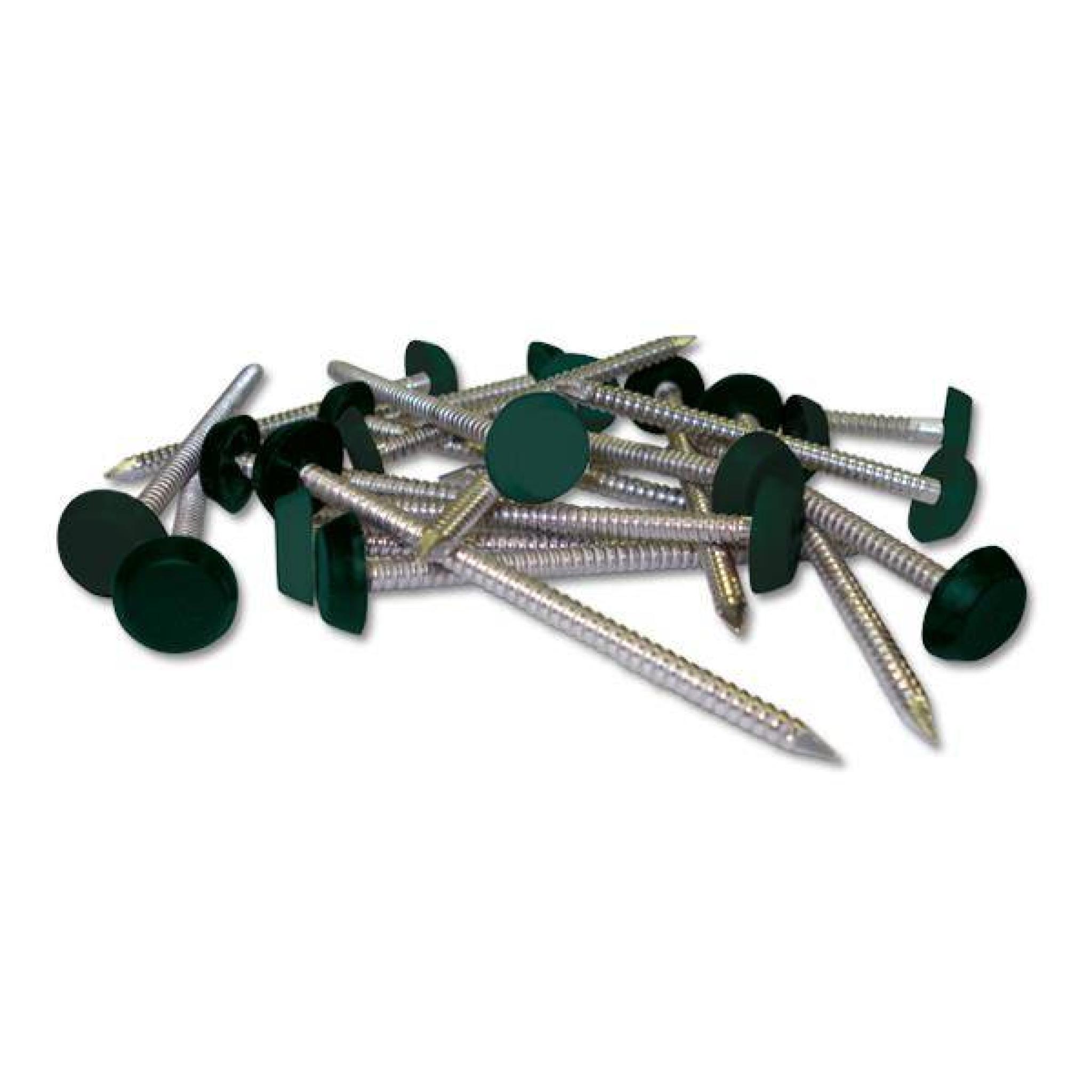
Rustic Green Plastic Headed Pins & Nails – 30mm
The Rustic Green Plastic Headed Pins & Nails is an option when planning installation fixings. Selected option: 30mm. Use product code GP30RG. when selecting or ordering this item.
Secure your roofline components with our quality Rustic Green Plastic Headed Pins & Nails, available in two convenient options: 65mm nails (box of 100) and 30mm pins (box of 250). These fixings are specifically designed to complement rustic green uPVC fascia, soffit, and trim installations, ensuring a neat, coordinated finish.
Weatherproof and Durable Construction.
Manufactured with a tough plastic head and corrosion-resistant metal shank, these pins and nails are designed to resist demanding weather conditions. The rustic green finish matches perfectly with roofline accessories, providing an unobtrusive and visually appealing fastening solution. Designed for longevity, they won’t rust, fade, or deteriorate, even in challenging environments.
Perfect for Roofline Applications.
The 65mm nails are ideal for securely fixing fascia boards, while the 30mm pins are suitable for soffit and trim installations. Their robust design ensures strong and reliable connections, making them a must-have for professional contractors and DIY enthusiasts working on roofline projects.
Easy to Use and Reliable.
These pins and nails are lightweight yet strong, ensuring ease of use and a secure hold. Packaged in convenient boxes of 100 nails or 250 pins, they offer excellent value for completing your roofline installation with precision and style.
The choice of fixing or sealing material should be made alongside the materials being joined, rather than on colour or appearance alone. Check the manufacturer's advice on compatible surfaces, preparation and working conditions. If a joint is expected to move, or the application is exposed to water, heat or repeated cleaning, confirm that the chosen product is suitable for those conditions before starting.
Prepare a small representative area before committing to the full installation. Remove loose material and contamination as directed by the product instructions, and make sure the surfaces are in the condition specified for the fixing or sealant. A trial on an offcut is useful where visible finishes could be marked or where two different materials meet. Do not assume that a product suitable for one substrate is suitable for every other substrate.
Work out the quantity required from the actual number of joints or fixing positions. For a sealant or adhesive, refer to the stated coverage for the bead size or application method; for mechanical fixings, use the spacing specified for the system being installed. Allow for the practical demands of the job without relying on an estimated coverage figure that may not apply to your particular surface.
Keep the original packaging and fitting information available until the work is complete. Observe the manufacturer's instructions for storage, application, personal protection and any curing time. Where a fixing is part of a load-bearing assembly, the system design and suitability of the substrate need to be established separately. The appearance of the finished joint is not a substitute for checking its integrity.
Before making irreversible cuts or alterations, compare the item with the actual installation and check the necessary clearances. Where the system instructions permit trial positioning, use it to assess the layout before final fixing. If a proposed change affects the product's function or compatibility, obtain advice specific to the item before proceeding.
Allow time to inspect the delivered materials before installation. Compare their identifying labels with the order and check for obvious damage or missing components. Keep items in the condition recommended by the manufacturer until they are needed, and avoid exposing finished surfaces to unnecessary damage during other building work. This is easier than discovering a problem once the materials have already been cut or fitted.
Any project with particular performance or regulatory requirements should be checked against the relevant technical documentation. The catalogue description is useful for identifying the product, but is not a substitute for confirmation of suitability in the intended application. Seek clarification about any required rating, classification or guarantee that is not explicitly stated in the available product information.
Think about how the finished area will be accessed after the work is complete. If inspection, cleaning or replacement is likely to be necessary, consider whether the planned layout allows for it without disturbing unrelated materials. Follow the maintenance and access requirements for the particular system, especially where a component will be concealed by subsequent work.
For more information on Rustic Green Plastic Headed Pins & Nails talk to Building Plastics Online Limited