 Get Listed


Light Oak Fascia Corner & Joint Trims
Product Code: GRJLO
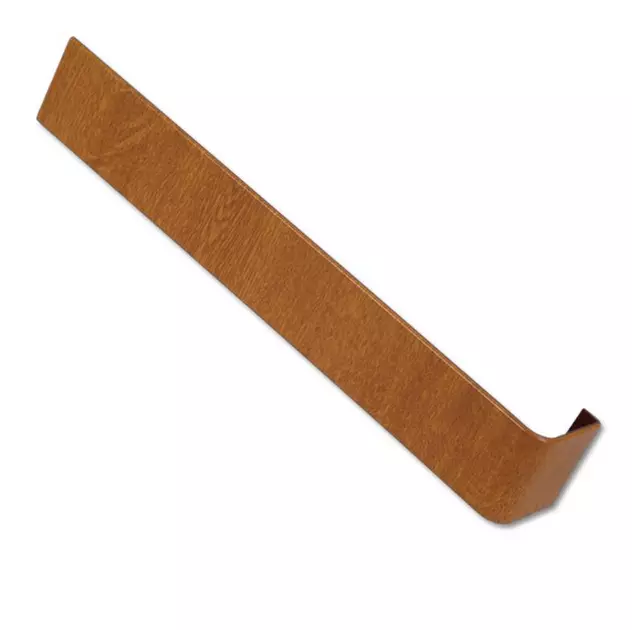
Light Oak Fascia Corner & Joint Trims – 300mm
Finish fascia junctions and edges. The Light Oak Fascia Corner & Joint Trims is the product specified here. Selected option: 300mm. Use product code GRJLO when selecting or ordering this item.
Versatile and Elegant Roofline Accessories.
The Light Oak Fascia Corner & Joint Trims are designed to ensure a seamless and polished finish for fascia board installations. Whether connecting fascia boards at corners, joints, or reveals, these trims add strength and style to your roofline. Their stunning light oak finish complements uPVC fascia boards, enhancing residential and commercial properties.
Weatherproof and Durable Design.
Made from premium uPVC, these trims are designed to resist exposure to demanding weather conditions, including UV rays, rain, and frost. Their robust construction resists warping, rotting, and discolouration, ensuring a long-lasting solution for your roofline.
Available Trim Options.
Choose from a variety of Light Oak Fascia Corner & Joint Trims to suit your project needs:
300mm Joint/Corner Ext; 135 Degree 300mm Corner Ext; 300mm Corner Ext D/Ended; 500mm Corner Int D/Ended; 500mm Joint D/Ended; 500mm Reveal End Cap; Fitting considerations.
These lightweight and easy-to-handle trims are straightforward to install, whether for new builds or renovation projects. They securely fit fascia boards, ensuring a professional finish with minimal effort.
About Light Oak Fascia Corner & Joint Trims?
Combining functionality, durability, and decorative appeal, these trims provide the perfect finishing touch for fascia installations. Their light oak finish and versatile options ensure they meet a variety of roofline requirements, enhancing your property's appearance and performance.
A roofline refurbishment is an opportunity to look at the fascia, soffit and rainwater fittings as a complete assembly. Before ordering, examine the condition of the existing material and determine whether the job requires capping, replacement or a finishing component. These are different tasks, and a neat outer finish should never be used to conceal decayed timber or an unresolved moisture problem behind the roofline.
Measure each straight run independently and note changes in height, external and internal corners, and junctions with neighbouring structures. The useful coverage of a board or trim may differ from its overall dimensions once joints and end details are included. A measured cutting schedule helps make better use of the lengths ordered and reduces the likelihood of needing another delivery midway through the work.
Plan how the fascia detail will meet the soffit and guttering. The relevant brackets, connectors, joints and end pieces must be compatible with the system rather than simply similar in appearance. If matching an older installation, compare a physical sample or the existing profile where possible, since the shape and shade of roofline products can vary between ranges and over time.
Roofline work needs suitable access and a safe working arrangement. Refer to the manufacturer's fixing positions, support requirements and movement allowances before any installation takes place. Where the fascia carries rainwater fittings or meets the roof covering, establish how those elements are supported and how water is directed away from the building. Resolve structural defects before fitting decorative materials.
Think about how the finished area will be accessed after the work is complete. If inspection, cleaning or replacement is likely to be necessary, consider whether the planned layout allows for it without disturbing unrelated materials. Follow the maintenance and access requirements for the particular system, especially where a component will be concealed by subsequent work.
Before making irreversible cuts or alterations, compare the item with the actual installation and check the necessary clearances. Where the system instructions permit trial positioning, use it to assess the layout before final fixing. If a proposed change affects the product's function or compatibility, obtain advice specific to the item before proceeding.
If the product is being purchased for a repair, record the existing item and its surroundings before removing anything. Photographs, measurements and manufacturer references can make it easier to compare the replacement with the original. Where an exact replacement is unavailable, check the implications of a different profile or specification for the remaining components, rather than assuming it can be substituted without changes.
For more information on Light Oak Fascia Corner & Joint Trims talk to Building Plastics Online Limited