 Get Listed


Brown & Grey Aluminium Top & Bottom Rail (Pair)
Product Code: 3060015010
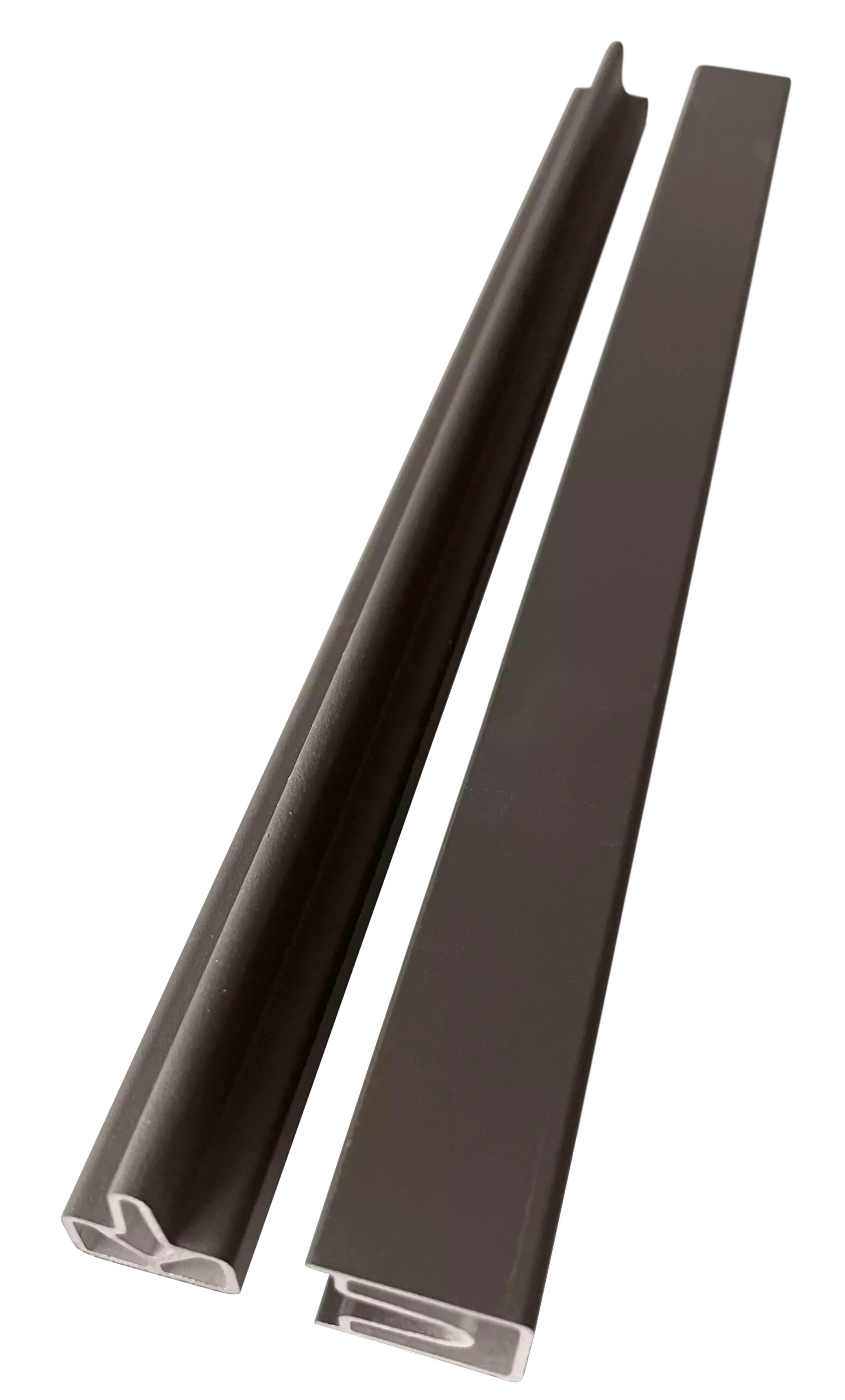
Brown & Grey Aluminium Top & Bottom Rail (Pair)
When comparing products for your project, use the specifications for Brown & Grey Aluminium Top & Bottom Rail (Pair) to check the required configuration. Use product code 3060015010 when selecting or ordering this item.
Ensure a secure and modern fencing solution with the Brown & Grey Aluminium Top/Bottom Rail 1.79m. Designed to provide essential structural support, this aluminium rail enhances the strength and stability of your fencing system while adding a sleek, contemporary finish. The dual-tone brown and grey colour effortlessly complements various fence panels, making it a versatile choice for residential and commercial applications.
Durable, Weather-Resistant Aluminium Construction.
Made from quality aluminium, this 1.79m fencing rail is resistant to rust, corrosion, and demanding weather conditions. Unlike traditional wood rails, it won’t warp, rot, or require frequent maintenance, supporting lasting durability with minimal upkeep. The powder-coated finish protects against fading and UV exposure, keeping your fence pristine for years.
Straightforward fitting for a Secure Fit.
Designed for quick and hassle-free installation, this aluminium rail can be used as a top and bottom rail, securing fence panels for enhanced stability. Its lightweight yet strong design allows for a secure fit while maintaining a streamlined aesthetic. This rail is suitable for DIY projects or professional installations and is essential for a quality fencing system.
NOTE: The top & bottom rails come as a pair, complete with 2 x “L” brackets and self-tapping screws used to fix the top rail. There are no fixings for the bottom rail, which slides into position.
Start by identifying the role this item will have in the finished project. Compare the stated product details with the existing installation or the drawings for the proposed work. Pay particular attention to dimensions, finish and the intended connection with other materials. Where the available information does not establish compatibility, obtain confirmation before placing an order.
Inspect the area where the product is to be used before starting. Existing damage, loose material or an uneven surface may need separate attention. The appropriate preparation and fitting method depend on the product and its surroundings, so refer to the actual manufacturer's guidance rather than applying instructions from a different item that happens to look similar.
Consider the order in which related components will be installed. Some details are easier to resolve before adjacent materials are fitted, and access may become restricted as the project progresses. Check the items needed for the full assembly and establish which are included and which must be ordered separately. Keep any required technical instructions available on site.
Where the appearance of the finished work matters, compare the relevant colours, surface textures and profiles together. Lighting, surrounding finishes and the age of existing materials can affect how well a new component matches. A sample or direct comparison is useful when an exact match is necessary, especially in an extension or repair to an established installation.
Any project with particular performance or regulatory requirements should be checked against the relevant technical documentation. The catalogue description is useful for identifying the product, but is not a substitute for confirmation of suitability in the intended application. Seek clarification about any required rating, classification or guarantee that is not explicitly stated in the available product information.
Think about how the finished area will be accessed after the work is complete. If inspection, cleaning or replacement is likely to be necessary, consider whether the planned layout allows for it without disturbing unrelated materials. Follow the maintenance and access requirements for the particular system, especially where a component will be concealed by subsequent work.
For larger projects, prepare a list of materials and check quantities against the final measured layout. Group items by their intended position so that similar components are not confused during fitting. This also makes it easier to identify which sizes or finishes still need to be ordered if the design changes before the work is complete.
Before making irreversible cuts or alterations, compare the item with the actual installation and check the necessary clearances. Where the system instructions permit trial positioning, use it to assess the layout before final fixing. If a proposed change affects the product's function or compatibility, obtain advice specific to the item before proceeding.
For more information on Brown & Grey Aluminium Top & Bottom Rail (Pair) talk to Building Plastics Online Limited