 Get Listed


4mm Clear Twinwall Polycarbonate
Product Code: PC45500X2100
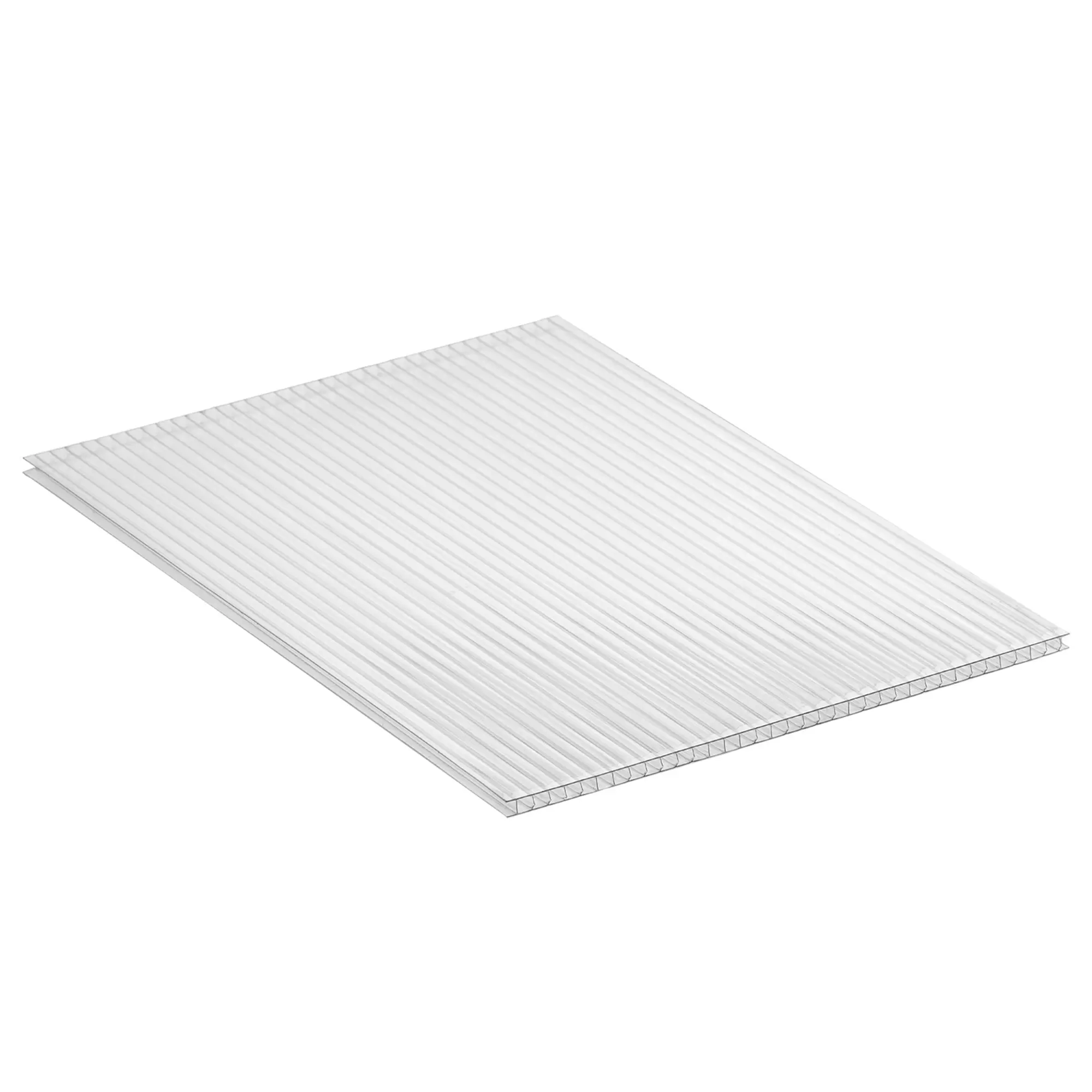
4mm Clear Twinwall Polycarbonate – 5500mm × 2100mm
The 4mm Clear Twinwall Polycarbonate is an option when planning polycarbonate glazing. Selected option: 5500mm × 2100mm. Use product code PC45500X2100 when selecting or ordering this item.
The 4mm clear twin-wall polycarbonate sheet is an ideal solution for projects requiring a durable, lightweight, and versatile material. With excellent light transmission and UV protection, these sheets are suitable for outdoor applications such as greenhouses, shed windows, and DIY projects. Made from quality materials, this product combines outstanding structural properties with affordability and ease of maintenance.
Only pay for what you need! Click this link - 4mm Cut To Size Polycarbonate.
This 4mm polycarbonate sheet is highly impact-resistant and provides excellent insulation, making it a reliable choice for domestic and commercial use. Additionally, it is weatherproof and easy to work with, supporting lasting performance in all conditions. Backed by a 10-year limited manufacturer warranty, this product delivers quality and peace of mind.
Available Sizes.
The following are popular sheet sizes that are cut from a standard 7m x 2.1m sheet:
Widths:; 700mm; 1050mm; 2100mm; Lengths:; 2000mm; 2500mm; 3000mm; 3500mm; 4000mm; 4500mm; 5000mm; 6500mm; 7000mm.
For custom sizes, please use our cut-to-size service for a tailored solution to suit your project’s specific requirements.
Start by planning the dimensions of the glazing area and the layout of its supports. Measure the actual openings and allow for the engagement of the sheet or profile within the chosen glazing system. Nominal sheet dimensions are not necessarily the same as the finished coverage. A cutting schedule based on the real installation is more useful than selecting a size solely from the overall area.
The sheet thickness, glazing profile and intended application must be considered together. Different glazing systems accommodate different material thicknesses and have their own requirements for support, movement and edge finishing. Do not assume that a sheet can replace another thickness without checking the bars, seals and supports. For overhead glazing, the suitability of the complete structure should be confirmed before purchase.
Think about the desired level of daylight, privacy and solar exposure when comparing glazing finishes. The position of the structure, its orientation and nearby surfaces all influence how the finished installation will feel. Compare the specified finish with the other materials used in the project, and use the manufacturer's published performance information if a particular thermal or light transmission target is important.
Keep glazing products protected from damage during transport and preparation. When cutting or handling is permitted, follow the relevant guidance for tools, protective films and edge treatment. Establish which face should be exposed and whether the system requires particular tapes, closures or drainage arrangements. These details depend on the selected sheet and profile, so use the actual system instructions rather than applying one method to every type of glazing.
Allow time to inspect the delivered materials before installation. Compare their identifying labels with the order and check for obvious damage or missing components. Keep items in the condition recommended by the manufacturer until they are needed, and avoid exposing finished surfaces to unnecessary damage during other building work. This is easier than discovering a problem once the materials have already been cut or fitted.
Before making irreversible cuts or alterations, compare the item with the actual installation and check the necessary clearances. Where the system instructions permit trial positioning, use it to assess the layout before final fixing. If a proposed change affects the product's function or compatibility, obtain advice specific to the item before proceeding.
Check what is supplied with the item and what is required separately before arranging work. A description of a larger system does not necessarily mean that all of its components are included in a single listing. Refer to the product information and packing details for the chosen option, and contact the supplier if the required contents or compatible accessories are not clear.
Think about how the finished area will be accessed after the work is complete. If inspection, cleaning or replacement is likely to be necessary, consider whether the planned layout allows for it without disturbing unrelated materials. Follow the maintenance and access requirements for the particular system, especially where a component will be concealed by subsequent work.
For more information on 4mm Clear Twinwall Polycarbonate talk to Building Plastics Online Limited