 Get Listed


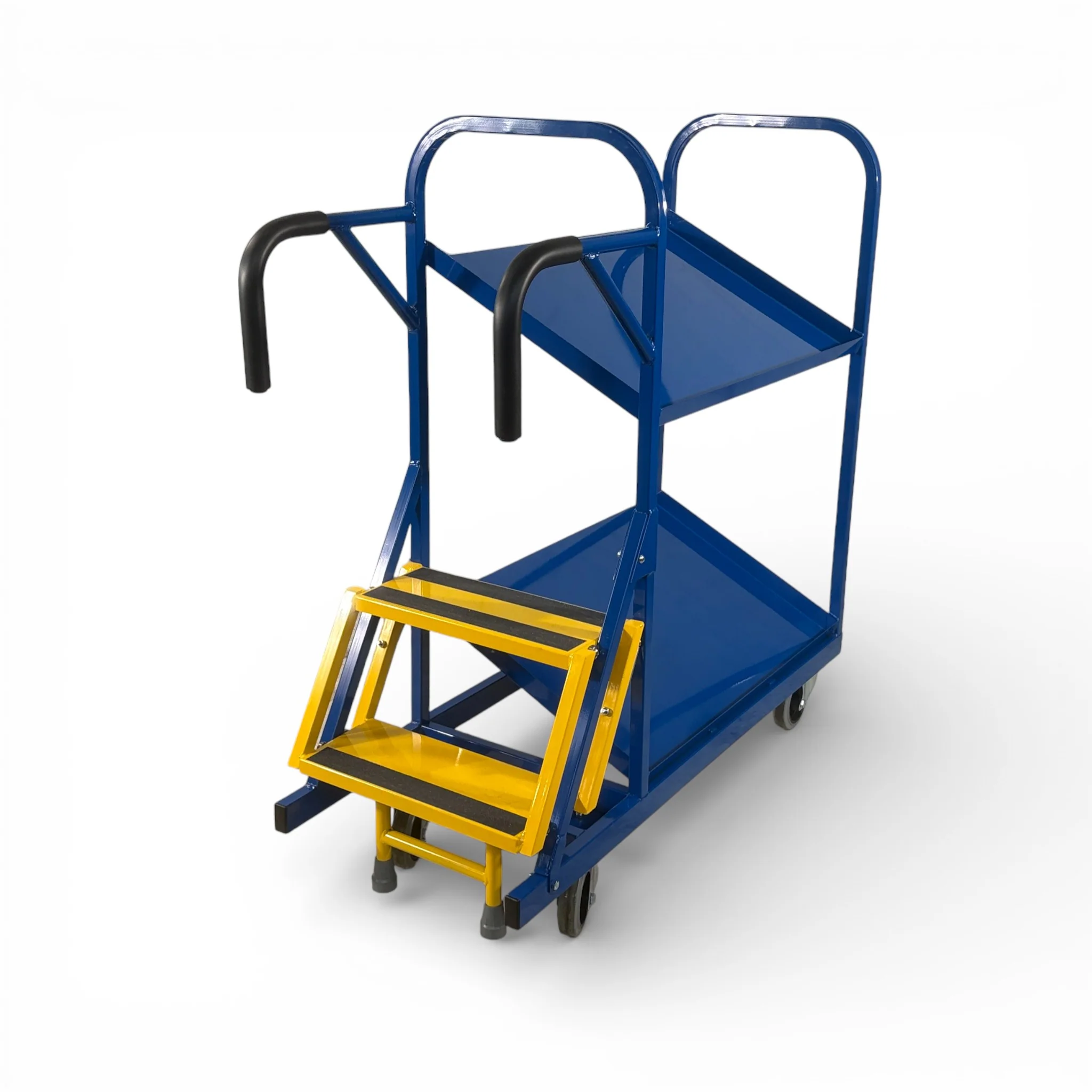
How can manual handling trolleys Improve load stability & control.
Manual Handling is the biggest cause of injury in the work place. All employers have a legal duty to keep workers safe from ill health and injury in the work place and must comply with the Health & Safety legislation set by the Health and Safety Executive.
The HSE is the government department responsible for setting mandatory Health and Safety legislation and requirements in England and wales. It is the legal duty and responsibility of all employers to meet the legislation and requirements in the workplace and to provide all workers with training in manual handling and manual handling equipment before carrying out any tasks. (HSE)
Contains public sector information published by Health and Safety Executive and Licensed under the open Government Licence. (HSE)
Manual handling, lifting and carrying in the workplace can lead to hazards, contamination, damage, ill health and injury. Manual handling trolleys provide stability and full load control when transporting goods around the workplace. When goods are transported safely the workplace will run smoothly reducing the risks, improve efficiently and increase productivity and profit.
The Law
Compulsory manual handling legislation set by the HSE must be followed:
- Manual handling - Manual Handling Operations Regulations 1992 (MHOR)
- Workplace Health & Safety guildlines
- Lifting Operations and Lifting Equiptment Regulations 1998 (LOLER)
- The Control of Substances Hazardous to Health (COSHH) Regulations 2002
Manual Handling Trolleys
Trolleys are strong, easy to use wheeled platforms designed in different shapes and sizes in many configurations. Trolleys safely transport large, heavy, awkward, multiple or hazardous items around the workplace. Designed to push and pull rather than lift and carry reducing the physical strain of the worker. Trolleys have a flat base, a weight limit and can be configured with shelves, baskets, contamination inlay trays, storage holders or step ladders and can be designed at different heights. Manual handling trolleys provide load stability and allow workers full control during transport. Trolleys allow workers to safely stop when needed. Trolleys improve visibility allowing workers to notice hazards ahead. Specific trolleys can be attached to a crane and lifted. Manual handling trolleys are available for all goods and industries.
By replacing the load from workers to wheels, the physical effort required is much lower. Trolleys are available as standard stock or bespoke custom designed for specific intended use for any industry. Trolleys can be designed manually or electronically.
Trolleys can transport many hazardous goods including gas cylinder bottles, liquids and flammable products keeping the goods stable, secure and safe. Trolleys can be provided with chemical in lay trays to prevent contamination.
Manual Handling Trolleys help employers comply with manual handling heath and safety legislation.
How do Trolleys improve load stability & control?
- Prevents dropped items
- Keeps the load secure
- Reduces the risk of damaged goods
- Reduces the risk of hazards, damage, injury or ill health
- Gives the worker full control of the load
Stability and Control
Unstable loads and lack of control result in hazards, contamination, damage, ill health and injury. Manual handling trolleys provide a stable controlled method of transport for all goods in all industries.
A stable load with full control results in safer movement around the workplace. Working in a fast paced workplace replacing physical carrying with a wheeled manual handling trolley allows goods to be relocated around the workplace without risk. The more efficient the task becomes the more productivity is increased.
Safely operating manual handling trolleys:
Trolleys are designed with the task and the worker in mind. With many different trolleys available it is essential you select the correct trolley for the task. Standard size trolleys take into account the the average person, with certain trolleys available for different goods, however not every worker is average and not all goods to be transported fit onto standard trolleys securely. Trolleys can be custom designed and built for specific tasks, goods and the workforce. When the correct trolley for the task or workplace is selected the goods become secure and the worker gains complete control during transport. The goods must fit securely on the trolley and the worker must have the ability to fully control the loaded trolley.
Goods must be loaded and transported correctly on the trolley to allow stability and full control. Trolleys have a flat surface, It is essential nothing covers the surface except the goods. Using a firm grip and correct manual handling techniques place heavier larger goods on the lower platform of the trolley evenly spaced in the middle to allow good balance. Know the weight limit of the trolley and the goods, the weight of the goods combined must never exceed the maximum weight limit of the trolley. Make sure the goods do not overlap the trolley unless designed to do so using appropriate straps when needed to hold goods in place.
The goods should never block visibility, make the load more compact to reduce obstruction of vision or movement. The distance between the load and the workers should always allow leg movement. Check for any surrounding or upcoming hazards, keep both hands gripped on the trolley with an upright posture, push or pull the trolley slowly with both hands without twisting movements and walk slowly avoiding ramps, stairs and uneven surfaces.
The manual handling trolley must be maintained and regularly inspected, structural damage, broken wheels and worn brakes are dangerous and become a hazard to the work place and workers.
When manual handling trolleys and the goods are too heavy, large or awkward to transport by hand specific trolleys can be attached to trucks or cranes.
Risk assessment
A risk assessment to identify any risks and needs before the task takes place must be completed. This will allow the planning of transporting the goods and what suitable manual handling equipment will be needed for the task.
There are many trolleys available that transport different items. A risk assessment will identify the risks and the needs of the workplace and workers. How will the task be completed, how will the goods get from the current location to the designated location?. What is the load? Is it hazardous?, large, heavy, awkward shape? Risk of contamination or flammable product? Risk of damage? Is the work place suitable for the task? Are there any hazards? Is the floor suitable, are their any obstacles, ramps, stairs or uneven floor? Are the workers trained? Is the work force capable of the task? What equipment is needed, Is the individual worker capable of using the equipment, look at the ergonomics, the worker and the equipment, do they match? Does the worker have an illness or existing injury, are they strong? Is it a one person or multiple person lift? Can the worker control the trolley?
A large heavy trolley that transports heavy, awkward or large goods is difficult to control, a smaller lighter trolley is easier to control however will only transport smaller lighter goods. Does the item lay flat on the trolley, is it stable, does it need to be secure with a cage, straps or a basket to hold it in place, is it the correct trolley for the item? Do you need contamination in lay trays to prevent risk of contamination, shelves or baskets for smaller delicate goods? Transporting gases, flammable goods, chemicals or hazardous goods? is the workplace and workers COSHH trained? Do you need a gas cylinder trolley? Do you need a specific custom designed and built trolley for a specific task? If the goods are not stable on the trolley how can they be made stable? Does the load block visibility, can the load become more compact to improve visibility or movement? Do you need different equipment? Do you need a crane to lift the goods or a truck to pull the trolley?
Lifting trolleys over obstacles and transporting to out of reach areas
Specific trolleys attach to a crane allowing stable and secure lifting and lowering over obstacles or transportation to out of reach areas, providing the worker with full control of the load. Trolleys should only ever be lifted by crane and never lifted manually.These specific trolleys become part of lifting equipment and the crane therefor must have a valid LOLER certificate provided by the manufacturer to be renewed every 6 months. It is the legal duty and responsibility of the employer to ensure the training and valid certificate is in place before the task is carried out.
Summary
Manual handling trolleys provide stability and full control of a load and help employers to meet mandatory health and safety legislation.
- Prevent contamination or damage of goods
- Reduce ill health or injury to workers
- Help meet health & safety legislation
- Keep goods stable during transport
- Provide workers with full control of the load
Here at Breg Products our standard Trolleys are available to order direct from our website.
We also provide a bespoke design and build service tailored to your needs.
Site visits are available.
We love to talk!
Not sure what you need or want to discuss our design & build service give us a ring today or email us and one of our friendly sales team will be happy to discuss your needs.
telephone: 01484 469944
email: mail@bregproducts.co.uk
For more information on Health & Safety and the main benefits of Manual Handling Trolleys. How can manual handling trolleys Improve load stability & control. talk to Breg Products Ltd