 Get Listed

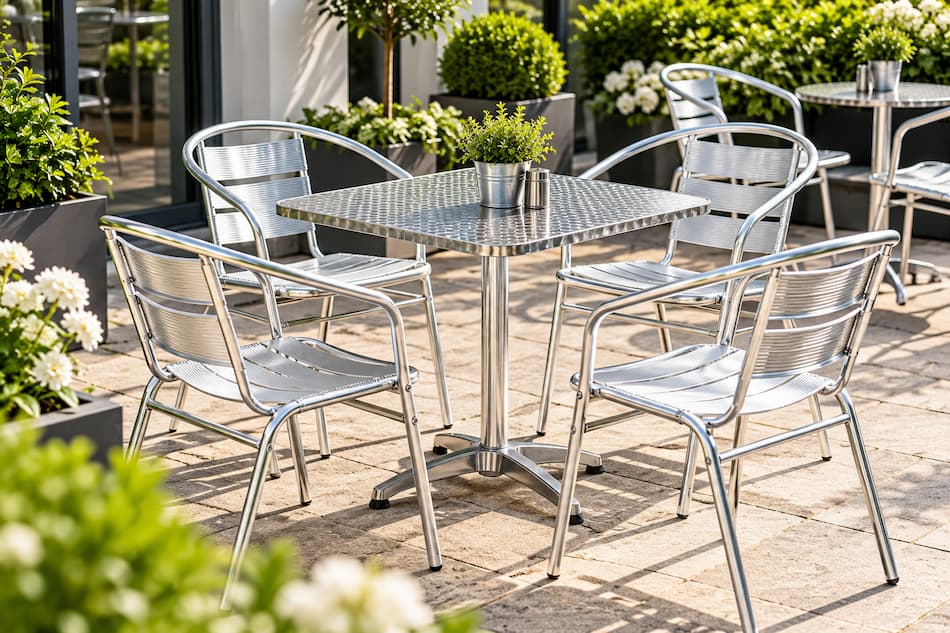
Aluminium tables and chairs can be practical outdoor furniture because they combine relatively low weight with resistance to corrosion. BE Furniture Sales' maintenance guide explains why that does not make them maintenance-free, particularly in cafés, restaurants and other commercial spaces where furniture is handled and cleaned repeatedly.
The guide covers regular cleaning, coating care, fixings, storage and the treatment of older furniture. It stresses that the method needs to suit the particular product and finish rather than assuming all metal furniture can be cleaned or restored in the same way.
Clean gently and regularly
Food residue, bird droppings, dust and outdoor deposits can accumulate on tables and chairs. BE Furniture Sales recommends removing loose debris and using a soft cloth, sponge or non-abrasive brush with mild soapy water for routine cleaning, followed by rinsing and drying.
Edges, chair backs, legs and joints deserve attention as well as the main table surface. Busy hospitality areas may need several wipe-downs during the day, with a more thorough clean at suitable intervals.
Abrasive pads, wire brushes and unsuitable chemicals can damage the finish. Cleaning products should follow the furniture manufacturer's care instructions, especially where surfaces are painted, anodised or powder coated.
Distinguish aluminium from other components
Aluminium does not develop the familiar red-brown rust associated with iron, but staining, oxidation and surface deterioration can still occur. Salt deposits, prolonged dampness, pollution and aggressive cleaning products can affect its appearance.
Coastal use can require particular attention to washing off deposits. Screws, bolts and fittings may also be made from other metals, with their own protective finishes and maintenance needs. The condition of an aluminium frame therefore does not establish that every part of the chair or table is unaffected.
Protect powder-coated finishes
Powder coating supplies colour and an additional protective surface, but scraping, dragging and unsuitable stacking can chip or wear it. Cleaning should avoid methods that scratch or dull the coating.
Where damage appears, the appropriate repair depends on the finish and product. Manufacturer-approved touch-up methods may suit a small area, while substantial deterioration may call for professional refinishing. Applying household paint without establishing compatibility may not provide a lasting result.
Inspect stability and fixings
Repeated movement and regular use can loosen components. Staff should check chair legs, table bases, joints and visible fittings, with attention to pedestal tables, folding mechanisms and items frequently moved or stacked.
An unstable chair or table should be taken out of use while the cause is assessed and corrected. Repairs need suitable parts and the correct method; overtightening can damage threads or distort lighter components.
Protective feet and glides should also be inspected. Worn or missing parts can affect stability and expose both the furniture and the floor to unnecessary damage.
Handle and stack the furniture correctly
Relatively light furniture can often be lifted rather than dragged across rough surfaces. Tables knocked against walls and chairs forced into unsuitable stacks may develop avoidable scratches and finish damage.
Only designs intended for stacking should be stored that way, following the product instructions. Stackability is useful for commercial venues, but it is not a reason to assume every aluminium chair can be nested safely with another design.
Manage wet weather and covers
Leaves, dirt and standing water can hold moisture around joints and surfaces. Clearing debris and removing collected water where practical helps preserve condition, particularly after poor weather or exposure to coastal spray.
Suitable covers can protect furniture during periods out of use. They should fit properly, remain secured and allow appropriate ventilation. Covering dirty or wet furniture can trap moisture rather than solve the problem, so cleaning and drying should come first.
Dry, sheltered storage is preferable where available. Furniture left outside should be positioned securely and protected in accordance with the relevant product guidance.
Account for heat and seasonal storage
Metal surfaces can become hot in direct sunlight or near heating equipment. Seating should be checked before use in hot conditions, while heaters, fire pits and barbecues need the clearances specified for that equipment. Coatings and non-metal components can also be affected by excessive heat.
Before winter storage, clean and dry the furniture and assess fixings, feet and finishes. A dry, ventilated store can reduce unnecessary exposure to rain, frost and debris. Check the furniture again before the next season rather than assume storage has preserved every component unchanged.
Assess restoration before choosing a method
The right treatment depends on whether a surface is bare, coated, painted or anodised. Mild cleaning may remove ordinary dirt; more persistent marks may need a product approved for the finish. Acids, abrasive polishing compounds and wire brushes should not be used without confirming suitability.
Structural damage, cracked joints or severely deteriorated fixings need assessment before further use. For commercial seating, replacement may sometimes be more appropriate than cosmetic restoration.
BE Furniture Sales recommends building cleaning and inspections into normal operations, with intervals reflecting use and exposure. Its aluminium bistro range includes tables, chairs and coordinated arrangements for commercial and domestic spaces, with product-specific care information guiding their ongoing maintenance.
Source: BE Furniture Sales
For more information on Maintenance Tips for Outdoor Aluminium Furniture talk to BE Furniture Sales