 Get Listed


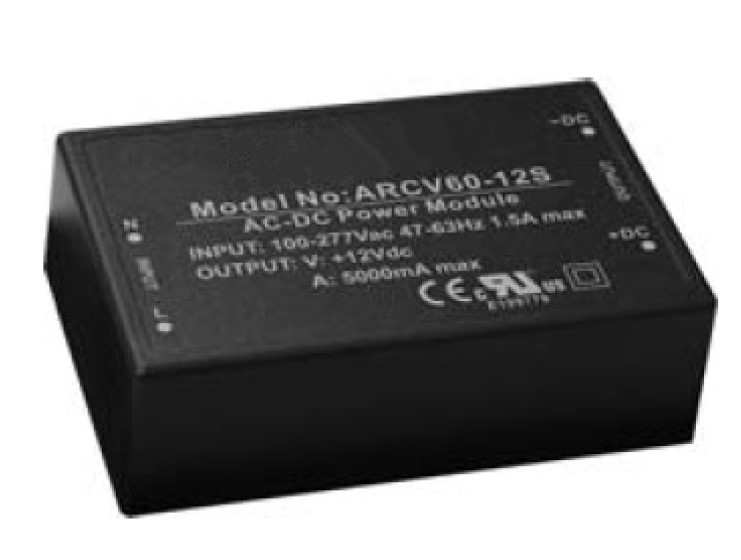
As electric vehicles continue to gain widespread adoption, residential EV charging systems have become an essential part of modern EV infrastructure. These systems are typically installed in residential garages, community parking areas, or semi-outdoor environments, and are commonly implemented in the form of home EV chargers (EVSE / Wallbox) to support daily charging needs.
Unlike typical indoor electronic equipment, residential EV charging systems remain continuously connected to the power grid and often operate in standby mode for extended periods. At the same time, they must withstand grid voltage fluctuations, transient disturbances, and ambient temperature variations commonly found in residential environments. As a result, the auxiliary power supply within the system must deliver not only stable output, but also a high level of safety, reliability, and energy efficiency.
In practical designs, engineers typically face the following challenges:
- Residential grid fluctuations: Power quality varies across installations, with frequent transient and surge events.
- Wide operating temperature range: Outdoor or semi-outdoor installations must withstand significant ambient temperature variations.
- Energy efficiency requirements: Equipment remains in standby mode for extended periods, making standby power consumption a critical factor.
- Safety and grounding conditions: Grounding quality in residential environments may be inconsistent, while user safety requirements remain stringent.
Therefore, even a 60W-class auxiliary power supply plays a critical role in determining the overall stability and user experience of residential EV charging systems.
The Role of ARCV60 in Residential EV Charging Systems
Within residential EV charging systems, the ARCV60 is typically used as an auxiliary AC-DC power supply, providing stable power to key internal modules, including:
- Main control boards and system management units
- Communication modules (Ethernet, 4G/5G, OCPP control)
- Displays, status indicators, and human-machine interfaces
- Monitoring, sensing, and protection circuits
Even when the main power module is inactive, the auxiliary power supply must remain stable to ensure the system can be monitored and awakened at any time. Therefore, the reliability of the auxiliary power supply directly impacts system startup reliability, remote monitoring availability, and long-term maintenance efficiency.
Designed for High-Voltage and Semi-Outdoor Environments: Key Technical Advantages of ARCV60
OVC III Architecture for Enhanced Residential Grid Robustness
Residential EV charging systems are typically connected directly to building distribution networks, which are classified as environments with high transient energy. The ARCV60 power module features an Over-Voltage Category III (OVC III) design, enabling it to withstand higher levels of surge and transient disturbances. This significantly reduces the risk of system malfunction or component damage, making it well suited for residential and semi-outdoor charging applications.
Wide Input Range of 90–305VAC for Flexible Residential Deployment
The ARCV60 power module supports a wide input voltage range of 90–305VAC, allowing it to accommodate variations in residential grid conditions across different regions. This minimizes additional design and validation effort caused by local grid differences and enhances overall deployment flexibility.
Class II Insulation and 4300VAC Isolation for Enhanced Safety
Residential EV charging equipment is accessible to general users, making safety a critical design requirement. The ARCV60 adopts a Class II insulation structure and provides 4300VAC input-to-output isolation, ensuring reliable user and equipment protection even in installations where grounding conditions may be limited.
Ultra-Low No-Load Power Consumption for Long-Term Operation
For residential charging systems that remain in standby mode for long durations, the ARCV60 delivers no-load power consumption below 0.1W. This helps reduce overall energy consumption, supports energy-efficient system design, and minimizes thermal stress, contributing to improved long-term reliability.
EMC Class B Compliance for Simplified System Integration
The ARCV60 complies with EN 55032 Class B EMI and EN 55035 EMS requirements without the need for external filtering components.
For system designers, this provides:
- Greater EMC design margin
- Shorter certification and debugging cycles
- Simplified system architecture and reduced BOM cost
Reliability Designed for Residential and Semi-Outdoor Environments
The ARCV60 supports:
- Operating temperature range from -40°C to +85°C
- 5000m altitude operation
- MTBF >300,000 hours at 25°C
These features allow the ARCV60 to meet the demands of outdoor, high-temperature, cold-climate, and long-term operating conditions commonly encountered in EV charging station installations.
Application Summary: Reliable Auxiliary Power as the Foundation of Residential EV Charging Systems
In residential EV charging system designs, auxiliary power supplies are not the main power source, yet they are essential to ensuring stable operation of control, communication, and safety functions. With its high-voltage robustness, reinforced isolation, ultra-low no-load power consumption, and Class B EMC performance, the ARCV60 power module has proven to be a dependable auxiliary power solution for residential EV charging applications.
OVC III Design Philosophy
In residential EV charging systems—where equipment is installed in living environments yet still exposed to high-voltage power conditions and grid disturbances—power supply design is not solely about output power, but about long-term resilience against transient energy and unstable grid behavior.
The ARCV60 is a representative product built upon the OVC III design philosophy, with a design approach grounded in real-world power environments rather than laboratory-only compliance.
By integrating OVC III architecture, reinforced insulation and isolation, wide input voltage capability, and Class B EMC performance into a unified design strategy, the ARCV60 effectively addresses the surge, transient, and continuous operation challenges commonly encountered in residential EV charging systems.
For more information on ARCV60 Power Module: A 60W Auxiliary Power Solution for Residential EV Charging Systems talk to ALL PSU Ltd